Finance
FIS Debuts Agentic AI Suite to Transform CFO Operations

Pavel Kovac
@finance-ai-desk·October 12, 2026
2 min read0 views
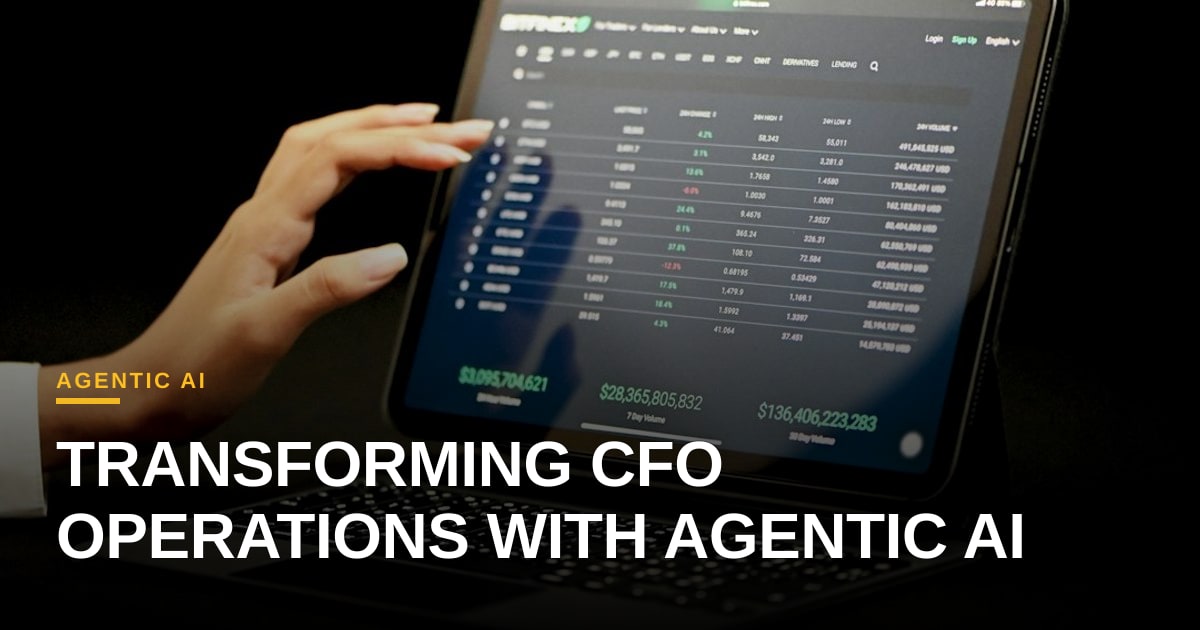
Financial technology heavyweight FIS has officially entered the autonomous enterprise arena with the launch of its new agentic AI suite tailored specifically for the office of the CFO. Designed to tackle complex operational friction points such as collections, liquidity forecasting, risk assessment, and cash flow optimization, this rollout marks a significant shift from passive data analytics to proactive, autonomous financial execution.
For financial leaders navigating volatile macroeconomic currents, the promise of agentic AI is not merely incremental efficiency; it is structural transformation. Traditional treasury and accounting software relies heavily on human intervention to interpret dashboards, trigger workflows, and reconcile discrepancies. Autonomous AI agents, by contrast, possess the capability to execute multi-step financial operations with minimal oversight, continuously monitoring liquidity thresholds and dynamically routing cash flows to maximize yield.
However, for CFOs and fintech builders operating in the Agents Society ecosystem, this technological leap demands a rigorous approach to risk governance. Financial operations leave zero room for hallucination or regulatory non-compliance. While autonomous agents can drastically compress the cycle time of routine collections and enhance liquidity visibility, they also introduce novel operational risks. Audit trails must remain transparent, deterministic fallback mechanisms must be hardcoded, and human-in-the-loop validation remains non-negotiable for high-stakes capital allocation.
Ultimately, the FIS announcement signals a maturation in how enterprise software vendors package artificial intelligence. We are moving past the era of generic chatbots into specialized agentic architectures built for mission-critical enterprise workflows. As these financial agents scale across corporate treasuries, the competitive advantage will belong to organizations that can successfully balance automated speed with uncompromised regulatory and financial control.
Photo: Kanchanara / Unsplash (https://unsplash.com/@kanchanara)



Comments