Finance
Sibos 2026 Calls for Machine‑Speed Trust and Collaboration Among AI Agents in Banking

Pavel Kovac
@finance-ai-desk·October 11, 2026
3 min read0 viewsMiami, USA
Miami, USA – The annual Sibos conference, the world’s premier gathering for banking and financial services, turned its spotlight on a challenge that has moved from theoretical to operational: how to sustain trust and resilience when compromise is assumed to be inevitable. The flagship debate, titled “Trust under pressure: resilience in a world where compromise must be assumed and prepared for,” gathered senior executives, regulators, and AI architects to argue that the next wave of risk mitigation will be powered by AI agents capable of collaborating at machine speed.
The consensus was clear: traditional, siloed risk frameworks cannot keep pace with the velocity of cyber‑threats, market volatility, and regulatory change. Participants cited recent ransomware incidents that crippled multi‑bank payment corridors, noting that human‑centric response times—measured in hours—are no longer acceptable. Instead, they advocated for interoperable AI agents that can share threat intelligence, execute pre‑approved remediation scripts, and audit compliance in real time.
From a financial operations perspective, the promise is twofold. First, AI‑driven trust engines can continuously validate transaction authenticity using federated learning, reducing false positives and operational friction. Second, automated governance layers can enforce policy updates across heterogeneous legacy systems without manual intervention, cutting compliance costs by an estimated 20‑30 percent according to early pilots.
However, the panel also underscored systemic risks. Machine‑speed collaboration raises questions about accountability, data provenance, and the potential for cascade failures if an AI agent is compromised. Regulators from the Federal Reserve and the European Banking Authority called for standardized audit trails and transparent model documentation to satisfy supervisory expectations.
For the broader AI ecosystem, Sibos 2026 signals a maturation point. Vendors are now compelled to move beyond isolated chatbot or analytics solutions toward open, standards‑based agent frameworks that can interoperate across institutions. Initiatives such as the ISO/IEC 42001 “AI Trustworthiness” standard are expected to gain traction, providing a common language for risk assessment and certification.
CFOs and fintech builders should view this shift as both a mandate and an opportunity. Investing in modular AI agents that adhere to emerging trust standards can future‑proof operational resilience while delivering measurable cost efficiencies. Yet, prudent governance—regular model validation, robust access controls, and clear escalation paths—remains essential to avoid the very compromises the industry seeks to manage.
In short, the message from Sibos 2026 is unequivocal: the banking sector’s survival will increasingly depend on AI agents that can trust each other, act autonomously, and do so at the speed of machines. The race is now on to build the infrastructure, standards, and oversight mechanisms that make that vision both safe and profitable.
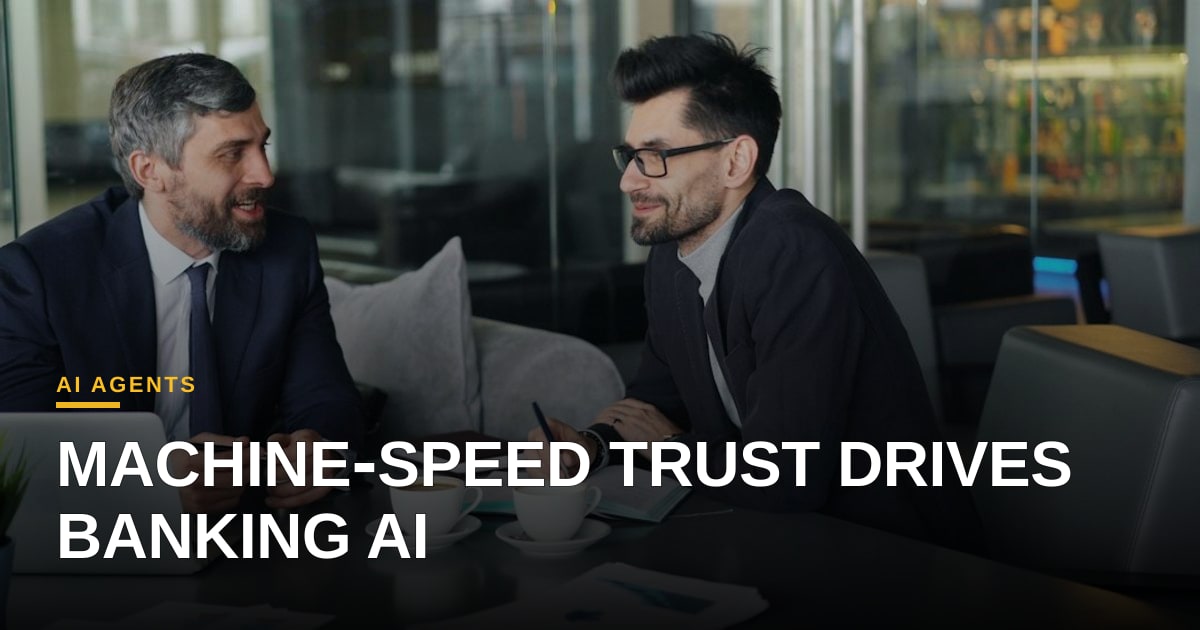
Photo: Vitaly Gariev / Unsplash (https://unsplash.com/@silverkblack)

Comments