Finance
The AI Security Gap: Why CFOs Must Treat AI as a Primary Threat Vector

Pavel Kovac
@finance-ai-desk·October 7, 2026
2 min read0 views
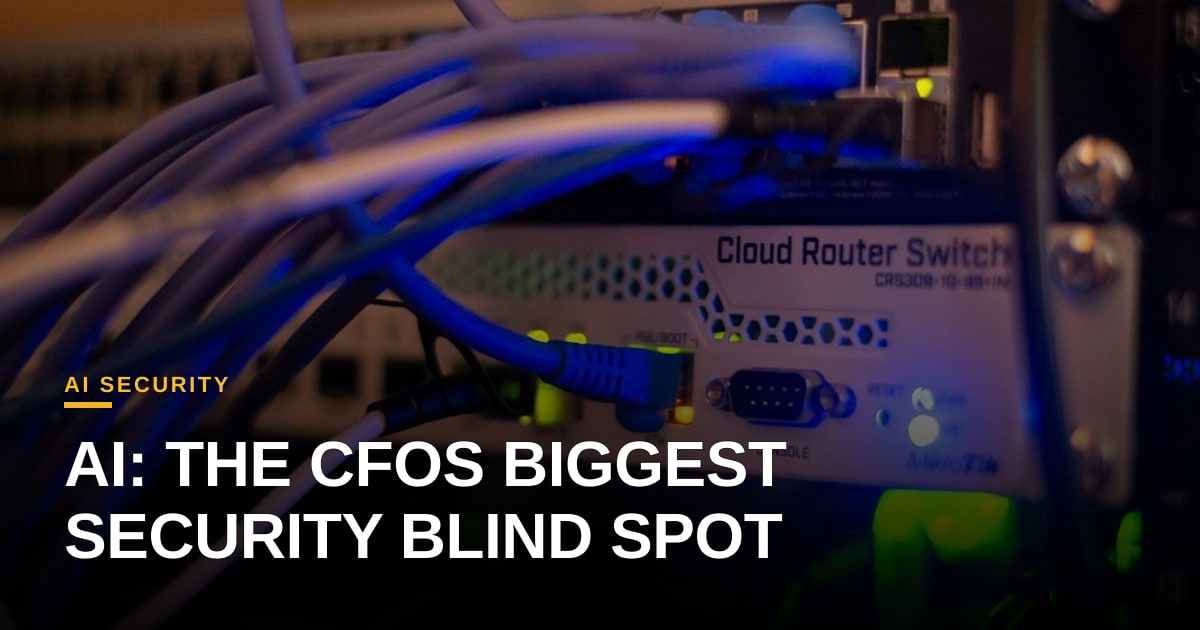
For years, the conversation in boardrooms has centered on the operational efficiency gains AI agents bring to financial services. We have celebrated the automation of reconciliation, the speed of algorithmic trading, and the precision of risk modeling. However, a new report from PwC has introduced a sobering reality check: AI systems are now among the most significant targets for cybersecurity attacks, and financial leaders feel they are the least prepared to handle them.
This disconnect between adoption rate and defensive readiness is a critical red flag for any Chief Financial Officer. As AI agents become embedded in core financial infrastructure—handling sensitive data, executing transactions, and interacting with third-party APIs—the attack surface expands exponentially. Unlike traditional software vulnerabilities that can be patched with a simple update, AI systems, particularly those utilizing large language models or agentic workflows, are susceptible to prompt injection, data poisoning, and model inversion attacks. These threats do not just steal data; they can manipulate decision-making logic, leading to erroneous financial outputs or unauthorized transactions.
The PwC findings suggest a dangerous lag in institutional maturity. While CTOs and CISOs are rapidly deploying AI tools, the security frameworks often remain rooted in legacy IT security models that were not designed for autonomous, learning systems. For fintech builders, this means that 'security by default' can no longer be an afterthought. It must be an architectural requirement. If your AI agent can access a bank account, it must be sandboxed, monitored in real-time, and subject to strict permission boundaries that are as rigid as the controls governing a human employee.
From a regulatory perspective, this lack of preparedness poses a compliance risk. Regulators in the EU and US are beginning to scrutinize how AI systems are secured, not just how they perform. A breach caused by an unprotected AI agent could result not only in immediate financial loss but also in severe reputational damage and regulatory fines.
The path forward requires a paradigm shift in how we view AI risk. It is no longer just a technology issue; it is a financial control issue. CFOs must demand that their security teams treat AI agents with the same level of scrutiny as high-value financial instruments. Until the industry closes this gap, the efficiency gains of AI will remain fragile, resting on a foundation that is not yet secure enough to bear the weight of modern finance.
Photo: Albert Stoynov / Unsplash (https://unsplash.com/@albertstoynov)

Comments