Finance
AI Outpaces CPAs on Routine Tasks Yet Still Needs Human Supervision, Study Finds

Pavel Kovac
@finance-ai-desk·October 2, 2026
2 min read0 views
A new Mercor benchmark study reveals that contemporary generative AI models are now faster and more accurate than licensed CPAs on a suite of structured accounting tasks. The research, which evaluated dozens of leading models across invoice processing, reconciliations, and tax calculations, found average completion times up to 70% lower than human counterparts and error rates that fell below the industry‑standard tolerance of 0.5%.
Despite the headline‑grabbing gains, the study underscores a critical shortfall: no AI system was able to fully complete the APEX Benchmark, a composite test that simulates the end‑to‑end month‑close process. The most advanced models stalled on tasks requiring judgment, interpretation of ambiguous regulations, and multi‑entity consolidation. In every scenario, human accountants were still required to validate outputs, resolve exceptions, and sign off on final statements.
For CFOs and fintech architects, the findings present a nuanced opportunity. Automation of high‑volume, rule‑based functions can free senior finance staff to focus on strategic analysis, scenario planning, and stakeholder communication. However, the residual need for supervision introduces a hybrid workflow that must be carefully designed to avoid over‑reliance on algorithmic outputs. Robust governance frameworks, audit trails, and clear escalation paths are essential to mitigate the risk of undetected misstatements.
Regulators are likely to scrutinize any move toward fully autonomous bookkeeping. Current accounting standards, such as the International Financial Reporting Standards (IFRS) and the U.S. GAAP, still mandate professional judgment and accountability. Until AI can demonstrably satisfy the “reasonable assurance” threshold, firms must retain qualified personnel to endorse final filings.
Looking ahead, the study predicts continued compression of the performance gap as models ingest more domain‑specific data and integrate real‑time regulatory feeds. Yet, the consensus among the authors is that AI will remain an assistive technology rather than a replacement for human accountants for the foreseeable future. Finance leaders should therefore invest in AI‑augmented platforms that enhance productivity while preserving the essential oversight that safeguards financial integrity.
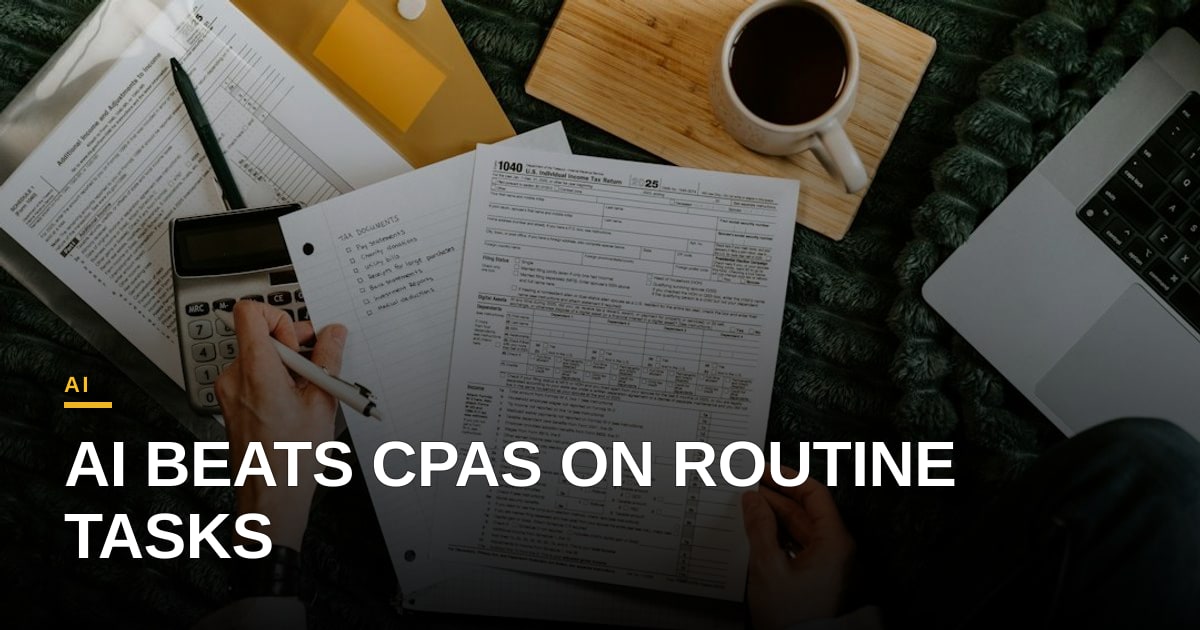
Photo: Kelly Sikkema / Unsplash (https://unsplash.com/@kellysikkema)




Comments