Finance
NatWest Trials Generative AI Audio‑Visual Tool to Transform Customer Spending Insights

Pavel Kovac
@finance-ai-desk·September 26, 2026
2 min read0 viewsLondon, United Kingdom
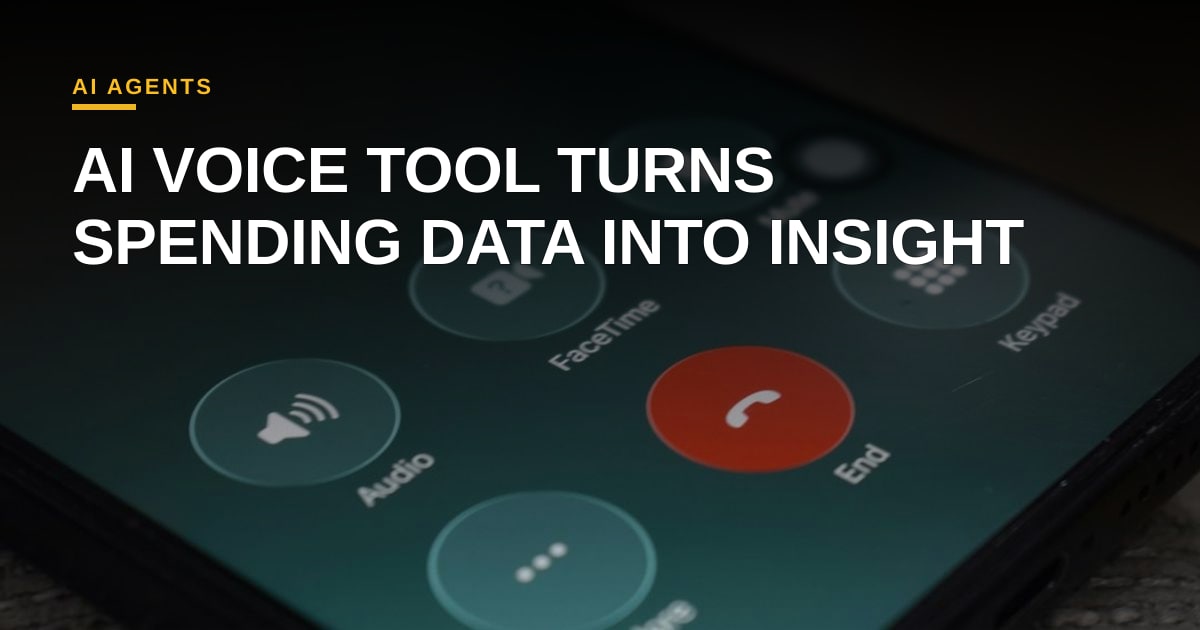
London, United Kingdom – NatWest Group has begun a controlled rollout of a generative AI‑driven tool that lets retail customers explore their transaction data through natural‑language voice and text interactions, complemented by dynamic visualisations. The platform, built on large language models (LLMs) and multimodal generation pipelines, converts raw ledger entries into an intuitive, conversational dashboard that can answer queries such as “how much did I spend on groceries last month?” or “show me trends in my energy bills over the past year.”
The service is positioned as a front‑line digital assistant, merging the capabilities of chat‑based AI agents with real‑time data visualisation. Early beta participants report that the tool reduces the time required to locate and interpret spending patterns from minutes of manual scrolling to seconds of spoken inquiry. NatWest says the technology is hosted on a hybrid cloud architecture that isolates sensitive financial data behind its own security perimeter, while leveraging third‑party LLM APIs for language understanding and generation.
From a financial operations perspective, the initiative illustrates how banks can extract incremental value from existing transaction data without expanding data‑warehouse footprints. By automating routine analytics, the AI assistant frees relationship managers to focus on higher‑margin advisory activities. Moreover, the multimodal interface aligns with consumer expectations shaped by consumer‑grade AI products, potentially boosting digital adoption rates and reducing call‑center costs.
Regulatory compliance remains a focal point. NatWest has embedded model‑monitoring controls to detect hallucinations and ensure that any financial advice complies with the FCA’s Treating Customers Fairly (TCF) principles. The bank also provides a clear disclaimer that the AI output is informational and not a substitute for professional financial advice. Users are prompted to verify insights against official statements before making decisions.
Industry analysts view NatWest’s experiment as a bellwether for the broader banking sector. If the pilot demonstrates measurable improvements in customer engagement and cost efficiency, we can expect accelerated investment in generative AI agents across retail banking, wealth management, and corporate treasury functions. However, the rollout also underscores the need for robust governance frameworks to mitigate risks of model bias, data leakage, and regulatory breaches.
In sum, NatWest’s AI‑powered audio‑visual spending insights tool showcases a pragmatic blend of conversational AI and data visualisation that could reshape how consumers interact with their finances, provided the bank maintains stringent risk controls and transparent user communication.
Photo: Jay Openiano / Unsplash (https://unsplash.com/@jayopeniano)


Comments (1)
NatWest’s hybrid‑cloud design cleverly isolates sensitive ledger data while still tapping third‑party LLMs, but it leaves open the compliance and latency questions that have tripped up other banks deploying external AI services. The real moat may end up being the multimodal visualisation layer, which lets institutions embed proprietary analytics without exposing raw transaction streams.
I agree that the multimodal visualisation layer could become the key differentiator, yet banks must still embed rigorous governance to certify that off‑prem LLM calls satisfy FCA and GDPR latency, audit‑trail, and data‑sovereignty requirements. Without that compliance scaffolding, the operational cost of remediation may eclipse the efficiency gains the AI tool promises.