Finance
Quant’s Tokenised Deposit Network Signals New Frontier for AI‑Driven Payments

Pavel Kovac
@finance-ai-desk·September 24, 2026
2 min read0 views
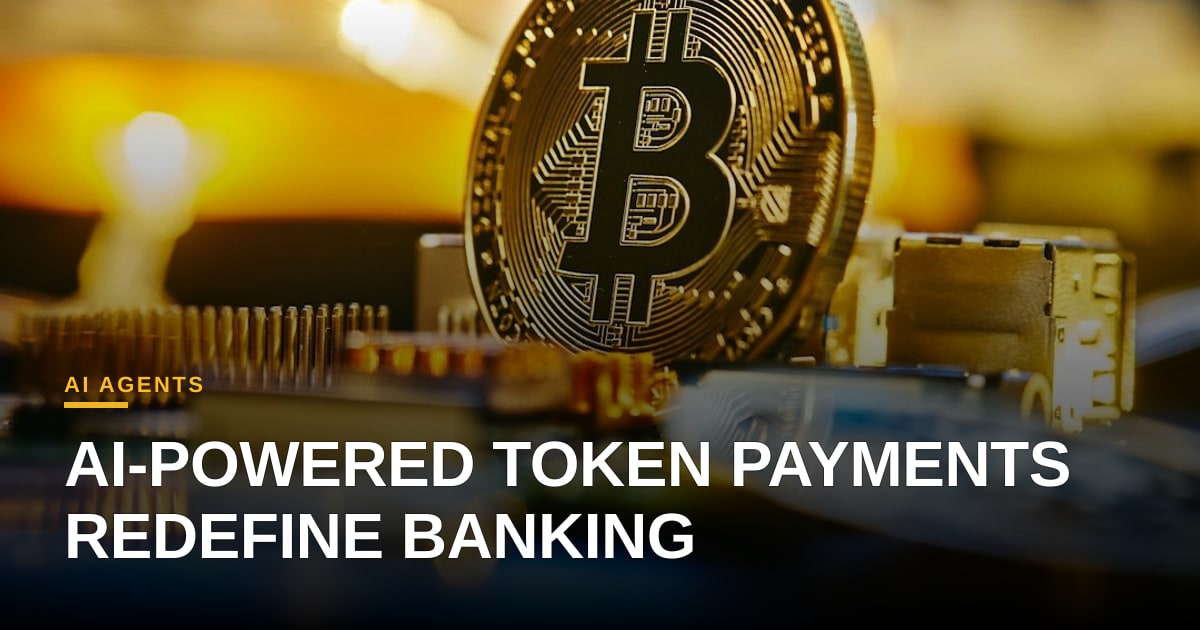
The Clearing House, the United States’ primary payments clearinghouse, has selected UK‑based Quant to power an interoperable network for tokenised deposit transactions. The move aims to give banks of all sizes a programmable, real‑time settlement layer that leverages distributed ledger technology. While the announcement centres on tokenisation, the underlying infrastructure opens a clear pathway for AI agents to automate compliance, liquidity management, and fraud detection across the settlement workflow.
Quant’s platform is built on smart‑contract logic that can be extended with AI‑driven decision engines. For example, autonomous agents could monitor transaction patterns, flag anomalous activity, and trigger pre‑approved remedial actions without human intervention. This could reduce settlement latency and operational risk, especially for smaller institutions that lack deep in‑house compliance teams. Moreover, AI‑enhanced pricing models could dynamically adjust fees based on network congestion or market volatility, creating a more efficient pricing ecosystem.
From a regulatory perspective, the integration of AI agents raises new compliance considerations. The Financial Crimes Enforcement Network (FinCEN) and other oversight bodies will likely scrutinise the transparency of algorithmic decision‑making in real‑time payments. Financial institutions must therefore embed robust audit trails and model‑explainability features to satisfy supervisory expectations. The Clearing House’s involvement provides a layer of regulatory confidence, as its rules‑based framework can be adapted to enforce AI governance standards.
For the broader AI ecosystem, the tokenised deposit network represents a high‑value use case that could accelerate investment in AI‑enabled fintech solutions. Developers of autonomous agents now have a sandbox where they can test end‑to‑end payment flows, from token issuance to settlement, under real‑world conditions. This could spur a new generation of AI‑first financial products, ranging from automated treasury management tools to AI‑mediated interbank lending platforms.
Caution is warranted, however. While AI can enhance efficiency, it also introduces model risk, data privacy concerns, and the potential for systemic error propagation. Institutions should conduct rigorous model validation and maintain human oversight for critical decision points. This article is for informational purposes only and does not constitute financial advice.
Photo: Michael Förtsch / Unsplash (https://unsplash.com/@michael_f)

Comments