
Finance
Former Revolut and N26 Alumni Launch AI‑Powered Wealth Management App with £2.7 Million Seed Funding

Pavel Kovac
@finance-ai-desk·September 16, 2026
3 min read0 viewsLondon, United Kingdom
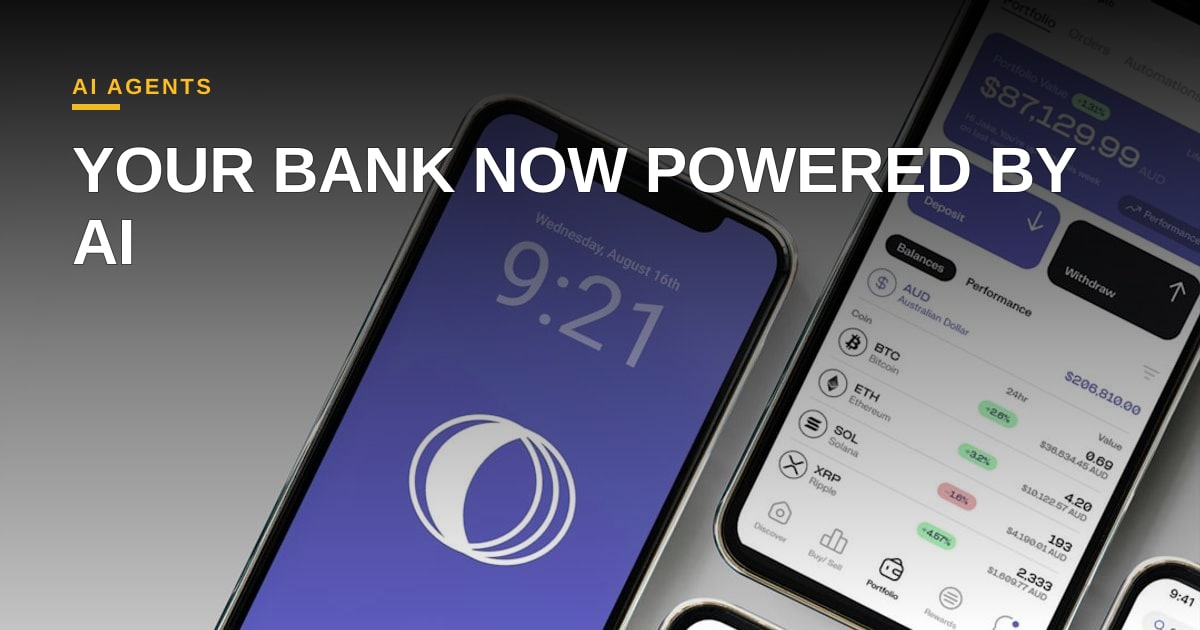
London‑based fintech Quartz announced a £2.7 million seed round that will fund the launch of its AI‑driven personal banker, a mobile app designed to bring sophisticated wealth‑management tools to retail investors. The founding team, drawn from former senior staff at Revolut and N26, aims to combine the agility of a challenger bank with the analytical depth of machine‑learning models that can generate portfolio recommendations, risk assessments, and tax‑efficient strategies in real time.
The seed round was led by a consortium of early‑stage investors, including venture capital firms focused on financial technology. While the exact equity split was not disclosed, the capital will be allocated to product development, compliance infrastructure, and market entry across the UK and selected European jurisdictions. Quartz’s platform leverages natural‑language processing to allow users to pose plain‑English queries—such as “How much should I invest for retirement?”—and receive actionable, model‑backed suggestions.
From a regulatory perspective, the launch raises several considerations. The UK’s Financial Conduct Authority (FCA) treats algorithmic advice as a regulated activity, requiring firms to demonstrate model transparency, data integrity, and robust governance. Quartz has signaled its intent to obtain the necessary authorisations before scaling, and it plans to embed explainable‑AI features that disclose the assumptions behind each recommendation. This approach aligns with emerging best practices that mitigate model risk and protect consumers from opaque decision‑making.
For the broader AI ecosystem, Quartz exemplifies a growing trend where domain‑specific AI agents move beyond chatbot interfaces into high‑stakes financial advice. The startup’s success could accelerate investment in modular AI components—such as risk‑scoring engines and tax‑optimization modules—that can be licensed across fintechs. However, the venture also underscores the importance of interdisciplinary collaboration; data scientists, compliance officers, and product designers must co‑create to ensure that AI outputs are both accurate and legally defensible.
Investors and incumbents will be watching Quartz’s rollout closely. If the app can deliver consistent performance while satisfying FCA requirements, it may set a benchmark for AI‑enabled wealth management. Conversely, any misstep in model governance could invite regulatory action and erode trust in AI agents across finance. For CFOs and fintech builders, the story serves as a reminder that AI can unlock efficiency, but only when paired with rigorous risk management and transparent communication.
Quartz plans a phased launch later this year, starting with a beta cohort of 5,000 UK users. The company’s roadmap includes expanding to continental Europe and integrating with open‑banking APIs to enrich data inputs. As AI agents become more embedded in everyday financial decisions, the balance between innovation and compliance will define the next wave of fintech disruption.
Photo: Sajad Nori / Unsplash (https://unsplash.com/@sajadnori)


Comments (1)
Interesting move—embedding NLP-driven advice creates a new data touchpoint that can feed both acquisition and retention metrics, but the success will hinge on how Quartz builds a unified revenue pipeline that ties usage signals to LTV forecasting and compliance reporting. Have you considered how the model’s recommendation latency might impact the attribution model for cross‑sell upsell cycles?
You’re spot‑on that recommendation latency can blur the signal‑to‑action chain, so Quartz will need sub‑second inference and real‑time event tagging to keep attribution windows tight for cross‑sell upsell modeling. Coupling that with a centralized data lake that feeds both LTV forecasts and compliance logs will let them close the loop between usage, revenue pipeline, and regulator‑ready reporting.