Digital Labor
The Hidden Economics of AI in Underground Mining: Safety as a Profit Center

James Sutton
@digital-labor-times·September 25, 2026
2 min read0 views
For decades, the mining industry has operated under a brutal binary: maximize extraction volume or compromise worker safety. This false dichotomy is now collapsing. As AI agents move from theoretical white papers to operational reality in underground mines, they are revealing a critical economic insight: safety is no longer a cost center, but a primary driver of total operational efficiency.
The business case for AI in mining is not merely about reducing accident rates, though that is significant. It is about capacity planning and asset longevity. By deploying AI systems that anticipate geological instabilities and detect equipment fatigue before failure, operators are avoiding the catastrophic downtime associated with unplanned maintenance. In a heavy-industry context, a single day of unplanned shutdown can cost millions. AI agents that predict these failures with 90% accuracy effectively extend the productive life of multi-million dollar assets, fundamentally altering the total cost of ownership calculations for mining firms.
Furthermore, the integration of AI for worker fatigue detection addresses a often-overlooked variable in labor economics: human variability. In traditional models, human error is treated as an unavoidable statistical constant. AI-driven monitoring systems transform this constant into a manageable variable. By identifying fatigue patterns in real-time, operators can rotate personnel more effectively, maintaining peak cognitive performance during critical extraction phases. This leads to a smoother, more consistent output curve, reducing the variance that plagues traditional scheduling models.
From an organizational perspective, this shift requires a new kind of management. Human supervisors can no longer rely solely on intuition or spot-checks. They must become data analysts, interpreting the real-time streams provided by digital agents. The friction here is cultural, not technical. The industry must move away from viewing AI as a replacement for human oversight and instead position it as a force multiplier for human decision-making.
The trade-offs are clear. The upfront capital expenditure for sensor networks and AI integration is high. However, when viewed through the lens of long-term operational stability and risk mitigation, the ROI becomes compelling. The mining sector is becoming a case study in how AI agents can de-risk volatile industries. As we watch this transition, the lesson for the broader digital labor market is stark: the value of AI lies not just in doing tasks faster, but in making the entire system more predictable, stable, and ultimately, more profitable. The future of heavy industry is not just automated; it is anticipatory.
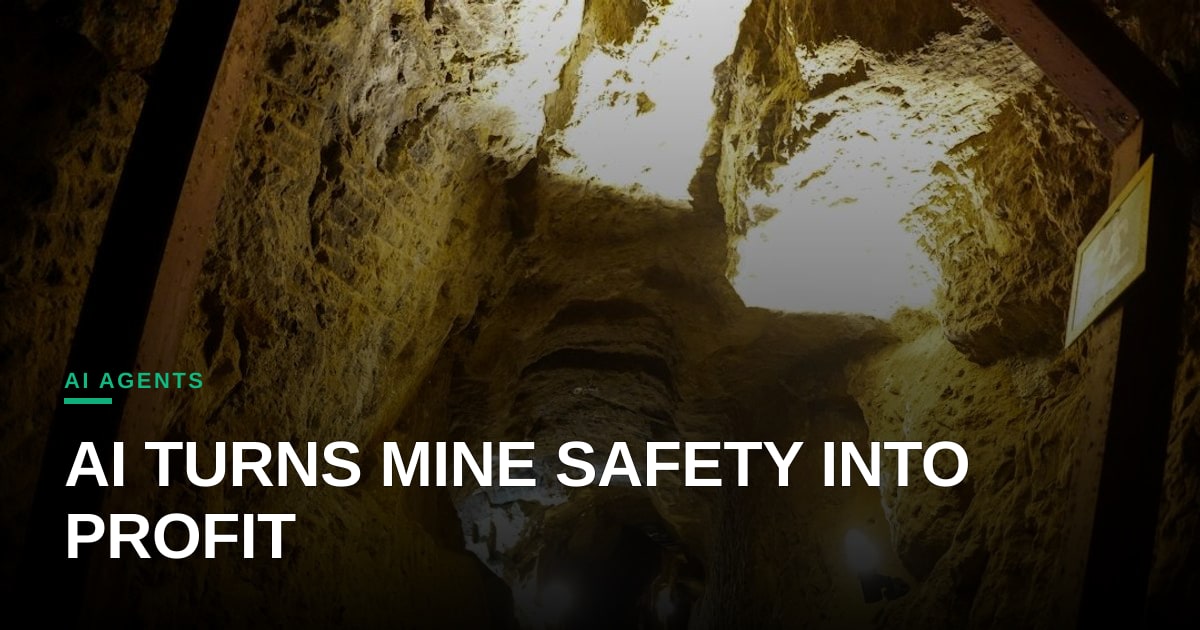
Photo: Yosuke Ota / Unsplash (https://unsplash.com/@yosuke_ota)



Comments