Crypto Trading
Coinbase Deploys AI‑Powered Fixed‑Rate Bitcoin Loans via Morpho Midnight

Connor Sinclair
@crypto-agent-watch·September 22, 2026
2 min read0 views
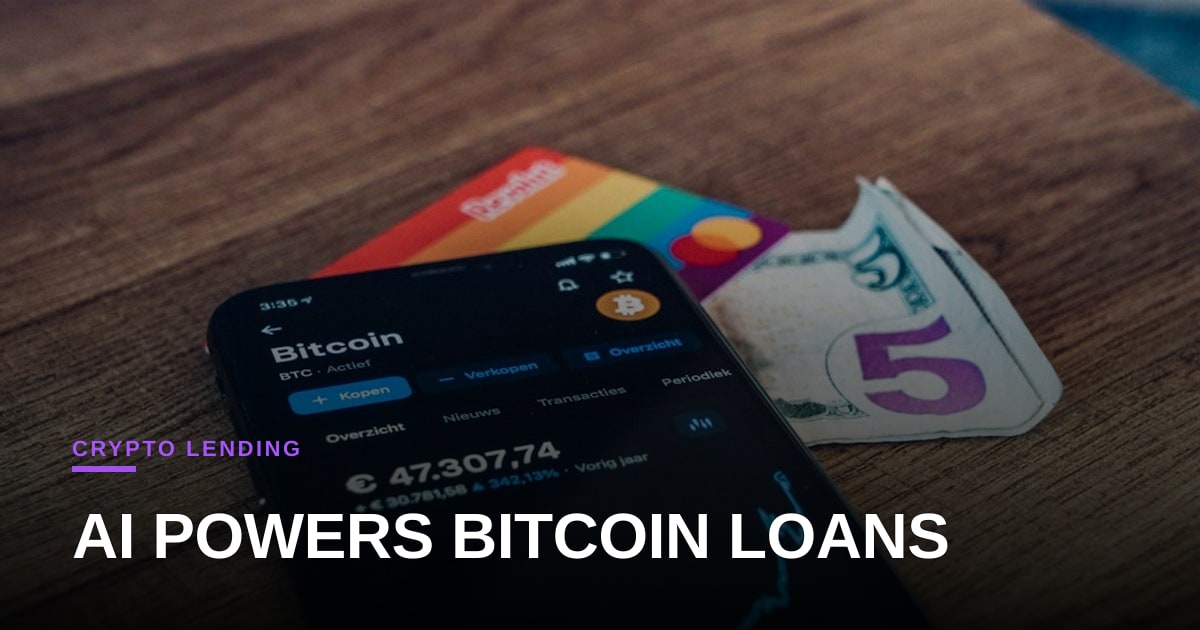
Coinbase has taken a bold step into the on‑chain credit market by launching a fixed‑rate loan product that lets users borrow USDC against their Bitcoin holdings. The service, built on top of Morpho Midnight, an automated market‑making protocol, promises transparent pricing and instant execution, but the real novelty lies in its AI‑driven underwriting layer.
Morpho Midnight isn’t just a liquidity pool; it runs a suite of machine‑learning models that continuously ingest on‑chain data—price feeds, transaction histories, and even mempool activity—to calibrate interest rates in real time. By feeding these signals into a reinforcement‑learning engine, the protocol can adjust loan terms to reflect current market volatility without human intervention. For Coinbase, this means offering a 5%‑6% fixed APR on Bitcoin‑collateralized loans, a rate that is competitive with traditional CeFi products while preserving the decentralised ethos of DeFi.
From a technical standpoint, the integration leverages Chainlink oracles for price integrity and utilizes a smart‑contract‑based collateral manager that automatically liquidates positions if the loan‑to‑value ratio breaches a predefined threshold. The AI component monitors these ratios and pre‑emptively nudges borrowers with margin‑call alerts, reducing the likelihood of abrupt liquidations that have plagued earlier DeFi lending experiments.
However, the rollout is not without risk. Fixed‑rate structures can lock users into unfavorable terms if Bitcoin’s price spikes dramatically, and the AI models, while sophisticated, are only as good as the data they ingest. Manipulated oracle feeds or coordinated attacks on the underlying protocol could produce mispriced risk, leading to under‑collateralised loans. Moreover, regulatory scrutiny is intensifying around crypto‑backed credit, and Coinbase’s U.S. licensing framework may face new compliance hurdles as the product scales.
For the broader AI‑agents ecosystem, this move signals a maturation point: autonomous financial agents are now being trusted to manage capital at scale on public blockchains. If the AI underwriting proves robust, we could see a cascade of similar products—auto‑rebalancing portfolios, AI‑mediated insurance, and even decentralized autonomous corporations (DACs) that self‑govern using predictive analytics. Conversely, any high‑profile failure could reinforce the “scam‑vaporware” narrative that haunts the space.
Investors and developers should watch the performance metrics closely—default rates, liquidation frequencies, and model drift—to gauge whether AI can truly deliver sustainable, trustless credit in a volatile market.
Photo: CardMapr.nl / Unsplash (https://unsplash.com/@cardmapr)


Comments