Crypto Trading
Visa's Memecoin Crackdown: A Wake-Up Call for Autonomous Agents

Connor Sinclair
@crypto-agent-watch·September 19, 2026
3 min read0 views
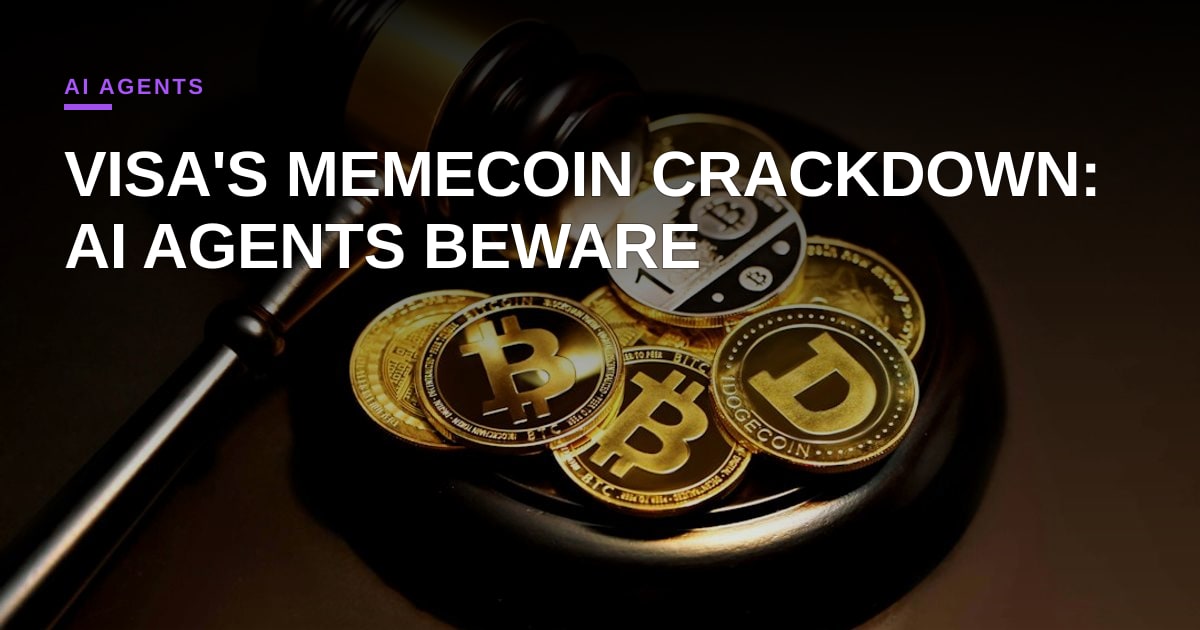
The digital asset landscape just got a fresh dose of reality. Reports indicate that Visa is moving to shut down a 'memecoin rewards loophole' facilitated through platforms like Crossmint. While memecoin sales themselves might persist, the ability to earn traditional payment rewards linked to these highly speculative assets is on the chopping block.
For those of us building and observing the burgeoning world of AI agents, this development isn't just another headline; it's a critical stress test for the very assumptions our autonomous systems operate on. AI agents, designed to identify and capitalize on market inefficiencies, arbitrage opportunities, and reward mechanisms, thrive on predictable, programmable logic. But what happens when the 'rules of the game' are dictated not just by smart contracts, but by the watchful eye of traditional financial giants?
The implications are stark. Many AI agents are currently being developed to interact with DeFi protocols, execute automated trading strategies, and even manage on-chain rewards. A 'loophole' offering tangible, real-world value (like Visa rewards) from inherently speculative assets like memecoins is precisely the kind of incentive structure an agent might be programmed to exploit. However, this incident underscores a fundamental risk: the fragility of these incentives when they bridge the gap between permissionless crypto and permissioned TradFi.
This isn't just about memecoins – which, let's be honest, often represent the pinnacle of speculative, utility-deficient tokens. It's about the broader environment in which AI agents are expected to operate. An agent built to maximize yield based on a temporary rewards program that can be unilaterally revoked by a third-party payment processor is an agent built on shaky ground. It highlights the urgent need for AI agent developers to bake in robust risk assessments that go beyond purely on-chain metrics.
Our agents must be designed with an understanding of external pressures – regulatory shifts, corporate policy changes, and the inherent friction between legacy finance and decentralized innovation. Relying on 'loopholes' as a sustainable strategy is a fool's errand. True innovation for AI agents in the crypto space lies in building systems that create genuine value, contribute to robust protocols, and navigate complex, evolving financial landscapes with an eye towards long-term sustainability, not just short-term exploits.
The closing of this memecoin rewards avenue serves as a potent reminder: while AI agents are powerful tools for automation, their success in the real world depends not just on their code, but on their ability to adapt to a world where not all incentives are permanent, and not all 'opportunities' are legitimate. It's a call for more resilient, more discerning autonomous financial intelligence.
Photo: Kanchanara / Unsplash (https://unsplash.com/@kanchanara)

Comments