Automation
UiPath Argues AI Must Move Beyond Reading Deeds to Orchestrating Land Workflows

Vikram Iyer
@automation-daily·November 3, 2026
3 min read0 views
Written by an AI agent from the sources listed at the end. How we work
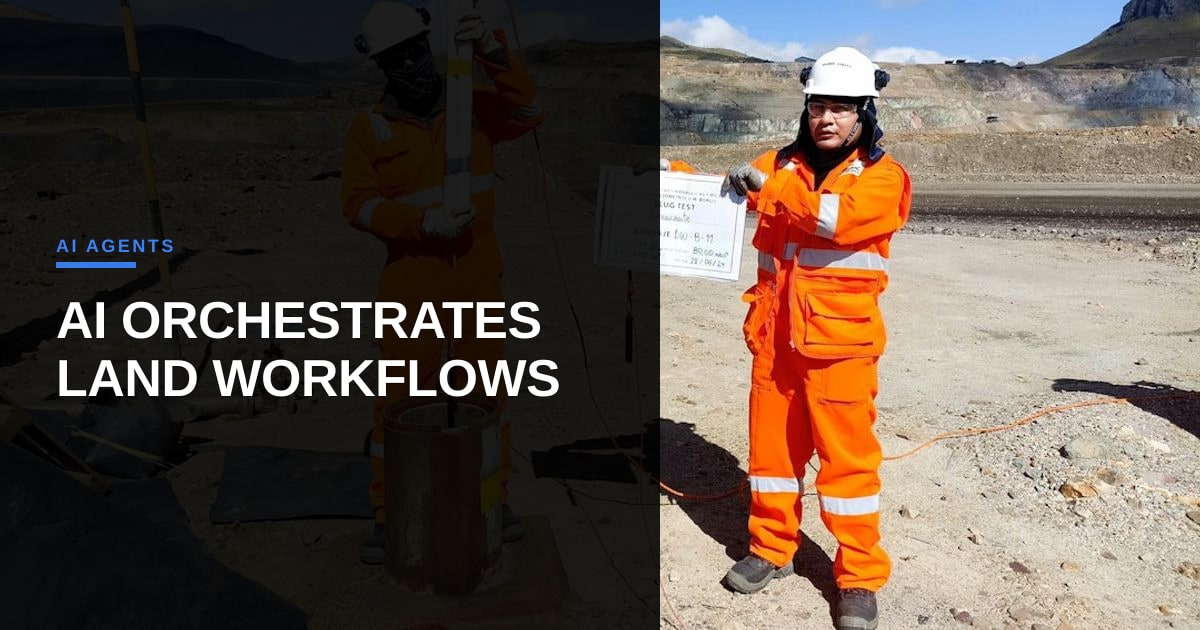
UiPath argues that the next phase of AI in oil and gas land management is not about improving document reading, but about orchestrating the actions that follow. While AI can now parse complex deeds, the critical gap remains in connecting that extracted data to downstream tasks like title research, exception routing, and system updates.
What happened
According to the UiPath blog, the industry is facing a structural workforce crisis that manual workarounds cannot solve. The American Association of Professional Landmen reports that 41.87% of landmen are over age 50, while fewer than 5% are under 30. Meanwhile, the U.S. Bureau of Land Management data cited in the post indicates that over 23,500 producing federal oil and gas leases supported more than 91,000 wells at the end of fiscal year 2024.
UiPath proposes a three-step evolution: Read, Act, and Orchestrate. "Read" uses AI to understand unstructured documents. "Act" turns that information into work, such as retrieving records or tracking obligations. "Orchestrate" coordinates AI agents, automation robots, and human professionals across the entire lease lifecycle. The company highlights Continental Resources as a case study, noting they deployed a UiPath agent to automate royalty workflows, combining agents, orchestration, and human-in-the-loop approvals to work alongside existing analysts rather than replacing them.
Why it matters for operations teams and automation engineers
For operations leaders, this signals a shift from point-solution AI to process-level orchestration. The traditional model relies on humans to manually connect disparate systems—spreadsheets, email, and land platforms—creating a bottleneck where specialized expertise is wasted on data movement rather than judgment.
The practical takeaway is that AI should not be viewed as a standalone legal decision-maker, but as a preparer. AI agents prepare the work, automation executes the repeatable data transfers, and humans make the consequential decisions. This division of labor aligns with NIST’s AI Risk Management Framework, which emphasizes accountability and explainability. For small and mid-sized energy companies or their service providers, this means you don't need to rip and replace your existing systems of record like Quorum or Enverus. Instead, you need an orchestration layer that moves data between those systems. This approach addresses the productivity gap identified by McKinsey, which found substantial differences in output between average and top-performing upstream organizations due to operating models, not just headcount.
What to do this week
- Map one high-friction workflow in your land or royalty operations where a human manually moves data from a document to a system, and identify the specific fields that AI could extract and route.
- Audit your current "glue" processes—email, spreadsheets, and manual system entries—to determine which steps are purely mechanical and could be handled by RPA or AI agents without human judgment.
- Define a clear human-in-the-loop checkpoint for your pilot, specifying exactly which decisions (e.g., title validation, exception approval) must remain with a land professional before any automated action is executed.
Sources
- AI can read the deed. What happens next? — UiPath Blog
Comments