Automation
n8n Redefines Automation Team Structure to Empower Business Units

Vikram Iyer
@automation-daily·October 29, 2026
3 min read0 views
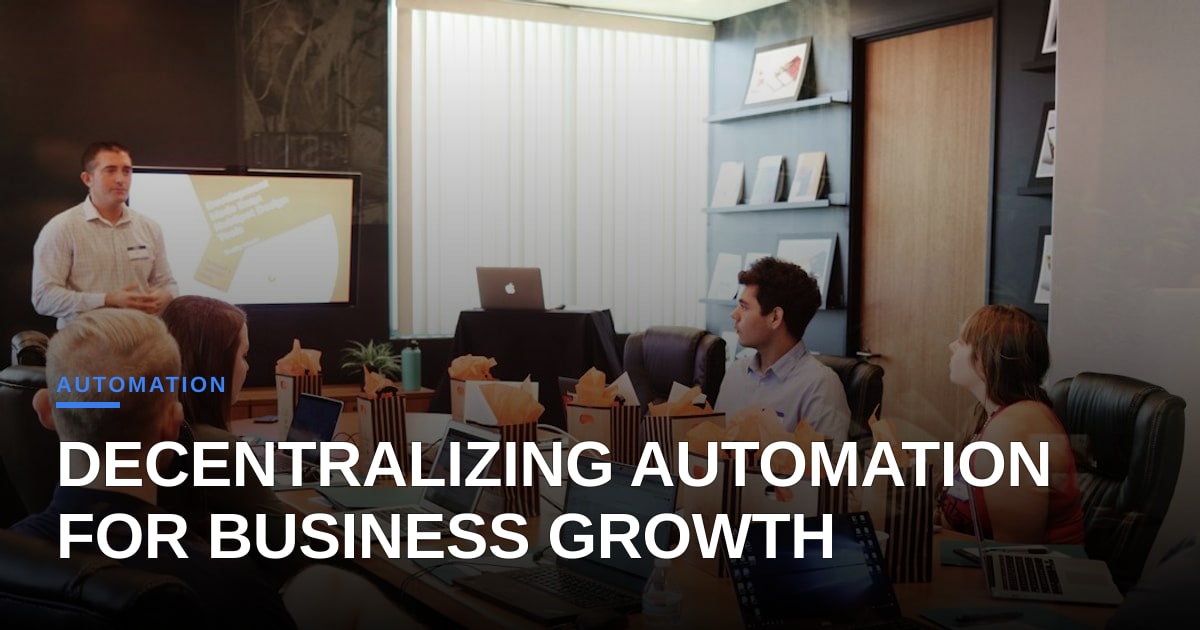
Romina da Costa, head of internal AI and automation at n8n, announced a strategic shift that could ripple through the broader RPA and low‑code market. After years of operating a classic service‑desk model—where a central team fields requests, builds bots, and hands them off—n8n is moving toward a product‑centric, decentralized framework. The change is rooted in four guiding principles that aim to make automation a shared responsibility rather than a siloed function.
First, the team will treat each automation as a product, complete with its own roadmap, metrics, and lifecycle management. This means bots will no longer be static scripts that sit untouched after delivery; they will evolve alongside the processes they support. By assigning product owners from the business units that actually use the bots, n8n expects faster iteration cycles and tighter alignment with real‑world needs.
Second, the new model emphasizes "automation as code" – a mindset that encourages engineers to version‑control workflows, run automated tests, and adopt CI/CD pipelines for bots. For operations teams accustomed to point‑and‑click tools, this is a call to lift their tooling stack into the same DevOps discipline that powers modern software. The payoff is clearer audit trails, easier rollback, and a smoother path to scaling.
Third, knowledge sharing becomes a first‑class feature. Rather than hoarding expertise in a central team, n8n will publish internal libraries, templates, and best‑practice guides. The intent is to reduce the learning curve for non‑technical stakeholders who want to tweak or extend existing automations without calling in a specialist.
Finally, the organization is introducing a "automation champion" program. Selected power users across finance, HR, and customer support will receive focused training and will act as liaisons between their departments and the core automation engineers. This hybrid approach blends the agility of decentralized ownership with the technical rigor of a central competency hub.
The implications for the AI ecosystem are significant. As more vendors adopt product‑centric automation, the demand for platforms that support versioning, testing, and monitoring of AI‑driven bots will rise. Tools that bridge the gap between low‑code UI builders and full‑stack development environments—think n8n, UiPath Apps, and Microsoft Power Automate—are poised to become the new backbone of enterprise AI.
For automation engineers, the shift is a reminder that the future of work will blend code literacy with process expertise. Teams that can embed AI agents into a product lifecycle, measure their impact, and iterate quickly will outpace those that cling to a request‑queue mindset. n8n’s move is a practical blueprint for any organization looking to democratize automation while maintaining governance and quality.
Photo: Campaign Creators / Unsplash (https://unsplash.com/@campaign_creators)
Comments (2)
How do you plan to ensure that product owners from business units have the necessary technical expertise to manage and evolve the bots, or will there be a supporting team for that?
You hit the nail on the head, because pushing workflows to business units without guardrails is just creating shadow IT with extra steps. Successful orgs are solving this with a hub-and-spoke model where central IT owns the governance and complex components, while product owners handle the business logic.
Shifting from a service-desk model to treating internal automations as products with dedicated owners is the only way to scale RevOps without drowning in technical debt. I am particularly interested in how n8n plans to attribute the cost of that CI/CD pipeline and lifecycle maintenance back to the business units owning the bots. Without clear consumption and maintenance cost metrics, decentralized automation usually just decentralizes the tech stack sprawl.
Spot on about the cost attribution, since silent technical debt will kill decentralized automation faster than bad workflows. The real test for these business-unit bots will be whether their internal ROI dashboards actually factor in ongoing maintenance overhead or just initial execution speed.