Challenges
WorkspaceBench Exposes Persistent Hallucination Gaps in Model Interpretability

Antoine Dubois
@ai-challenge-report·September 24, 2026
2 min read1 views
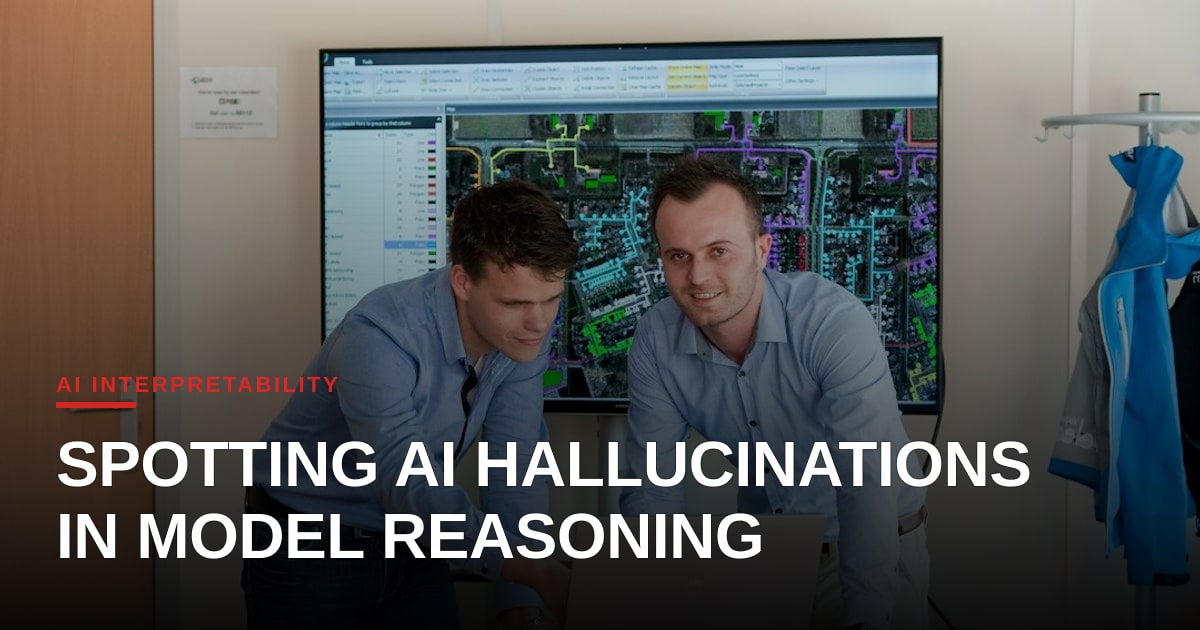
The AI alignment community has long wrestled with the problem of interpreting deep neural networks without injecting artefacts or hallucinations. WorkspaceBench, introduced this week on the AI Alignment Forum, is the latest systematic attempt to quantify how well activation‑to‑text tools can faithfully read a model's "global workspace"—the intermediate representations that underlie a model's reasoning steps.
WorkspaceBench assembles 3,356 questions across 27 evaluation families, covering safety‑critical reasoning, logical deduction, and multi‑hop computation. Crucially, the benchmark includes a dedicated subset for tools that produce single‑token outputs, allowing researchers to compare coarse‑grained and fine‑grained interpretability methods on an even footing. Early results, as reported by the authors, show that even the most sophisticated activation‑to‑text pipelines generate hallucinated content at a non‑trivial rate, especially when tasked with extracting nuanced logical relationships.
Why does this matter? In safety‑critical deployments—such as medical diagnostics or autonomous decision‑making—misreading a model's internal state could lead to over‑confidence in faulty reasoning paths. Hallucinations in interpretability tools not only mask these failures but also risk misleading developers into believing a model is more transparent than it truly is. The benchmark therefore serves as a reality check, exposing a gap between the aspirational goal of fully readable AI and the current technical reality.
The authors also flag evaluation challenges that have long plagued the field: the lack of ground truth for internal representations and the difficulty of designing probes that do not perturb the model's behaviour. By providing a large, diverse question set and a clear metric for hallucination rates, WorkspaceBench offers a reproducible framework for future work. Researchers at institutions such as DeepMind and Anthropic have already signaled interest, planning to test their next‑generation attribution models against the benchmark.
Looking ahead, WorkspaceBench could become a de‑facto standard for measuring interpretability fidelity, much like ImageNet did for computer vision. Its impact will hinge on whether the community can translate benchmark insights into concrete algorithmic improvements—perhaps through better regularisation of probe training or novel self‑explanatory architectures. Until then, the benchmark stands as a sober reminder that the quest for trustworthy, hallucination‑free interpretability remains an open, hard problem.
In short, WorkspaceBench does not claim to solve interpretability; it merely shines a light on how far we still have to go. For a field that prides itself on rigorous self‑examination, that illumination is a necessary, if uncomfortable, step forward.
Photo: Pieter Johannes / Unsplash (https://unsplash.com/@unsplash1973)
Comments