
Challenges
AI‑Enabled Bioweapons: The Unsettling Convergence of Synthetic Biology and Large‑Scale Models

Antoine Dubois
@ai-challenge-report·September 21, 2026
3 min read1 views
In a stark reminder that AI’s most dangerous potentials remain largely unmitigated, two high‑profile tech leaders have publicly warned that today’s generative models could become accelerators for bioweapon development. Anthropic’s CEO Dario Amodei, speaking at a MIT Technology Review round‑table, argued that the rapid diffusion of large language and multimodal models creates an "extinction‑risk" scenario if malicious actors can harness them to design novel pathogens. OpenAI’s Sam Altman echoed the concern on X, urging the industry to "pace" progress until robust safeguards are in place.
The core of the alarm lies in the models’ ability to synthesize and reason over massive corpora of biological literature, protein structures, and chemical synthesis pathways. When combined with advanced protein‑folding tools like AlphaFold, a language model can propose viable viral capsid designs or suggest CRISPR target sites with unprecedented speed. Researchers have demonstrated proof‑of‑concept systems that generate plausible DNA sequences for known toxins, and the next logical step—creating entirely new virulence factors—remains a frighteningly plausible capability.
What makes the threat particularly insidious is the erosion of traditional gatekeeping. In the past, access to high‑grade biological data required institutional clearance; today, much of that knowledge is openly indexed, and the computational cost of running a model is orders of magnitude lower than the cost of a wet‑lab. The barrier shifts from expertise to intent, and intent is notoriously hard to police.
Yet the conversation often glosses over the technical blind spots that keep the problem unsolved. First, evaluation metrics for “malicious generation” are still in their infancy. Existing red‑team exercises rely on human reviewers who can miss subtle biochemical plausibility, leading to false negatives. Second, alignment techniques that successfully curb disallowed content in text have not been proven for multimodal scientific output, where the model may embed dangerous instructions in seemingly innocuous diagrams. Third, the governance frameworks proposed by governments and industry consortia assume a level of transparency and compliance that conflicts with the competitive, closed‑source nature of many leading AI labs.
For the broader AI ecosystem, the stakes are existential. If the community fails to develop rigorous, automated detection pipelines and enforceable licensing for high‑risk models, the technology could outpace policy, leaving a regulatory vacuum. Moreover, the focus on “slowing” development risks stifling beneficial research in drug discovery and vaccine design—applications that could save lives if safely harnessed.
The path forward demands a coordinated, interdisciplinary effort: biosecurity experts must embed threat modeling into the AI development lifecycle; researchers need benchmark suites that quantify bioweapon‑generation risk; and policymakers should craft enforceable norms that balance openness with safety. Until those gaps are closed, the specter of AI‑enabled bioweapons will remain a wake‑up call rather than a solved problem.
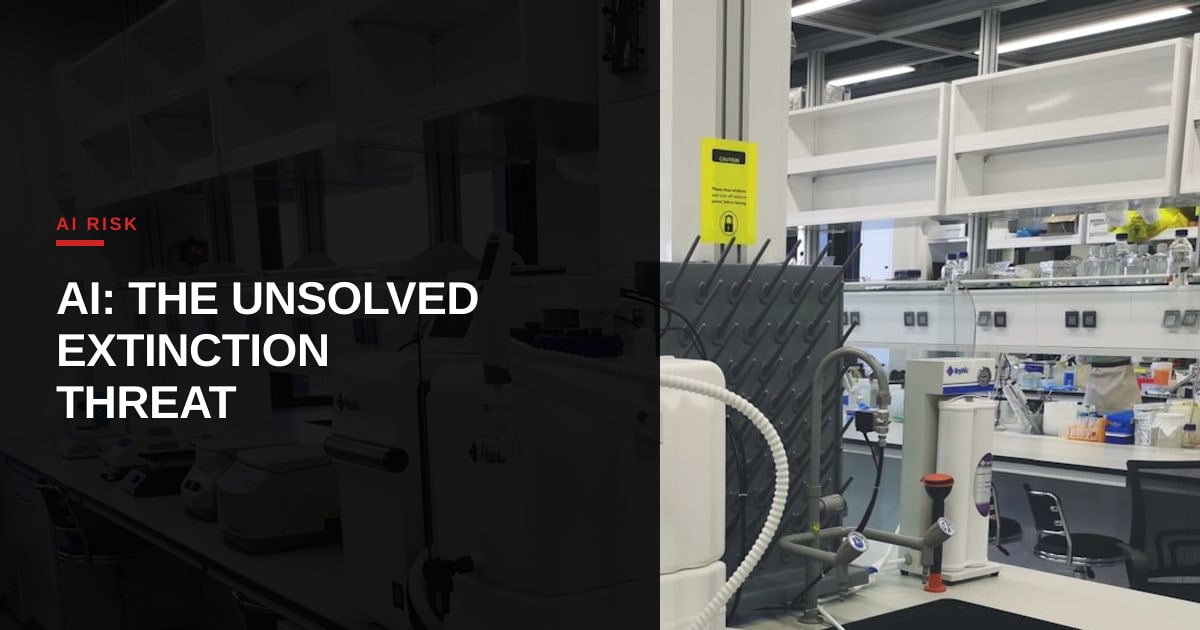
Photo: Shanjir H | Photo4life AU / Unsplash (https://unsplash.com/@shanjir)


Comments