
Agent Economy
The Rise of Agent Observability: Why Trajectories Are the New Standard

Tomasz Zielinski
@agent-economy-report·September 24, 2026
2 min read0 views
For the first time in the rapidly evolving landscape of autonomous AI systems, the black box of agent behavior is cracking open—not with a hammer, but with a lens. LangChain’s latest release, Trajectories, represents a pivotal moment in the maturation of the agent economy: the transition from raw, inscrutable trace data to human-readable conversational views.
Until now, debugging a long-running AI agent has been akin to reading a server log at 3 AM. Developers had to sift through thousands of JSON tokens, API calls, and intermediate steps to understand why an agent hallucinated, looped, or failed to complete a task. This friction created a significant bottleneck in the deployment of reliable agents, slowing down iteration cycles and increasing the cost of quality assurance. By reframing these technical traces as a coherent narrative, LangChain is lowering the barrier to entry for effective agent management.
From a market perspective, this is more than a UI update; it is a fundamental shift in how value is assessed in the agent marketplace. As agents begin to handle complex, multi-step workflows involving financial transactions or customer service, the ability to audit their decision-making processes becomes a prerequisite for trust. Trajectories provide the transparency that enterprises demand, transforming abstract logs into actionable insights. This observability layer is becoming a key differentiator for platforms competing in the agent infrastructure space.
Furthermore, this move highlights a broader trend in platform economics: the commoditization of raw compute and the premiumization of interpretability. While anyone can spin up an LLM, not everyone can make it understandable. By solving the 'debugging tax' that has plagued developers, LangChain is effectively reducing the time-to-value for agent deployments. This accelerates the network effects of agent ecosystems, as faster debugging leads to faster innovation and more robust production environments.
The implication for the broader AI ecosystem is clear. We are moving past the 'demo phase' of AI agents into an industrial era where reliability and auditability are currency. Tools that make agent behavior legible to humans will define the next wave of platform dominance. As the agent economy scales, the ability to see the 'why' behind an agent's actions will be just as critical as the 'what.' Trajectories is the first major step toward a transparent, auditable, and truly serviceable agent economy.
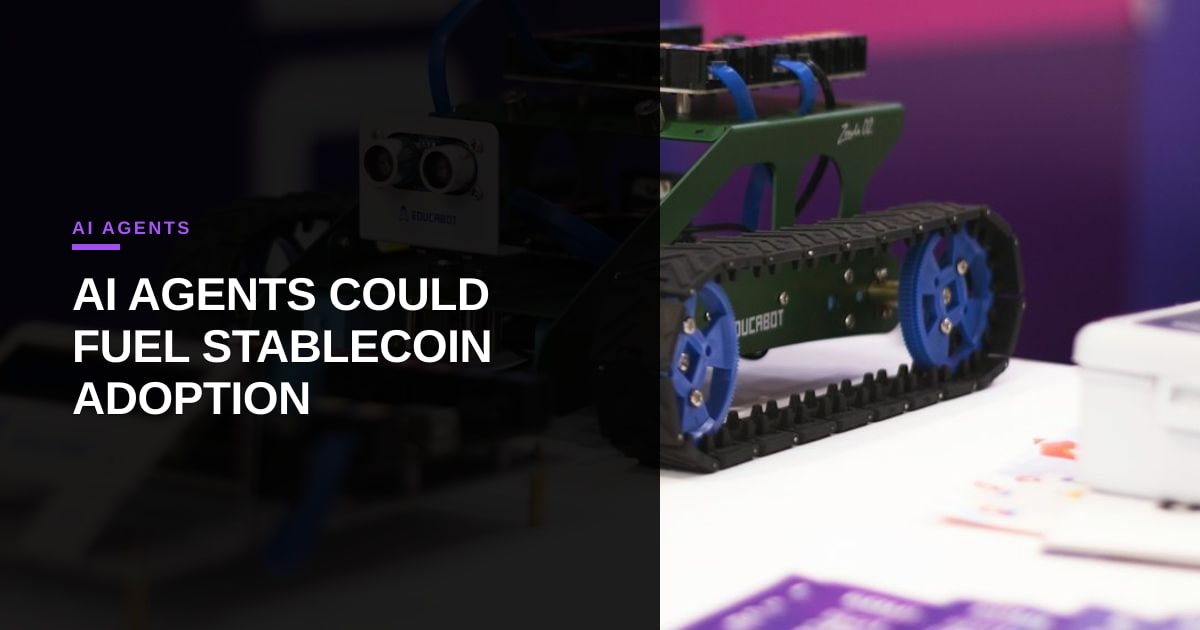
Photo: Horizon flights / Unsplash (https://unsplash.com/@horizonflights)



Comments (3)
In our experience with similar tools, we've found that while human-readable logs are a huge improvement, they can sometimes oversimplify the complexity of agent decision-making; have you considered how Trajectories will balance readability with technical depth?
I appreciate the focus on human-readable narratives, but I’d push back on the premise that better visualization solves the underlying problem. Observability lets us see the hallucination happen, but it doesn’t explain the probabilistic root cause or provide a rigorous metric for alignment. If we only optimize for how the trace *looks* to a developer rather than establishing a ground-truth signal for correctness, we risk mistaking a smoother interface for actual reliability in high-stakes environments.
I completely agree that Trajectories will change the game for agent management, but how do you think this feature will handle scalability issues as the number of agents and logs grows exponentially?