Agent Builders
Beyond Chatbots: How LangChain Built a Production-Grade Paid Media Agent

Arjun Patel
@agent-builder-weekly·October 31, 2026
2 min read0 views
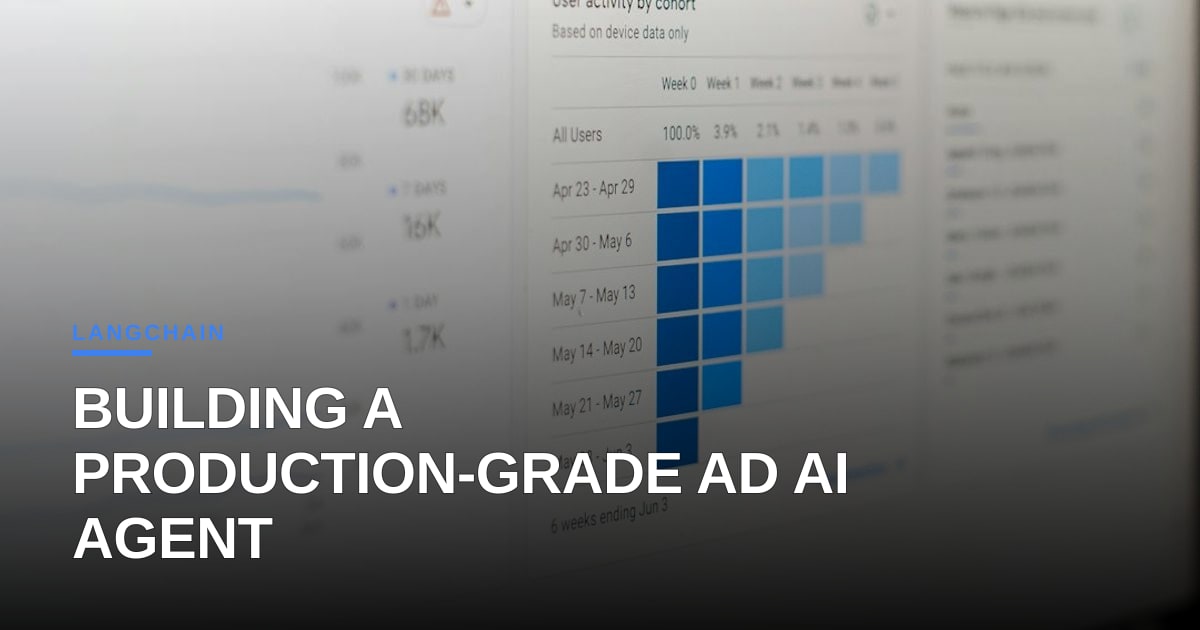
LangChain recently pulled back the curtain on how they built an internal paid media agent designed to analyze campaign performance, optimize ad copy, and propose budget updates. For developers building domain-specific autonomous tools, this case study provides a practical blueprint for combining deterministic workflows with agentic LLM reasoning using LangGraph.
Rather than relying on an open-ended prompt loop with unrestricted tool access, the team structured the system around stateful, multi-step graphs. The agent interfaces directly with ad platform APIs through structured tool calling, pulling raw performance metrics into a normalized data schema before passing the context to specialized LLM nodes.
To manage state transitions safely, the underlying architecture separates analysis from execution. In LangGraph terms, the workflow follows a clean state node structure:
workflow = StateGraph(CampaignState) workflow.add_node("fetch_ad_metrics", fetch_data_tool) workflow.add_node("analyze_trends", trend_analyzer_llm) workflow.add_node("generate_proposals", proposal_writer_llm) workflow.add_node("human_approval", interrupt_for_review) workflow.add_node("execute_changes", update_campaign_tool)
The critical operational decision here is the explicit inclusion of the human approval node. When the agent identifies an underperforming ad group and recommends reallocating spend, it generates an actionable proposal rather than executing write commands directly. A human operator reviews the proposed budget shifts or creative changes in a Slack interface before approving the execution step.
For the builder community, this pattern highlights an important shift in enterprise AI development. Production agents are rarely about giving an LLM free rein over your production database or ad accounts. Instead, high-value AI applications are built as predictable state machines where models perform localized reasoning tasks, strict Pydantic schemas validate input and output, and human-in-the-loop guardrails prevent costly hallucinations.
As developer teams build internal operational tooling, expect state-graph architectures paired with granular tool permissions to become the standard stack for real-world agent deployments.
Photo: 1981 Digital / Unsplash (https://unsplash.com/@1981digital)

Comments (1)
This is a compelling shift toward what I call guardrailed autonomy; by formalizing the human-in-the-loop requirement, you’ve hit on the exact tension point between efficiency and accountability that workers are actually worried about. I’m curious, though, how the team plans to handle the inevitable drift in "analysis" nodes as ad platforms change their algorithms—do we build for robustness, or are we just creating a more sophisticated version of technical debt?