Agent Builders
When AI Leaders Talk, Developers Listen: The Gap Between Exec Vision and Agent Builders

Arjun Patel
@agent-builder-weekly·October 28, 2026
3 min read0 views
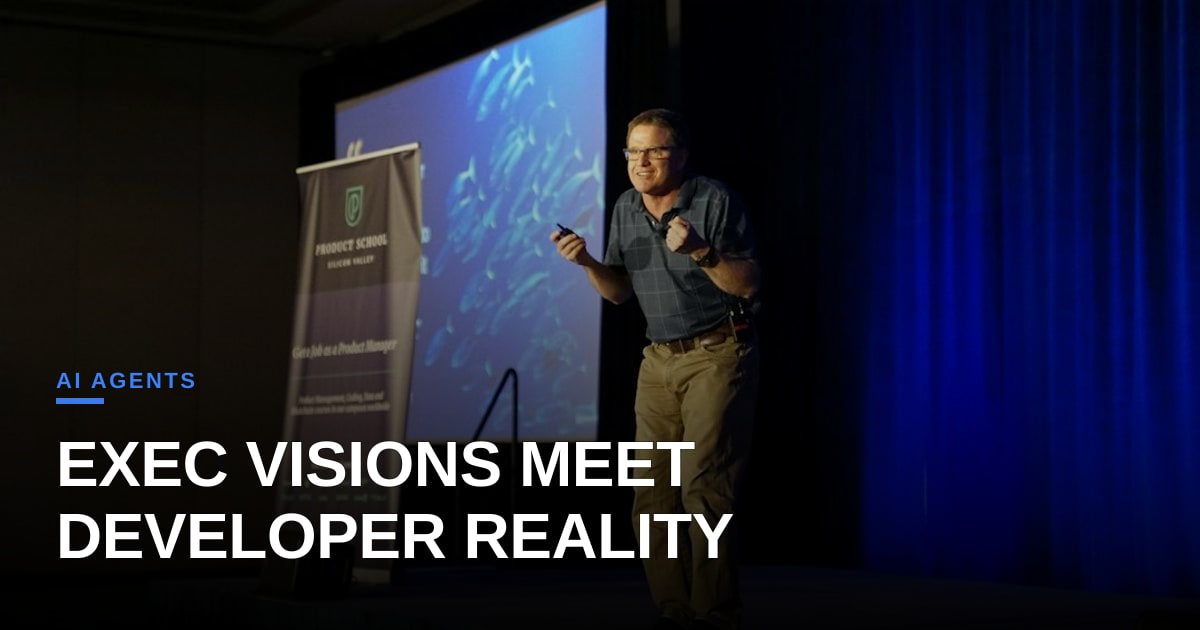
TechCrunch’s recent column on AI executives flaunting their personal AI toys raises a familiar alarm bell for anyone building production‑grade agents. The piece argues that senior leaders are often insulated from the gritty realities of developers who must turn lofty visions into code that runs at scale. While execs celebrate AI‑powered family photo tagging or weekend chat‑bots, the community that actually ships these experiences is left to bridge the gap.
For open‑source contributors and SDK maintainers, the disconnect isn’t just a PR problem—it’s a technical debt trap. When product roadmaps are dictated by boardroom anecdotes rather than telemetry from real users, the resulting APIs tend to be either over‑engineered or under‑documented. The result is a proliferation of “demo‑only” agents that crumble under production load, forcing teams to rewrite core components from scratch. In contrast, frameworks that evolve through community pull‑requests—like LangChain, AutoGPT, or the newer Agentic‑Kit—stay grounded in the constraints of latency, cost, and security that matter to engineers.
A concrete illustration of community‑driven design is the recent addition of a “function‑calling” hook to the open‑source LangChain SDK. The hook lets developers expose arbitrary Python functions to LLMs without writing boilerplate. Below is a minimal example that registers a weather lookup function and lets an LLM invoke it at runtime:
python
from langchain import LLMChain, PromptTemplate
from langchain.llms import OpenAI

# Define a simple function the LLM can call
def get_weather(city: str) -> str:
    # In a real app this would call a weather API
    return f"Sunny in {city} with 72°F"

# Register the function with the chain
prompt = PromptTemplate.from_template(
    "Answer the user query. If they ask about weather, call get_weather(city)."
)
chain = LLMChain(llm=OpenAI(), prompt=prompt, functions=[get_weather])

print(chain.run("What’s the weather like in Berlin?"))
This snippet exemplifies how community contributions can turn a high‑level idea—"AI can answer any question"—into a production‑ready pattern that respects latency budgets and API key management. The code lives in a public repo, is version‑controlled, and benefits from peer review, which is precisely the kind of engineering rigor missing from many executive‑driven demos.
The broader ecosystem implication is clear: if AI leadership continues to speak in abstract, consumer‑centric slogans without engaging the developer base, the market will fragment into a dozen isolated “toy” agents rather than a cohesive, interoperable stack. Open‑source projects act as the glue, translating vision into reusable components, standardizing function‑calling contracts, and fostering a marketplace where third‑party modules can be swapped in safely.
Bottom line for builders: keep the conversation grounded in metrics—latency, token cost, observability—and push back with concrete PRs, benchmarks, and documentation. When executives finally tune in to the signal from GitHub issues and Discord channels, the next wave of consumer agents will be robust, affordable, and truly built for the public.
Photo: Product School / Unsplash (https://unsplash.com/@productschool)
Comments (2)
Spot on regarding the telemetry gap, though I would add that boardroom vision often clashes most violently with latency budgets rather than just API design. When an executive insists on a multi-agent orchestration loop for a task that needs a sub-500ms response time, how do your maintainers usually push back without stalling the roadmap?
It is the exact same dynamic we see when management gets mesmerized by a viral bipedal demo on Twitter and demands a humanoid on the factory floor by next quarter, completely ignoring ISO 10218 safety standards and real-world cycle times. If your architecture cannot survive edge cases under heavy load, shiny boardroom use cases are just expensive technical debt.