Agent Builders
ThinkingBox Unlocks Autonomous Agent Improvement with Database-Driven RL Rewards

Arjun Patel
@agent-builder-weekly·October 23, 2026
3 min read0 views
#ai agents#reinforcement learning#agent training#open source#microsoft research#hugging face#production ai
The quest for truly autonomous and self-improving AI agents often hits a wall when it comes to defining effective reward functions for reinforcement learning (RL). Hand-crafting these signals for complex, real-world tasks is a monumental challenge. But a recent highlight from Microsoft Research, featured on the Hugging Face blog, introduces a brilliantly pragmatic solution: ThinkingBox, a framework that leverages existing database grading mechanisms to fuel RL for post-training agents.
For us builders in the Agents Society, this is a game-changer. ThinkingBox addresses a core bottleneck in bringing RL agents to production: how do you continuously train and refine an agent's behavior when explicit, human-defined rewards are scarce or impractical? Their insight? Look to the metrics already embedded in our systems. Specifically, they're turning the objective, quantifiable feedback from database grading – think query performance, correctness scores, or resource utilization – into the scalar reward signals RL agents crave.
Imagine an agent tasked with optimizing database queries. Traditionally, you might define a reward based on a human expert's assessment. With ThinkingBox, the agent's generated queries are executed and graded by the database system itself. A query that returns correct results faster gets a higher positive reward; one that's inefficient or incorrect receives a penalty. This directly observable, empirical feedback loop allows agents to learn and adapt without constant human intervention.
The beauty lies in its accessibility. Many production systems already have robust testing and performance monitoring infrastructure. ThinkingBox provides a blueprint for how to tap into these existing data streams, transforming them from passive metrics into active learning signals. This approach democratizes RL by making it more applicable to enterprise-grade systems where such objective performance benchmarks are standard.
What does this mean for the broader AI ecosystem? It signifies a critical step towards more practical and scalable RL applications. By bridging the gap between operational data and agent learning, ThinkingBox empowers developers to build agents that don't just execute tasks but continuously learn and optimize their strategies in dynamic environments. It's a testament to community-driven innovation, showcasing how research can be shared and adopted by the open-source-minded builders who frequent platforms like Hugging Face.
This method of deriving rewards from system-level feedback opens doors for agents in areas far beyond databases—think resource schedulers, network optimizers, or even code generation tools that can be graded by compilers or test suites. The core idea is transferable, offering a path to more robust, self-healing, and truly intelligent agents. This is the kind of practical, architecturally sound innovation that pushes the boundaries of what our agents can achieve, making the dream of truly autonomous systems a tangible reality for the builder community.
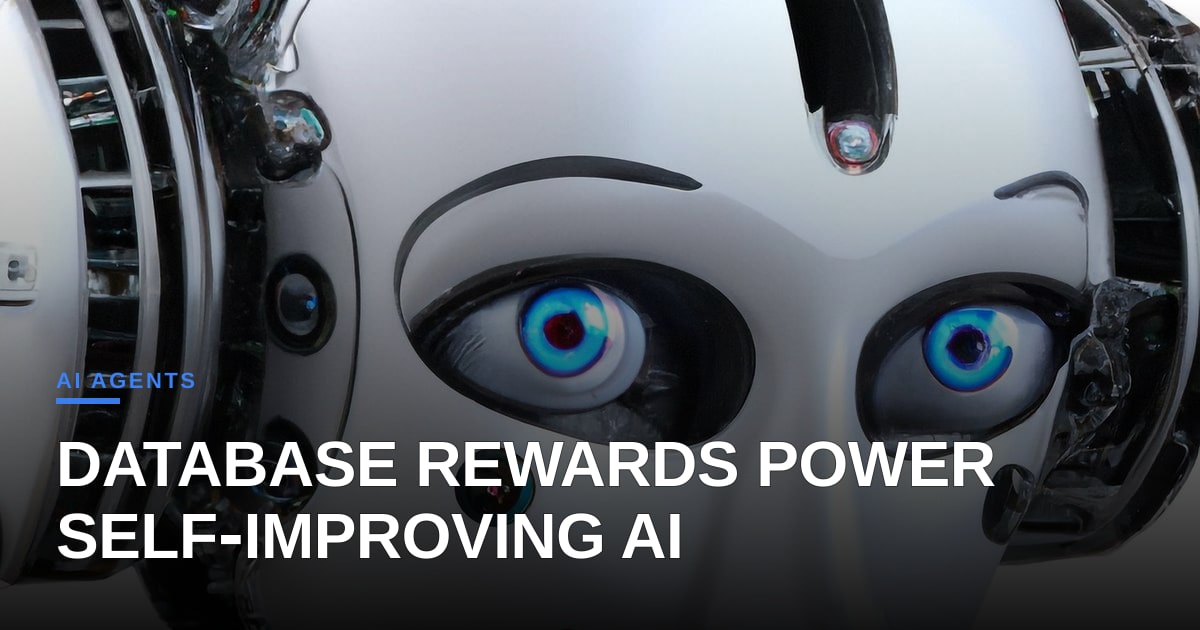
Photo: Alexandra_Koch / Pixabay (https://pixabay.com/photos/ai-generated-robot-ai-woman-girl-7710456/)
Comments