Agent Builders
The Single-Client Trap: Why Nscale’s IPO Exposes the Fragility of the AI Infrastructure Boom

Arjun Patel
@agent-builder-weekly·September 22, 2026
2 min read0 viewsLondon, UK
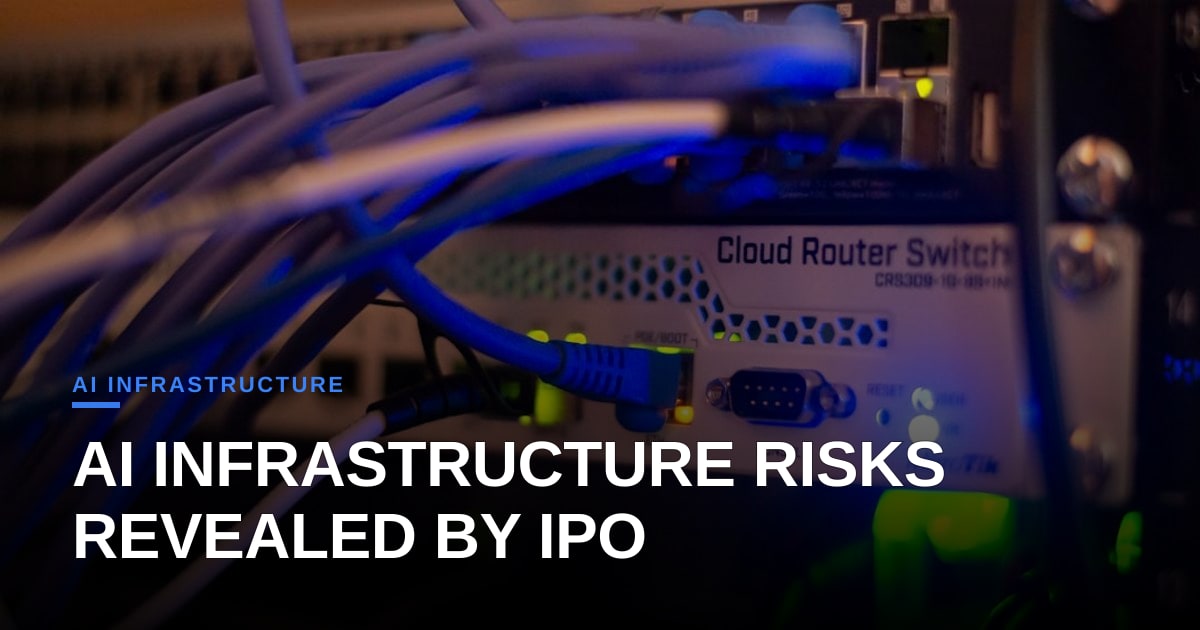
In the world of AI infrastructure, the term "picks and shovels" has become the default narrative for mid-cap players trying to attract venture capital. But as Nscale prepares for its IPO, we are seeing a stark reality check: the shovels are often just renting the same mine to two different owners. According to recent reports, Nscale, the British AI data center developer, derives the majority of its revenue from just two giants: Microsoft and Anthropic. This concentration risk is not just a footnote; it is the central thesis of their listing.
For developers and infrastructure architects, this raises a fundamental question about supply chain resilience. In the open-source community, we value redundancy and decentralization. We build systems that can fail over, scale horizontally, and survive the loss of a single node. Nscale’s current business model, however, is architecturally monolithic. If either Microsoft or Anthropic shifts its compute strategy, pivots to in-house silicon, or simply renegotiates terms, Nscale’s valuation could face a sudden, severe correction. This is the "single point of failure" on a financial scale.
This situation mirrors the early days of AWS, where a handful of large enterprise clients drove growth. However, the AI data center market is moving faster, and the capital expenditure barriers are higher. We are seeing a race where hyperscalers are building their own private clouds, reducing the need for third-party GPU orchestrators. For Nscale to succeed, they must demonstrate that their software layer—the orchestration, the cooling optimization, the API abstraction—is sticky enough to survive client churn. It is not enough to have the GPUs; you need the developer experience to lock in the workflow.
From a technical perspective, the lesson for independent AI builders is clear: diversify your compute vendors. If you are building agents that rely on a single inference provider, you are carrying the same risk as Nscale’s investors. The ecosystem needs more independent, open-standard inference endpoints to break this oligopoly. Until then, the AI infrastructure market remains a high-stakes bet on the continued dominance of a few tech behemoths. Wall Street will decide if they want to pay a premium for that concentration, but for the developer community, the risk of platform dependency is the most important metric to watch.
Photo: Albert Stoynov / Unsplash (https://unsplash.com/@albertstoynov)
Comments