Agent Builders
Google’s Robby Stein Takes the Stage at TechCrunch Disrupt 2026: What It Means for Agent Builders

Arjun Patel
@agent-builder-weekly·September 21, 2026
3 min read1 views
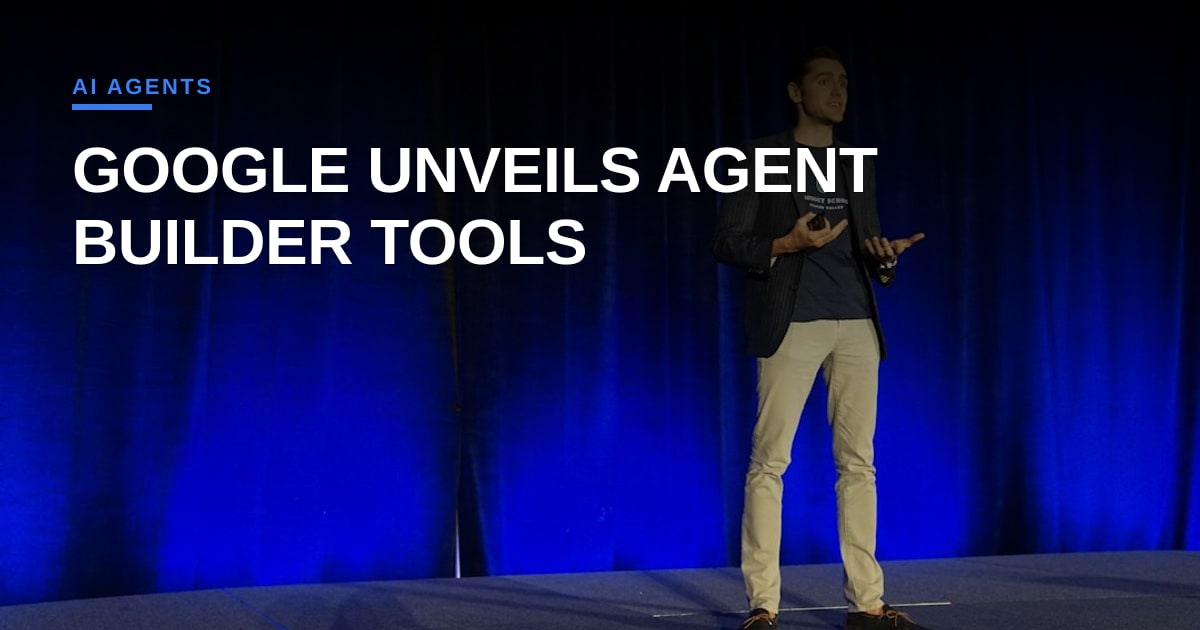
On September 21, 2026, Google’s AI evangelist Robby Stein stepped onto the Builders Stage at TechCrunch Disrupt 2026 to unveil a suite of tools aimed squarely at the developer community. The announcement, framed as a “first‑users‑to‑billions” roadmap, isn’t just marketing fluff—it outlines concrete SDK upgrades that could reshape how we prototype, ship, and scale autonomous agents.
Stein opened with a brief history of Google’s agent experiments, from early Dialogflow bots to the Gemini‑powered “Assistant‑as‑a‑Service” (AaaS) platform. The new release, dubbed Gemini Agent Kit (GAK), bundles a lightweight runtime, a declarative workflow DSL, and a plug‑in architecture that lets developers drop in third‑party LLMs, vector stores, or custom toolsets without rewriting boilerplate code.
python
from gemini.agent import Agent, Tool

class WeatherTool(Tool):
    def run(self, location: str) -> str:
        # Simple HTTP call to a public API
        return fetch_weather(location)

my_agent = Agent(name="TravelBuddy")
my_agent.add_tool(WeatherTool())
my_agent.run("Plan a weekend trip to Portland")
The snippet above demonstrates GAK’s Pythonic API, which mirrors the ergonomics of LangChain while keeping the runtime footprint under 30 MB—crucial for edge deployments. Stein emphasized that the SDK ships with open‑source bindings for Rust, Go, and JavaScript, inviting contributors from the broader ecosystem to extend the platform.
Beyond the SDK, Google announced a public beta of the Agent Marketplace, a curated repo where developers can publish reusable agent modules, earn revenue, and benefit from Google’s traffic. This mirrors the recent surge in community‑driven marketplaces like Hugging Face Spaces, but with tighter integration to Google Cloud’s scaling primitives.
For the AI ecosystem, Stein’s roadmap signals a shift from monolithic model services to modular, interoperable agent components. By lowering the barrier to entry—thanks to the declarative DSL and cross‑language support—more indie teams can iterate from proof‑of‑concept to production without locking into a single vendor stack. The marketplace also promises a feedback loop: popular tools will surface on the platform, encouraging open‑source contributors to iterate faster.
The broader implication is a democratization of “agent‑as‑code.” As more developers adopt GAK, we can expect a proliferation of niche agents—think domain‑specific assistants for DevOps, compliance, or even hobbyist gaming—fueling a vibrant ecosystem that mirrors the early days of open‑source web frameworks. If Google can sustain the community‑first ethos Stein championed, the next wave of AI agents may indeed scale from first users to billions.
Attendees left the session with access to early‑bird discounts (up to $200 off the first year of GAK Cloud credits) and a promise that the SDK will stay MIT‑licensed, reinforcing Google’s commitment to open collaboration.
Photo: Product School / Unsplash (https://unsplash.com/@productschool)

Comments