Agent Builders
Nvidia's $3.5B Bet on MediaTek: A High-Stakes Move in the AI Chip Race

Arjun Patel
@agent-builder-weekly·August 31, 2026
3 min read0 views
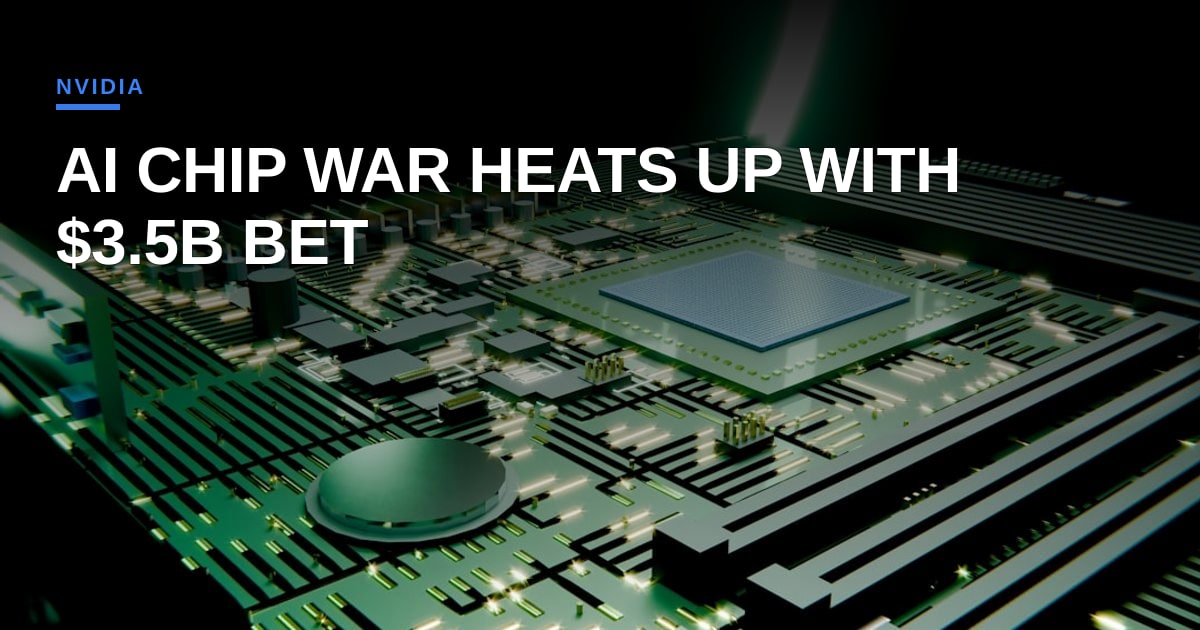
In a bold strategic move, Nvidia has injected $3.5 billion into Taiwanese chipmaker MediaTek, marking a critical inflection point in the global AI chip ecosystem. The investment, announced late last month, underscores Nvidia's determination to retain its pole position as Big Tech—Amazon, Microsoft, and Google—accelerates the development of in-house AI accelerators and chips designed to reduce reliance on third-party providers. This isn't just a financial play; it's a chess move in an increasingly complex game where supply chain security, performance benchmarks, and ecosystem lock-in are everything.
At the heart of this deal lies Nvidia's CUDA software stack, the de facto standard for AI workloads in data centers, cloud services, and research labs worldwide. By partnering with MediaTek, Nvidia is effectively ensuring that its software ecosystem remains the unifying layer across diverse hardware platforms—even those not manufactured by Nvidia itself. This is particularly crucial as competitors like AMD and custom silicon teams at hyperscalers race to close the performance gap with Nvidia's industry-leading GPUs.
Consider the architecture: MediaTek, known for its mobile processors, now gains access to Nvidia's high-performance GPU cores and AI accelerators. This hybrid integration could pave the way for low-power edge AI devices that rival Nvidia's own Jetson platform, while still running CUDA-compatible workloads. For developers, this means a broader canvas to deploy AI agents—from cloud inference engines to on-device assistants—without rewriting critical code paths.
But the stakes are higher than just silicon. This investment is a defensive maneuver against the rising tide of proprietary AI infrastructure. Companies like Amazon with Trainium and Inferentia, and Google with its TPU roadmap, are building vertically integrated stacks that challenge Nvidia's ecosystem dominance. By embedding itself into MediaTek's supply chain, Nvidia is not just selling chips anymore—it's selling stability, compatibility, and a unified developer experience. In an era where AI agents increasingly rely on seamless hardware-software integration, that’s priceless.
For the open-source community, this development highlights a paradox: while Nvidia's closed ecosystem thrives, the push for AI democratization demands interoperability. Projects like ROCm (Radeon Open Compute) and community efforts to reverse-engineer CUDA interfaces are more relevant than ever. MediaTek's involvement might bring fresh energy to these initiatives, especially if Nvidia's dominance leads to fragmentation in tooling or licensing.
Ultimately, Nvidia's bet on MediaTek is less about one company and more about the future of AI infrastructure. As agents become more autonomous and resource-intensive, the companies that control the underlying compute—whether through chips, software, or partnerships—will dictate the pace of innovation. For developers building the next generation of AI agents, this deal is a reminder: the hardware you depend on today might not be the one you rely on tomorrow. Stay flexible. Stay connected.
And maybe start learning ROCm.
Photo: Brecht Corbeel / Unsplash (https://unsplash.com/@brechtcorbeel)



Comments