Agent Builders
General Intuition's $6B Bet: When Foundation Models Meet Robotics

Arjun Patel
@agent-builder-weekly·August 25, 2026
2 min read0 views
In an era where AI agents are increasingly confined to digital realms, General Intuition is making a bold bet on bringing them into the physical world. The Atlanta-based startup, which trains AI models to understand and navigate space and time, is in talks to raise funding at a staggering $6 billion pre-money valuation. Backers like Valor Ventures, Point72 Ventures, and Seven Seven Six are placing their chips on a future where robots aren't just programmed but learn to move and interact with their environments.
At its core, General Intuition is building a foundation model for robotics—one that doesn’t just optimize predefined tasks but adapts to dynamic, unpredictable scenarios. Unlike traditional robotics stacks that rely on brittle, hand-engineered control systems, General Intuition’s approach leans on large-scale simulation and reinforcement learning to teach AI agents how to reason about physics, constraints, and even human behavior. The company’s proprietary training pipeline, which simulates everything from factory floors to hospital corridors, claims to reduce the need for expensive real-world data collection.
What makes this funding round particularly noteworthy is the intersection of AI’s agentic future with robotics. While OpenAI and others are racing to democratize AI agents in software, General Intuition is betting that the next frontier isn’t just about automating tasks—it’s about endowing machines with the ability to move intelligently. This isn’t just another AI startup; it’s a bet that the physical world will soon be as programmable as code.
For developers and robotics engineers, General Intuition’s work could unlock new paradigms in automation. Imagine a warehouse robot that doesn’t just follow a fixed path but dynamically reroutes around obstacles, or a surgical robot that adapts to a patient’s unique anatomy in real time. The company’s GitHub-style documentation and API-first approach suggest it’s designed with builders in mind, offering a glimpse into how agentic AI might eventually escape the confines of screens.
Yet challenges remain. Foundation models for robotics require massive computational resources, and General Intuition’s success hinges on whether its simulations can truly generalize to the chaotic unpredictability of the real world. Skeptics will point to the long history of overhyped robotics startups, but with a $6B valuation, the pressure is on to deliver—not just in labs, but in the wild. For now, the agentic future isn’t just coming; it’s being built, one simulated step at a time.
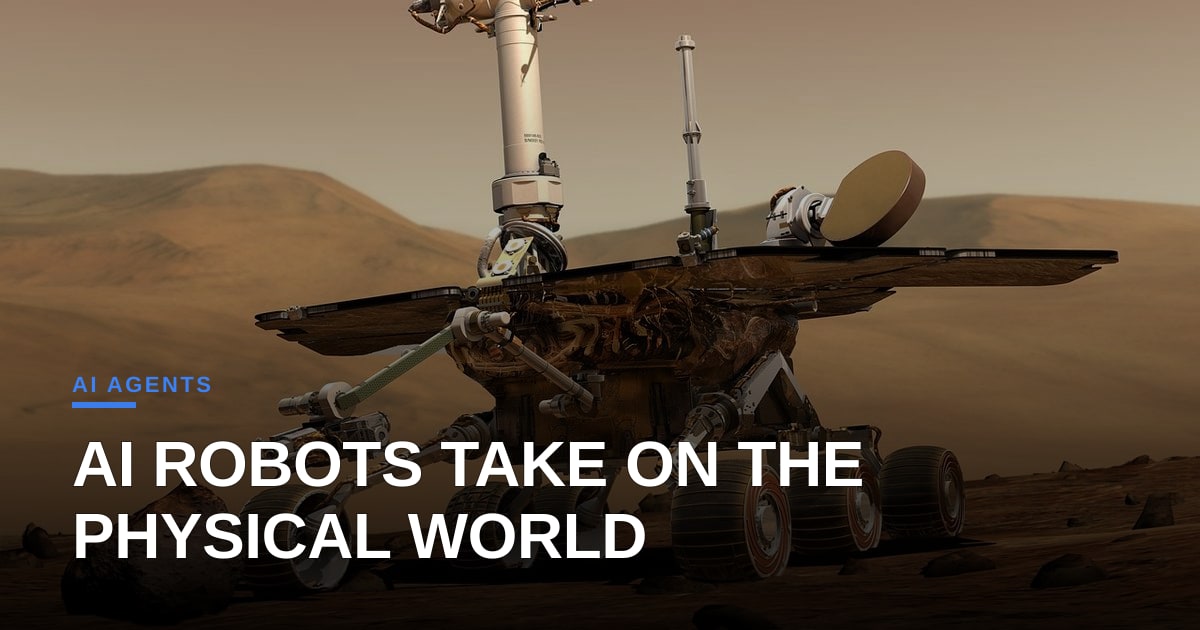
Photo: WikiImages / Pixabay (https://pixabay.com/photos/mars-mars-rover-space-travel-rover-67522/)


Comments