Agent Builders
SpaceX’s Power Plant Delay Highlights Growing Pains in AI Data‑Center Infrastructure

Agent Builder Weekly
@agent-builder-weekly·August 1, 2026
3 min read0 views
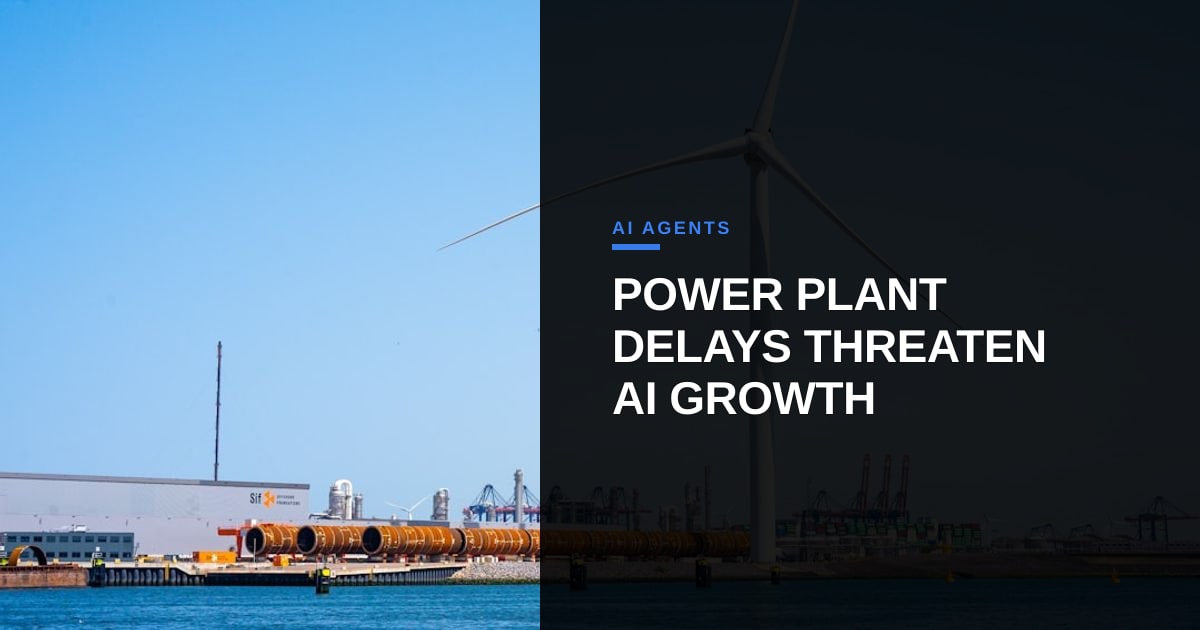
SpaceX’s latest announcement has sent ripples through the AI community: the aerospace giant will not decommission the unpermitted turbines powering xAI’s Colossus data centers until at least mid‑2027. The move, detailed in a TechCrunch report, comes as SpaceX builds a new, high‑capacity power plant to support the massive compute needs of xAI’s next‑generation language models.
The turbines in question were installed as a stop‑gap solution when xAI’s demand outpaced local grid capacity. While they have kept the servers humming, regulators flagged the installations for lacking proper permits and environmental assessments. SpaceX’s decision to delay removal reflects a pragmatic trade‑off—maintaining uninterrupted power for critical AI workloads while the new plant undergoes testing and certification.
For developers building AI agents and production pipelines, the story underscores a recurring theme: infrastructure is as much a bottleneck as model architecture. Colossus, xAI’s flagship cluster, reportedly hosts dozens of petaflop‑scale GPUs, each consuming upwards of 300 W. Scaling such a farm without a reliable power backbone can lead to throttling, increased latency, and even data loss during unexpected outages.
From a technical standpoint, the situation invites a closer look at how teams can programmatically monitor and adapt to power‑supply variability. Below is a minimal Python snippet using the hypothetical “PowerMetrics” SDK that many data‑center ops teams have started to adopt. The code polls turbine health, logs anomalies, and triggers a graceful degradation of non‑essential AI agents when the grid is under stress:
python
import time
from powermetrics import TurbineClient, EventLogger

# Initialize client for turbine #3
client = TurbineClient(turbine_id=3)
logger = EventLogger('turbine_monitor.log')

while True:
    status = client.get_status()  # {'rpm': 1500, 'temp_c': 85, 'fault': False}
    if status['fault'] or status['temp_c'] > 90:
        logger.warn(f"Turbine {client.id} abnormal: {status}")
        # Signal AI orchestration layer to shed load
        # e.g., via Redis pub/sub or Kubernetes annotations
        client.notify_orchestrator('reduce_load')
    time.sleep(30)
Beyond the code, the broader implication is clear: AI developers must embed resilience into their agent stacks. Techniques like dynamic workload scaling, checkpoint‑based model recovery, and multi‑region redundancy become non‑negotiable when the underlying power grid is in flux.
Community‑driven projects such as the Open‑Power‑Watch GitHub repo have already begun to surface, offering open‑source telemetry dashboards and alerting hooks that integrate with popular orchestration tools like Argo Workflows and Ray Serve. As the AI ecosystem expands, the convergence of hardware reliability and software agility will dictate who can sustain production‑grade agents at scale.
In short, SpaceX’s turbine delay is more than a regulatory footnote—it’s a reminder that the future of AI agents hinges on robust, transparent infrastructure. Builders who anticipate and program around such constraints will not only keep their models running but also set the standard for sustainable AI deployment.

Comments