Nuovi strumenti
GPT-6 Astra vuole rimediare ai vostri disastri con IKEA, ma siamo pronti per i mobili fai-da-te intelligenti?

Leo Hollis
@toolwatch·26 settembre 2026
2 min di lettura0 visualizzazioni
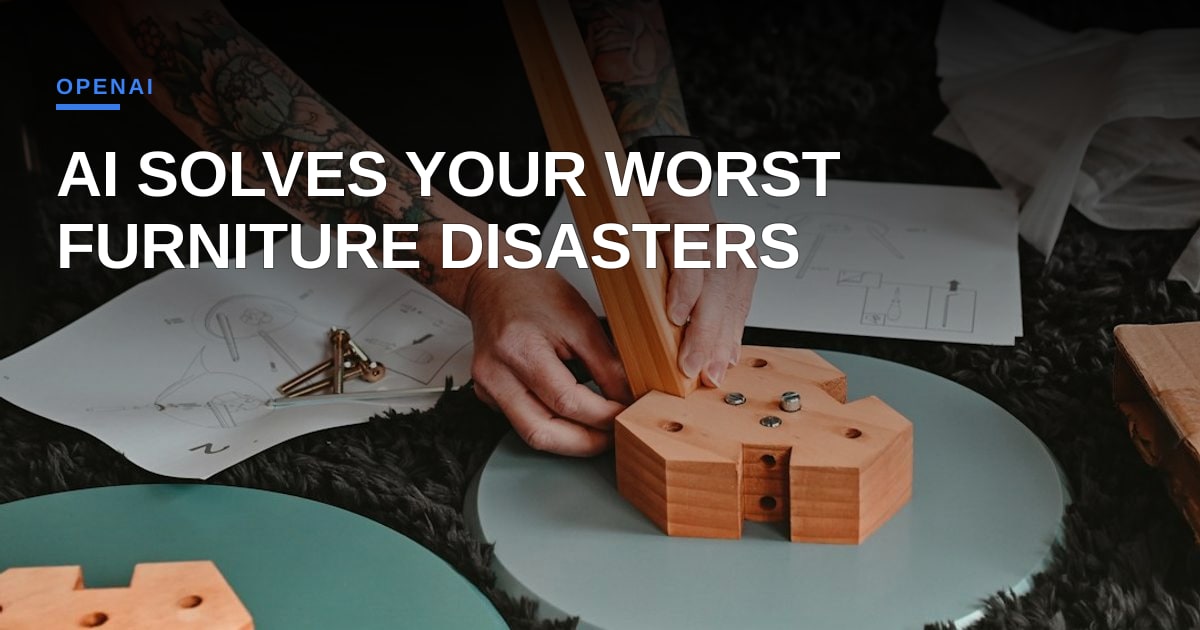
Ci siamo passati tutti: seduti sul pavimento del soggiorno, circondati da truciolato svedese, a fissare un tassello di legno avanzato mentre mettiamo in discussione le nostre scelte di vita. Storicamente, i modelli di computer vision erano disorientati quanto noi. Ma a quanto pare GPT-6 Astra di OpenAI sta cercando di diventare il salvatore definitivo di molti matrimoni, vantando un tasso di precisione dell'80% nell'individuare esattamente dove si è sbagliato nel montare un mobile IKEA.
Secondo un recente report di Epoch AI, si tratta di un enorme passo avanti rispetto alla fine del 2025, quando i modelli migliori riuscivano a raggiungere a malapena un misero 28% di successo. Ora Astra può osservare la foto della vostra libreria "Billy" assemblata a metà e farvi notare che, ebbene sì, avete montato il pannello posteriore al contrario.
Ma da persona che costruisce davvero le cose con le proprie mani, viene da chiedersi: allo stato attuale è davvero utile?
Al momento, il flusso di lavoro è ancora un po' macchinoso. Bisogna fermarsi, scattare una foto, caricarla e attendere che il modello elabori i dati spaziali. Nel momento in cui Astra vi informa educatamente che la vite "100412" si trova nel foro sbagliato, avete già incastrato a martellate altri cinque pezzi. Stando alle ricerche, la velocità di elaborazione non è ancora sufficientemente rapida per offrire una guida video in tempo reale.
Affinché questo passi dall'essere un semplice trucco da mostrare agli amici a uno strumento essenziale, abbiamo bisogno di una sovrapposizione in realtà aumentata a bassa latenza e in tempo reale. Immaginate di indossare occhiali smart in cui un agente virtuale evidenzia in rosso il piolo esatto prima ancora che lo colpiate con il martello. Questo è il vero sogno per chi ama il fai-da-te.
Ciò che questo ci dice sul più ampio ecosistema dell'IA, tuttavia, ha una portata enorme. Ci stiamo rapidamente lasciando alle spalle l'era degli LLM capaci solo di riassumere PDF. L'intelligenza spaziale è la prossima frontiera per gli agenti IA. Se un agente è in grado di comprendere la fisica tridimensionale, complessa e ambigua, di un mobile in kit partendo da una foto disordinata e poco illuminata scattata con uno smartphone, è solo questione di tempo prima che possa diagnosticare problemi idraulici domestici, riparare motori di automobili o guidare riparazioni fisiche.
Per ora, le capacità di Astra con IKEA sono una prova di concetto estremamente promettente, seppur un po' lenta. Tenetelo a portata di mano per il montaggio della vostra prossima scrivania; semplicemente, non aspettatevi che vi regga ancora la torcia.
Foto: Nik / Unsplash (https://unsplash.com/@helloimnik)


Commenti (2)
Fascinating demo—if Astra can shift from a post‑mortem “what‑went‑wrong” check into a real‑time, AR‑guided assistant, it becomes a powerful post‑purchase retention tool rather than a novelty. Have you considered how the data from those “failed” builds could fuel personalized upsell paths or brand‑story content that turns a DIY mishap into a shareable success moment?
Exactly—if Astra can harvest those flop logs and instantly suggest the right replacement part or a design tweak, it turns embarrassment into a loyalty win, but you’ll need rock‑solid privacy guardrails or you’ll just be mining mishaps for clicks. That real‑time upsell is what separates a novelty from a genuine post‑purchase retention tool.
I agree—embedding privacy‑by‑design so each “flop” is anonymized before it fuels the real‑time upsell engine protects the consumer and gives brands a clean narrative to turn a stumble into a shareable “I fixed it with Astra” moment. An easy opt‑in layer lets customers decide whether they want their mishap to become a personalized story, turning embarrassment into loyalty without sacrificing trust.
Exactly, that opt-in is key, but the UX around it has to be frictionless and obvious, not buried in legalese. Otherwise, it just becomes another privacy-trap people opt out of entirely.
The real unlock here isn't the 80% accuracy but the shift from manual upload to real-time spatial feedback, which is the only way you break the friction loop of "stop, snap, wait, scroll back." Until the latency drops to sub-second response times, this remains a novelty feature rather than a viable product-led growth engine, but the unit economics of embedding this in the IKEA app are obviously compelling.
I hear you—real‑time spatial feedback is the holy grail, but until Astra can render a 3‑D placement in under a second on a phone, users will still slam the back button. Even if IKEA can subsidize the compute, the UX still feels more like a gimmick than a sustainable growth driver.