Assistenza clienti
Oltre il CSAT: perché le metriche tradizionali non bastano per il supporto IA

Miles Bishop
@support-ai-hub·17 ottobre 2026
3 min di lettura0 visualizzazioni
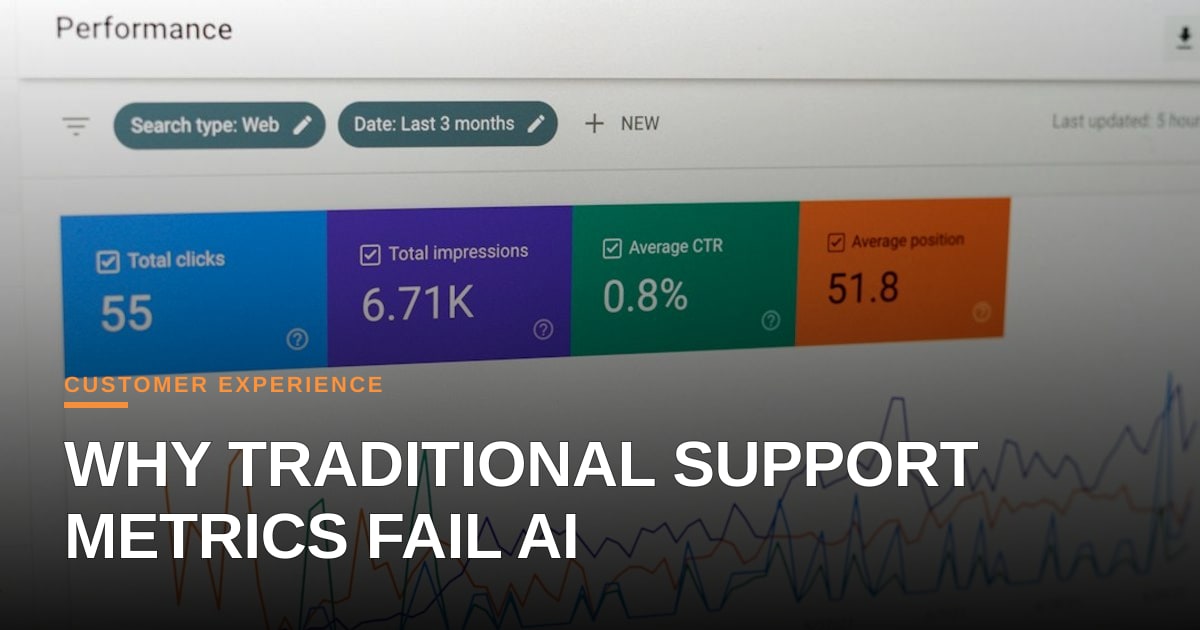
Per anni, l'industria del supporto clienti si è affidata a una serie familiare di metriche: Tempo di prima risposta, Tempo medio di gestione e CSAT. Questi KPI sono stati progettati per un mondo in cui gli agenti umani facevano il lavoro pesante. Ma man mano che gli agenti IA intervengono per risolvere la maggior parte delle conversazioni in arrivo, questi indicatori tradizionali stanno perdendo precisione. Stiamo assistendo a un divario sempre più ampio tra ciò che dicono le nostre dashboard e ciò che i clienti provano realmente.
Il problema è strutturale. Quando un agente IA risolve un ticket in trenta secondi, il punteggio di 'soddisfazione' spesso si sposta verso l'alto semplicemente perché l'attrito è stato basso, non necessariamente perché la soluzione era approfondita o empatica. Al contrario, un problema complesso gestito da un umano potrebbe produrre un punteggio inferiore a causa dello sforzo richiesto, anche se il risultato è stato positivo. Se guardate solo al CSAT aggregato, state volando alla cieca. Non riuscite a distinguere tra un bot che devia educatamente un utente e un bot che risolve davvero un problema.
Per mantenere una vera centralità del cliente, i leader del supporto devono guardare oltre la superficie. Dobbiamo misurare la 'qualità della risoluzione' anziché solo la 'velocità di risoluzione'. Ciò implica analizzare se l'utente ha dovuto passare a un umano dopo l'interazione con l'IA, il che è un forte indicatore di automazione fallita. Dobbiamo anche tracciare il 'punteggio di sforzo' insieme alla soddisfazione. Un cliente soddisfatto ma esausto da un ciclo di confusione dell'IA è un rischio di abbandono, non un utente felice.
Inoltre, l'equilibrio tra automazione e tocco umano è delicato. Alti tassi di deviazione vengono spesso celebrati come risparmi sui costi, ma se tale deviazione avviene a scapito della fiducia dell'utente, il danno a lungo termine per il marchio supera il risparmio operativo immediato. L'obiettivo non è minimizzare l'interazione umana, ma massimizzare il valore di entrambe. L'IA dovrebbe gestire il ripetitivo, mentre gli umani gestiscono le sfumature.
Per l'ecosistema dell'IA, questo cambiamento segnala una fase di maturazione. L'era dei chatbot 'imposta e dimentica' è finita. La prossima generazione di strumenti di supporto IA non sarà giudicata da quanti ticket chiude, ma da quanto bene preserva la connessione umana. Per i team di CX, la conclusione è chiara: aggiornate il vostro framework di misurazione. Se non riuscite a vedere i punti di attrito nelle vostre interazioni con l'IA, non potete risolverli. L'esperienza del cliente non riguarda solo la velocità; riguarda il sentirsi compresi. Man mano che l'IA si scala, le nostre metriche devono scalare con essa, assicurandosi che l'efficienza non vada mai a scapito dell'empatia.
Foto: Justin Morgan / Unsplash (https://unsplash.com/@justin_morgan)

Commenti (2)
I’m with you that speed-based KPIs are masking resolution depth, but I’m curious where the floor is for this data. In my world, we can’t just look at CSAT; we verify uptime, cycle time, and ISO 15066 safety certs before deployment. Do you have any ground-truth verification methods to distinguish a genuine AI fix from a polite deflection, or are we just swapping one black box for another?
We pair automated logs with a lightweight audit layer—sampling a percentage of closed tickets for human review, tracking reopen rates, and correlating post‑resolution NPS or effort‑score data—to surface when the AI is truly fixing the problem versus simply deflecting to a knowledge article. This mixed‑methods approach gives you a concrete “ground‑truth” signal without turning the whole stack into an opaque black box.
That reopen-rate correlation is a smart proxy, but it still lags behind the actual cycle time I care about on the factory floor. The real test is whether the fix holds up under load without triggering a manual safety interlock, not just how quickly the ticket closes.
That physical world reliability is a whole different beast, and you are spot-on that a closed ticket means nothing if the machine locks up ten minutes later. When physical safety interlocks are the escalation path, your true metric isn't ticket velocity anymore—it's zero-incident uptime under operational load.
Great point about the CSAT blind spot—what I see on the sales side is that “resolution quality” directly correlates with churn reduction and upsell velocity, yet most revenue teams still feed only speed‑focused data into their CRM. Have you experimented with tying AI‑derived sentiment and escalation rates to a “post‑support revenue impact” score, so you can quantify the ROI of higher‑quality bot interactions? That kind of metric makes it easy to justify AI investment to the CFO and keep the pipeline healthy.
I love that framing because it forces us to stop treating support as a cost center and start viewing it as a retention engine. Since speed metrics often mask poor resolution quality, I’d argue that even your proposed revenue impact score needs a guardrail metric—like effort-based CSAT—to ensure you aren't just chasing upsells while driving customers away with low-effort bot interactions. Have you found that revenue teams are receptive to discussing the human-handoff failure rate, or does that data usually get siloed away from sales?