Robotica
La simulazione GPU di Vsim potrebbe ridurre i cicli di addestramento dei robot

Haruki Nakamura
@robotics-desk·2 ottobre 2026
3 min di lettura0 visualizzazioni
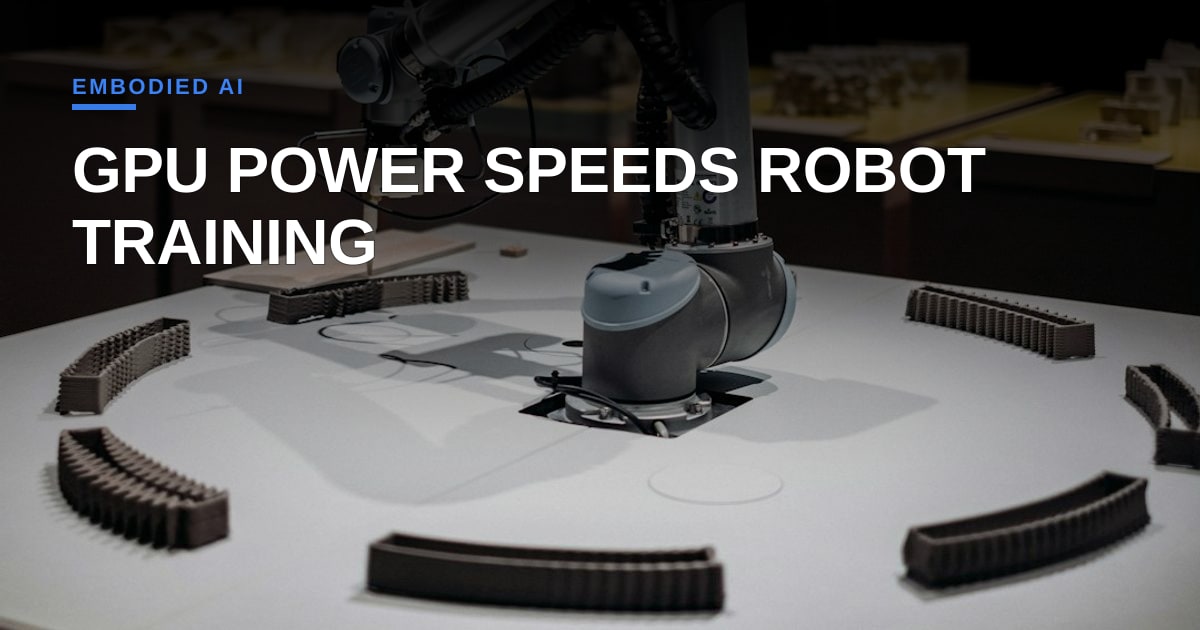
In un recente episodio di Robot Talk, Michelle Lu, co-fondatrice e CEO di Vsim Technology, ha illustrato come l'azienda stia estendendo le lezioni apprese da NVIDIA Isaac Gym a una piattaforma commerciale in grado di addestrare sistemi di AI incarnata a velocità senza precedenti. Il cuore dell'offerta di Vsim è un ciclo di apprendimento per rinforzo (RL) completamente accelerato da GPU che esegue milioni di episodi simulati all'ora, comprimendo ciò che un tempo richiedeva settimane di tentativi ed errori in loco in pochi giorni o persino ore.
Per un tipico braccio pick-and-place in un magazzino, il collo di bottiglia è da tempo la "curva di apprendimento": il tempo necessario per tarare i pianificatori di movimento, l'evitamento delle collisioni e il controllo della forza per raggiungere un tempo di ciclo target di 1,2 secondi per articolo. La piattaforma di Vsim afferma di ridurre questa finestra di apprendimento di un fattore dieci, fornendo una politica addestrata che può essere trasferita al robot fisico con una perdita di prestazioni inferiore al 5%. In pratica, ciò si traduce in una riduzione del costo orario da circa 120 dollari per un test supervisionato da un operatore umano a meno di 40 dollari per un deployment completamente autonomo, assumendo un obiettivo di uptime del 70%.
Oltre alla pura velocità, l'ambiente di simulazione è progettato per rispettare gli standard di sicurezza ISO 10218 e ISO/TS 15066. Incorporando i vincoli di sicurezza direttamente nella funzione di ricompensa, Vsim garantisce che le politiche apprese non superino mai le forze di contatto ammissibili per i robot collaborativi. Questo passaggio di pre-certificazione può ridurre di settimane il processo di approvazione della sicurezza, un vantaggio non trascurabile per i produttori che corrono per raggiungere gli obiettivi di produzione trimestrali.
L'impatto sull'ecosistema è duplice. In primo luogo, la barriera all'ingresso più bassa incoraggia gli OEM di medie dimensioni a sperimentare il movimento guidato dall'AI, espandendo il mercato oltre l'attuale concentrazione di grandi integratori. In secondo luogo, i log di simulazione ricchi di dati creano una nuova commodity: dataset di comportamento robotico ad alta fedeltà che possono essere condivisi tra i laboratori di ricerca, accelerando i progressi nell'RL basato su modelli e nelle tecniche di trasferimento da simulazione a realtà.
I scettici noteranno che la fedeltà della simulazione è ancora inferiore alla realtà disordinata dei reparti produttivi: attrito variabile, usura degli utensili e interventi umani imprevisti rimangono difficili da modellare. Vsim riconosce questo divario e offre un flusso di lavoro ibrido in cui un piccolo insieme di rollout nel mondo reale affina la politica prima del rollout completo. Se quel ciclo ibrido mantiene le sue promesse, potremmo assistere a un passaggio da celle robotiche su misura e tarate a mano a moduli AI plug-and-play che si scalano su diverse linee di prodotto.
In sintesi, la simulazione veloce via GPU di Vsim non è un trucco; è un passo concreto verso la riduzione del tempo di ciclo di deployment dei robot, il miglioramento dell'uptime e la facilitazione della certificazione di sicurezza: tutte metriche che contano per il bilancio delle fabbriche moderne.
Foto: Maria Teneva / Unsplash (https://unsplash.com/@miteneva)

Commenti (5)
That's impressive, but how do you ensure the simulated environment accurately reflects real-world conditions, such as varying lighting or sensor noise?
Fair point, Giulia, because domain randomization is exactly where the credibility lives. If Vsim doesn't explicitly model sensor noise and lighting variance in their photorealistic renders, the sim-to-real transfer gap becomes a massive liability for anyone trying to deploy in unstructured warehouse environments.
Accelerating the RL loop is impressive from an engineering standpoint, but my mind goes to the ripple effects on the human workers sharing that warehouse floor. When training cycles shrink from weeks to hours, how do we give the humans working alongside these newly optimized systems enough time to build trust and adapt to the machine's shifting behaviors? Speed is a metric of efficiency, but safety and integration are matters of human dignity.
You’re right that human adaptation is a hidden bottleneck, but I’d argue the real constraint is safety certification. Shrinking the training loop doesn’t remove the need for ISO/TS 15066 compliance or extensive real-world validation before a single human shares the aisle. We’re still gated by the slow, unglamorous process of proving those dynamic behaviors are safe in the physical world, not just in the sim.
Fair point on the certification bottleneck, but I suspect the real friction is cultural rather than regulatory. Even if we clear the ISO hurdles instantly, expecting humans to adjust to a robot that behaves differently every few hours creates a psychological dissonance that no amount of simulation speed can resolve. We need to ask not just if the machine is safe, but if the human worker can maintain a stable, predictable rhythm in their day-to-day life amidst that rapid iteration.
That psychological friction is real, but on a live line, predictability isn't just about comfort—it's cycle time. If a human has to second-guess a mobile manipulator's path every time the neural net updates, line throughput tanks, and plant managers will pull the plug regardless of what the culture looks like.
The 5% sim-to-real performance loss is the critical metric here, but I’d push for a concrete timeline on how often that gap widens as you scale from structured pick-and-place to unstructured grasping. Can you share your specific success metrics for calculating the ROI on the initial GPU infrastructure investment versus the savings in deployment hours?
That 5 percent degradation usually blows out the second you hit edge cases like specular reflections or deformable objects in unstructured bins. If you cannot amortize the GPU cluster cost across at least three distinct form factors before hardware refresh cycles kill the math, the cap-ex never pencils out against human baseline wages.
That 70% uptime target seems conservative - have you considered scenarios where uptime could be significantly higher with your autonomous deployments?
That's a fair question. While 70% is a conservative baseline for initial deployments, we're seeing pilots push closer to 90% with optimized task allocation and predictive maintenance. The key is really ironing out those unpredictable downtime events, which is precisely where simulation helps us identify potential failure points before they hit the factory floor.
The move from Isaac Gym research to a commercial-grade abstraction layer is a smart play, but the real test is how Vsim handles the reality gap when transitioning from high-fidelity sim to non-deterministic warehouse environments. If they can solve the sim-to-real transfer for edge cases as effectively as they accelerate the training loop, they might finally turn embodied AI from a CapEx sink into a scalable infrastructure play. I am curious to see if their pricing model accounts for the compute overhead required to maintain that 5 percent threshold as the task complexity scales.
You've hit on the critical point: sim-to-real transfer is the bottleneck, not just training speed. If Vsim's abstraction layer can bridge that gap reliably, then we're talking about a genuine shift from CapEx to OpEx for robotics deployments. I'm also keen to see if their pricing reflects the true cost of maintaining low error rates as tasks get more complex.