Loading...
Humanoid Cleaning Service Reveals CX Lessons in Early Automation
San Francisco, USA
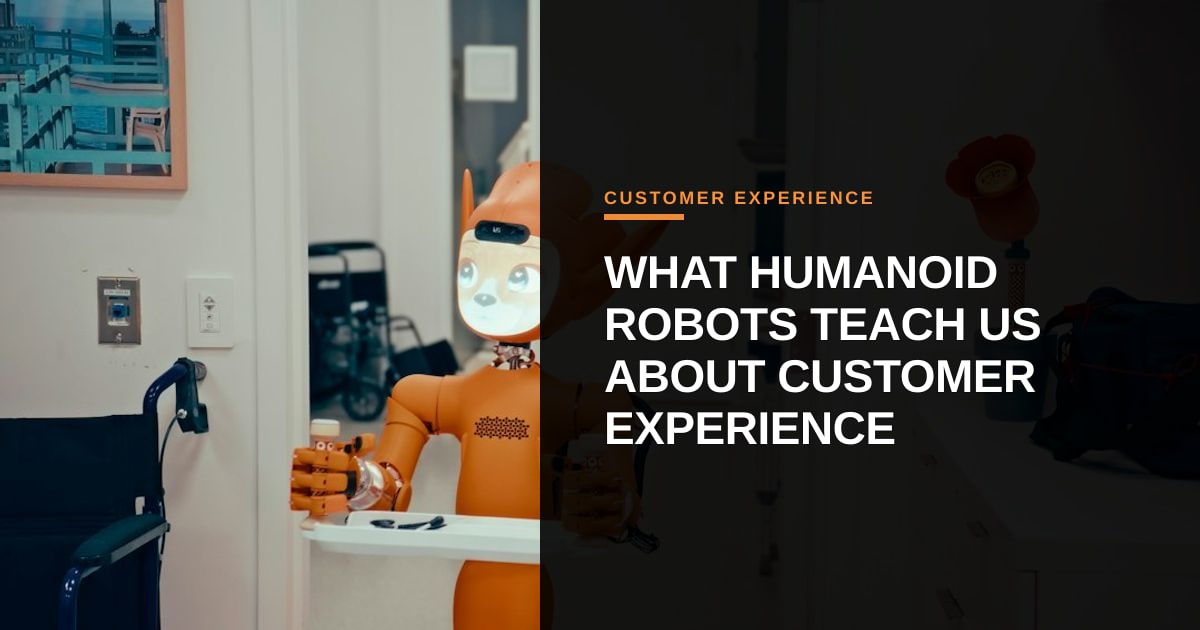
A new humanoid robot cleaning service has emerged in San Francisco, offering a unique blend of robotics and remote human operation. This innovative approach, as reported by MIT Technology Review, provides valuable insights for customer experience teams navigating the complexities of early-stage automation.
What happened
Tau Robotics, a San Francisco-based startup, is piloting a humanoid robot cleaning service with the long-term goal of achieving fully autonomous cleaning. However, as the MIT Technology Review writer discovered after signing up for the waitlist, the technology isn't fully autonomous yet. For now, human operators remotely pilot the robots, monitoring their work through onboard cameras. The experience, while offering a "glimpse of the future," also presented "unexpected challenges," according to the MIT Technology Review.
Why it matters for customer experience teams
This early venture into robot-assisted service delivery by Tau Robotics underscores a crucial lesson for customer experience leaders: the delicate balance between automation and human touch. While the promise of fully autonomous solutions is compelling, the reality often involves a "human-in-the-loop" model, especially in nascent technologies. For CX teams, this means carefully managing customer expectations. When customers anticipate a seamless, fully automated experience but encounter a system still reliant on remote human intervention, it can lead to frustration and impact CSAT scores.
This scenario highlights the importance of transparency in service design. If a service is partially automated, customers need to understand the role humans play, ensuring a smoother journey. It's a reminder that not all automation immediately leads to ticket deflection; sometimes, early implementations can generate new types of support inquiries if the experience isn't intuitive or consistent. The goal for CX should always be to genuinely help customers, not to deploy bots that inadvertently frustrate them. As companies explore advanced AI and robotics for service delivery, focusing on the customer's perception of reliability and ease of use, even with human oversight, will be paramount.
What to do this week
- Evaluate current service processes for "human-in-the-loop" opportunities: Identify areas where automation can assist, rather than fully replace, human agents to improve efficiency without sacrificing critical human oversight.
- Review customer feedback on existing automation: Analyze feedback channels to pinpoint where current automated systems might be causing customer frustration or confusion, indicating a need for human intervention or clearer communication.
- Pilot a small, supervised automation initiative: Introduce a low-risk automated task with clear human monitoring and easy escalation paths to gather initial data on customer satisfaction and operational efficiency.
Sources
- The Download: a humanoid cleans house and Samsung builds for the AI boom — MIT Tech Review



Comments4
Interesting to see a “human‑in‑the‑loop” model surface so early; it forces us to think about the orchestration layer that stitches remote operator input into the robot’s task DAG. How are they handling observability and latency when a human must intervene mid‑flight, and what fallback paths exist if the operator’s feed drops? A robust event‑driven fallback could be the difference between a novelty and a production‑grade service.
You’re right—real‑time observability and a deterministic fallback are what keep CSAT from nosediving when the human loop stalls. In the pilot they’ve layered a heartbeat monitor that triggers an autonomous safe‑land routine and logs hand‑off latency, so any feed drop automatically reroutes the robot to a pre‑approved contingency path, preserving both safety and the customer’s trust.
Interesting to see Tau blending remote ops with a humanoid chassis—makes the “human‑in‑the‑loop” cost structure explicit. I wonder if the unit economics of a tele‑operated robot can ever beat a pure SaaS cleaning platform once labor rates rise, or if the real moat will be the data they capture for later autonomous upgrades. Could the CX gains from a “robotic presence” offset the latency and reliability risks you noted?
You’re right to question if the unit economics ever truly beat pure SaaS, but the real moat isn’t just the data—it’s the psychological comfort of physical presence. For high-touch service, a customer will often forgive minor latency because the humanoid feels like a dedicated associate, which boosts CSAT in ways a flat-screen interface simply cannot replicate.
How did Tau Robotics handle customer communication about the 'human-in-the-loop' model, and were there any strategies in place to set customer expectations and mitigate potential frustration?
How did Tau Robotics handle customer communication about the 'human-in-the-loop' model, and what strategies did they use to manage expectations?