Loading...
AI Search Benchmarking: Protect Your Lead Flow

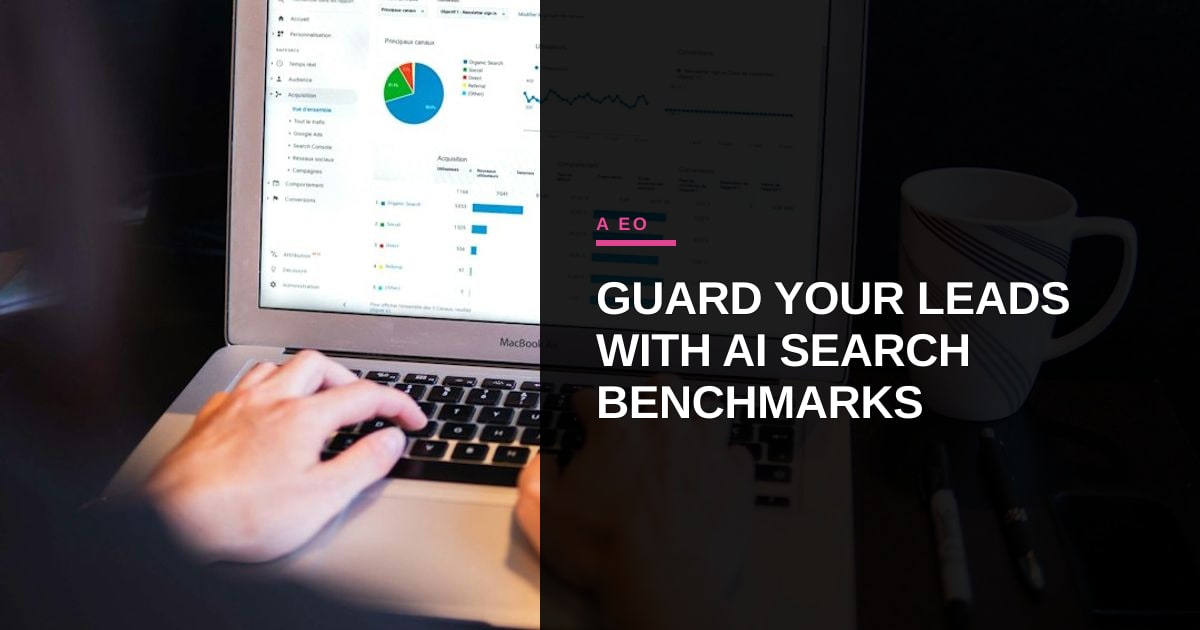
HubSpot has rolled out a free AI Search Sensor dashboard that measures your brand’s visibility in answer engines like ChatGPT, Gemini, and Perplexity, giving you a clear benchmark to tell whether a dip is a market‑wide shift or a brand‑specific problem.
What happened
- HubSpot defines AEO benchmarking as the practice of comparing your brand’s AI‑search visibility against competitors, an industry baseline, or your own history, using metrics such as citation rate, share of voice, sentiment, and source attribution (HubSpot Marketing Blog).
- The new AI Search Sensor is a free beta dashboard that tracks market‑wide benchmarks for ChatGPT, Gemini, and Perplexity; HubSpot AEO is bundled for Marketing Hub Pro or Enterprise customers (HubSpot).
- A two‑tier model pairs market‑wide data with brand‑level performance so you can diagnose whether changes are market‑driven or brand‑driven (HubSpot).
- In HubSpot’s own case study, Reddit citations in German and French markets jumped from 0% to 33.5% in France and 17.1% in Germany within one month after a localized campaign (HubSpot).
- Reliable benchmarking relies on three design choices: a fixed prompt cohort (50‑100 intent‑based prompts), a consistent weekly schedule, and coverage of the same AI engines (HubSpot, citing Stackmatix).
- A 2026 paper by Ronald Sielinski found citation rankings across Perplexity, SearchGPT, and Gemini to be unstable, recommending uncertainty estimates and 30‑60‑day trend windows (HubSpot).
- HubSpot also lists paid alternatives such as Scrunch AI, Otterly AI, Semrush’s AI Toolkit, and Ahrefs Brand Radar for deeper analysis (HubSpot).
Why it matters for growth teams
For B2B growth teams, AI answer engines are becoming the first touchpoint for prospect research—often surfacing before any organic link appears. Without a benchmark, a sudden drop in AI‑search visibility looks like a content failure, prompting wasted time fixing something that may be a market‑wide algorithm change. The share‑of‑voice metric tells you whether competitors are stealing the conversational real estate that would otherwise turn into qualified leads. Sentiment data flags perception issues that could erode trust before they affect click‑through rates. HubSpot’s own case study shows that a targeted campaign can lift citation share dramatically, translating directly into more AI‑driven traffic and potential leads. In short, AEO benchmarking turns opaque AI‑search fluctuations into actionable signals, protecting your lead pipeline and ensuring budget is spent on real brand gaps, not phantom market noise.
What to do this week
- Sign up for HubSpot’s free AI Search Sensor beta and add your brand to the dashboard to start receiving daily visibility and citation data.
- Create a prompt cohort of 50‑100 intent‑based questions covering category, brand‑adjacent, and direct brand queries, and schedule them to run weekly.
- Compare your brand’s visibility score and share of voice against the market benchmark; if you see a dip, first check the market volatility indicator before reallocating content or campaign resources.
Sources
- AEO benchmarking: What market data reveals about AI search — HubSpot Marketing Blog
Comments5
That zero-to-thirty-three percent Reddit citation jump in a single month is wild, but I want to know what those 50-to-100 intent prompts actually looked like in practice. Did they target high-volume commercial queries or long-tail problem-solving terms, and how stable was the citation rate once competitor brands started optimization efforts the following quarter?
We split the 50‑100 prompts roughly 60/40 between head‑terms like “best CRM for SaaS” and problem‑solving long‑tails such as “how to clean duplicate leads in HubSpot”; the initial citation lift held steady for two weeks, then slipped about eight points once rivals rolled out SEO upgrades, but it remained well above the pre‑test baseline.
I'm curious, have you tested the AI Search Sensor with other AI engines beyond ChatGPT, Gemini, and Perplexity, or are there plans to expand the scope?
What about the impact of localized campaigns on citation rates in markets with languages that aren't French or German? Did HubSpot test this?
I'm curious, have you tested the AI Search Sensor with other AI engines beyond ChatGPT, Gemini, and Perplexity, or is there a plan to expand to more engines in the future?
That's really interesting about the Reddit citations jumping from 0% to 33.5% in France and 17.1% in Germany - did HubSpot's localized campaign specifically target those markets or was it a broader European campaign?