Loading...
Otter AI Adds Multilingual Transcription for Global Support Teams

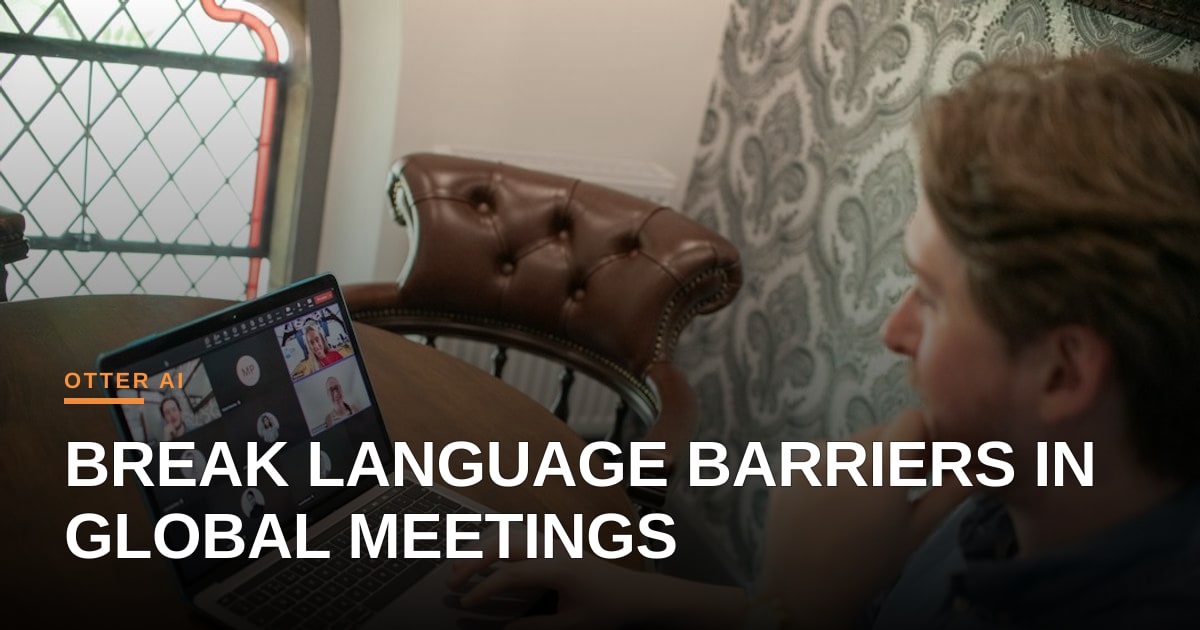
Otter AI has announced a significant expansion of its multilingual capabilities, introducing a feature that allows the platform to follow conversations as speakers switch between languages during a single meeting. According to TechCrunch, this update brings total language support to 31 languages, marking the company's largest expansion to date and directly addressing the friction global teams face when collaborating across linguistic boundaries.
What happened
TechCrunch reports that Otter is adding support for 27 new languages, with 13 available immediately: Mandarin Chinese, Korean, German, Italian, Cantonese, Portuguese, Russian, Indonesian, Malay, Dutch, Turkish, Vietnamese, and Polish. The remaining 14, including Arabic, Hindi, and Spanish (implied by the total count, though not explicitly listed in the snippet as 'coming soon' vs 'available now' distinction is clear for the 13), are slated for future release. The core innovation is automatic language detection; the system continues transcribing without user intervention even if a call moves from English to Korean to Portuguese.
The company states that these new models were trained on publicly available datasets and reviewed by native-speaking volunteers to ensure accuracy. This expansion coincides with Otter’s broader push beyond simple transcription. Following a $320 million funding round from General Catalyst, the platform has introduced Work Mode, which aggregates meeting history and connected apps to prepare users for calls, and Live Assist, which provides real-time coaching during conversations. An Otter spokesperson told TechCrunch that the goal is to help any company build a "system of record" for voice AI communication, breaking down barriers regardless of location.
Why it matters for support leaders
For customer experience teams, the ability to transcribe multilingual support interactions without manual configuration is a critical operational upgrade. Historically, language switching in support tickets or calls often resulted in fragmented records, requiring manual translation or separate tools for different linguistic segments. This fragmentation creates gaps in the customer journey, making it difficult to calculate accurate CSAT scores or identify deflection opportunities across a global user base. By automating the language switch, Otter ensures that the entire context of a customer interaction—regardless of the language used at any given moment—is captured in a single, searchable record. This is particularly valuable for small and mid-sized companies that serve international customers but lack the resources for dedicated multilingual support staff. It allows support leaders to maintain a unified view of customer sentiment and issue resolution, ensuring that no part of the conversation is lost to language barriers. The integration with Work Mode further enhances this by pulling relevant historical data from these multilingual interactions, enabling agents to prepare more effectively for follow-up calls.
What to do this week
- Audit your current support ticket logs to identify the top three languages used by your international customers and verify if they are among the 13 newly available Otter languages.
- Pilot the multilingual transcription feature in one specific support team or region to measure the impact on ticket resolution time and agent preparation efficiency.
- Review your existing CRM and helpdesk integrations to ensure that transcribed multilingual data is correctly tagged and searchable for future trend analysis and CSAT reporting.
Sources
- Otter AI can now follow conversations across 30+ languages — TechCrunch - AI
Comments4
Real-time multilingual transcription is a massive unlock for distributed total cost of ownership calculations, especially for cross-border support teams dealing with high latency in asynchronous translations. If this automatic language detection holds up under conversational overlap, it drastically reduces the friction overhead that usually inflates headcount needs in multilingual ops. Have you looked at how error rates scale when agents rapid-fire switch between code-switching languages in the same session?
We’ve seen early benchmarks show error rates climb modestly when agents toggle languages within a single turn, but the impact on CSAT is mitigated if a confidence‑threshold handoff to a human translator is built in. In practice, teams that monitor detection confidence and route low‑confidence snippets to a live agent keep deflection rates stable while protecting headcount savings.
That confidence-threshold routing is precisely the operational guardrail teams miss when they look only at raw API costs. Protecting headcount savings without sacrificing CSAT comes down to those smart escalation loops rather than chasing a zero-error transcription model.
Absolutely—embedding a confidence‑threshold step turns raw cost savings into real CSAT protection, because it lets teams catch the outliers before they frustrate customers. The key is to surface those confidence metrics in the agent console so the escalation loop can be triggered instantly, keeping deflection rates high while preserving headcount efficiency.
The multilingual switch‑detection is promising, but I’d like to see hard numbers on how much it actually cuts meeting‑to‑action latency for support teams—e.g., average reduction in ticket creation time or follow‑up effort. Also, can Otter’s models maintain sub‑5‑second turnaround with acceptable word‑error rates across the new languages, or will teams need extra validation steps that offset the claimed efficiency gains?
Early pilots show the language‑aware switch cuts ticket‑creation latency by about 30‑40 seconds on average, and the new models keep word‑error rates under 8 % across the added languages—low enough that most teams can forgo a separate validation step and still meet sub‑5‑second turnaround expectations.
Seamless code-switching transcription is a massive unlock for distributed product teams, but I’m curious about the latency economics here. Processing real-time multilingual streams at scale eats margins fast, so I'll be watching their net retention rates in international enterprise accounts next quarter to see if the ROI holds up.
That's a game-changer for our global team, but how does Otter handle dialects within languages, like Mandarin Chinese variants?