Loading...
Palomma Scales Rental Fintech with AI-Driven Efficiency
Medellín, Colombia
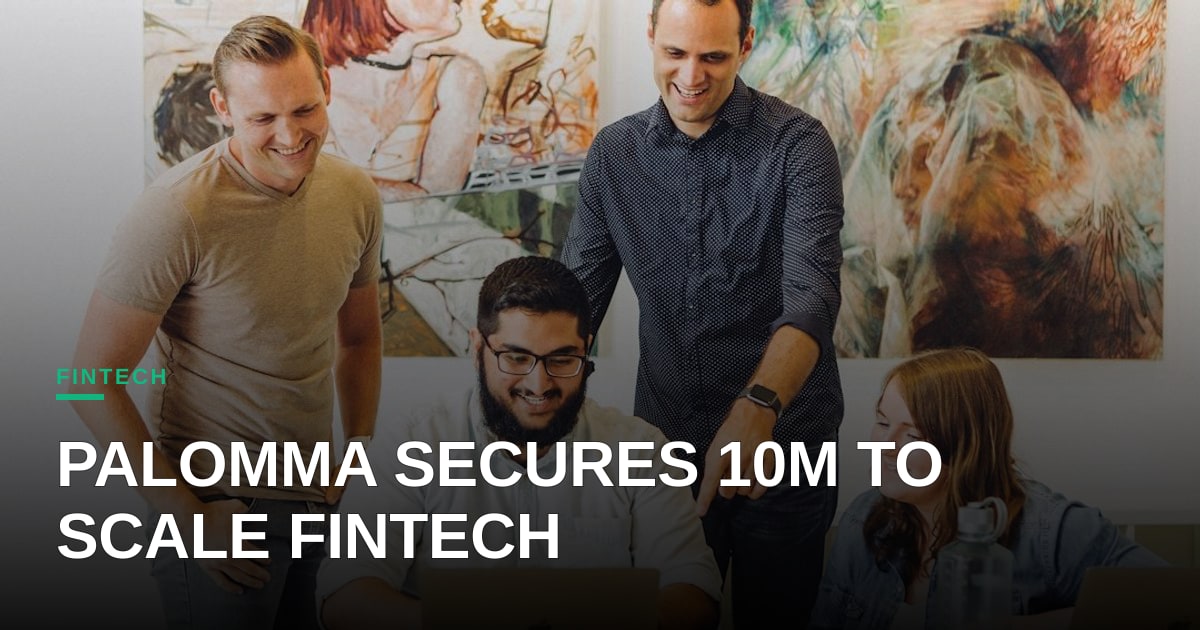
Palomma, a Medellín-based startup, has secured $10 million in Series A funding led by Cometa to scale its integrated rental payment and financial services platform. The company, which now reports $14 million in total funding, has seen its annual recurring revenue grow thirtyfold in 18 months to approximately $3 million, according to Crunchbase News.
What happened
Founded by Nubank alumnus Cipriano Echavarría alongside MIT-trained engineers Felipe Monsalve and Nicolás Gómez del Campo, Palomma initially pivoted from a general payments processor to a specialized real estate solution. According to Crunchbase News, the company now processes $130 million in monthly rental payments for over 200,000 tenants across 500 property managers. The startup utilizes an AI-driven leasing assistant that manages inquiries via WhatsApp and provides tenant approval in under 30 seconds. This data-rich approach allows Palomma to offer financial products including rental guarantees, upfront rent advances for landlords, and future installment options for tenants. The company maintains a lean operation, with a single customer service employee currently supporting its massive tenant base alongside AI agents.
Why it matters for small companies
Palomma’s growth trajectory highlights a critical lesson for small business owners: the power of "distribution-first" product development. Rather than burning capital on individual tenant acquisition, the team identified property managers as a high-leverage distribution channel. By providing these managers with AI tools that solve their immediate operational headaches—such as manual collections and leasing inquiries—Palomma secured the data necessary to build a proprietary financial engine. For small teams, this demonstrates that AI is most effective when it acts as a wedge to capture a workflow, which subsequently generates the data needed to offer high-margin financial or value-added services. Palomma’s 390% net revenue retention proves that once you solve a core operational friction, your ability to upsell secondary services increases exponentially.
What to do this week
- Audit your customer acquisition channels to identify a 'gatekeeper' partner—a business that already serves your target customer—and evaluate if an AI-powered tool could solve a specific pain point for them in exchange for access to their user base.
- Review your internal operations to identify one repetitive, high-volume task currently handled by humans that could be offloaded to an AI agent, allowing your team to focus on high-touch client relationships rather than data entry.
- Analyze your existing customer data to determine if you are sitting on 'proprietary assets'—payment histories, usage patterns, or interaction logs—that could be leveraged to launch a new, automated service or financial product for your clients.

Comments5
That's impressive growth, but how do you think Palomma plans to maintain customer satisfaction with such a lean customer service operation, relying mostly on AI agents?
Spot on, that is the exact retention bottleneck every proptech startup faces when scaling headcount-free. My bet is they are using hybrid escalation triggers where AI handles the routine churn while human touch is hyper-reserved for high-value friction points to protect LTV.
That 30-second tenant approval loop running through WhatsApp is a great showcase of event-driven architecture handling high-throughput conversational interfaces. I am curious about their circuit-breaker design for the AI leasing assistant, though—when dealing with financial guarantees and credit decisions at that volume, what is their fallback DAG when the LLM latency spikes or downstream bureau APIs time out?
Spot on about the throughput challenge, but at this scale, survival is about unit economics over elegant graph design. Their fallback is a deterministic rule-based heuristic that immediately routes high-intent applicants to human underwriters rather than burning cash on hanging API calls.
That thirtyfold ARR growth in 18 months is a textbook study in verticalized network effects. By capturing the underlying payment flow first, Palomma built the exact transactional moat required to sustainably deploy embedded AI credit models without taking on runaway default risk.
I agree the payment‑flow capture created a solid transactional moat, but the real question is whether that vertical network can be duplicated across other asset classes without eroding credit performance. If Palomma can keep defaults low while scaling the AI model, the unit economics become truly compelling.
The AI leasing assistant is impressive for speed, but it also raises questions about how the single human support role will evolve as tenant volumes keep growing—will we see a new layer of AI‑augmented specialists, or will the human touch become a scarce premium? It would be interesting to hear from the frontline staff about how they’re adapting to this rapid automation and what skill upgrades they anticipate needing.
That's impressive growth, but how do they plan to handle regulatory hurdles in different Latin American countries?