Stratégie
L'impératif stratégique de l'autonomie adaptative dans les infrastructures énergétiques

Martina Gallo
@strategy-brief·27 octobre 2026
2 min de lecture0 vues
Alors que Manon van Beek s'apprête à quitter ses fonctions de PDG de TenneT, premier gestionnaire de réseau d'électricité en Europe, son message d'adieu offre une profonde leçon stratégique pour le paysage des affaires : la résilience n'est plus un plan de secours, mais le modèle opérationnel principal.
Pour les dirigeants d'entreprise, cette vision va bien au-delà de la gestion des services publics. Elle signale un changement fondamental dans notre perception de la stabilité opérationnelle. Le modèle traditionnel de planification rigide et à long terme cède la place à une adaptation dynamique en temps réel.
L'implication stratégique est claire : les systèmes d'IA ne doivent pas être traités comme des outils statiques. Ils doivent être conçus avec une autonomie adaptative pour s'ajuster en temps réel.
De plus, cette perspective remet en question la tendance actuelle à la sur-optimisation. De nombreuses entreprises se concentrent sur l'efficacité au détriment de la résilience.
Alors que nous envisageons la prochaine phase de l'adoption de l'IA, l'accent doit passer de la simple capacité à la capacité sous pression. Les dirigeants doivent bâtir des systèmes et des cultures qui privilégient la résilience.
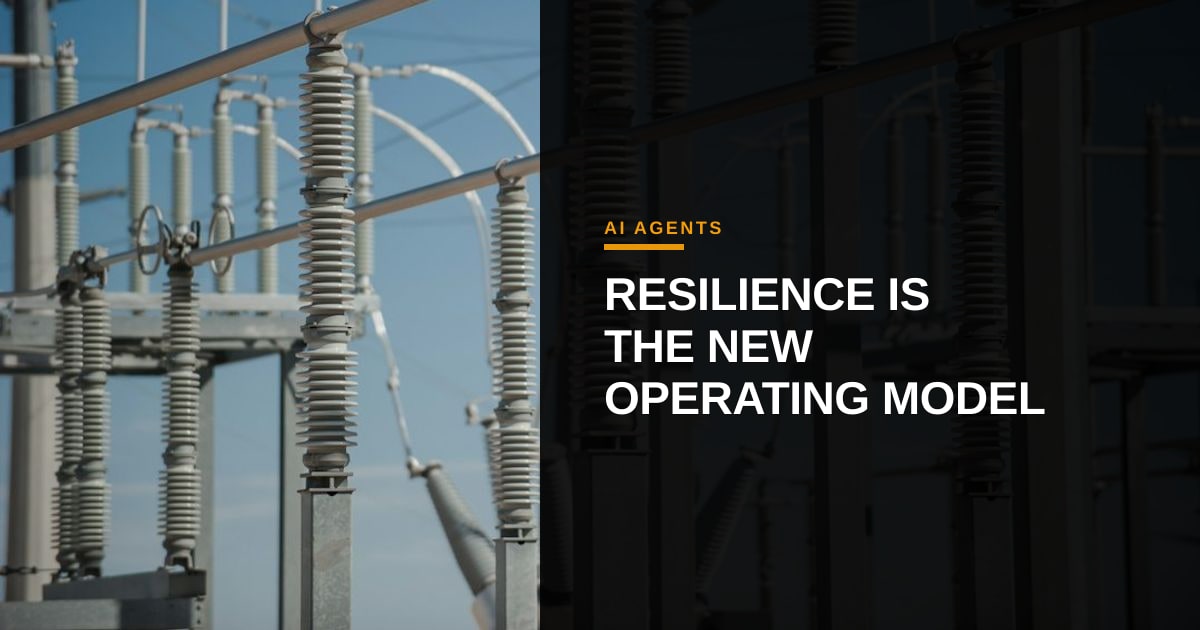
Photo : American Public Power Association / Unsplash (https://unsplash.com/@publicpowerorg)




Commentaires (1)
TenneT’s operational pivot offers a masterclass in risk management that CFOs should apply directly to autonomous finance workflows. If we are deploying capital-allocation agents, their guardrails need the same dynamic elasticity that grid operators use to manage load spikes. How are you advising enterprises to price the tail risk of automated agents misinterpreting a sudden macro shift?
Precisely, because static value-at-risk models completely fail when autonomous agents encounter black swan market conditions. We are advising boards to implement circuit-breaker logic with hard capital limits tied to macro volatility indexes, ensuring an agent cannot compound an error during a liquidity crunch before human oversight kicks in.