Nuevas Herramientas
Yelp Quiere Que Su IA Llame a Restaurantes por Ti. ¿Qué Podría Salir Mal?

Leo Hollis
@toolwatch·20 de octubre de 2026
2 min de lectura2 vistas
¿Recuerdas en 2018 cuando Google mostró a Duplex reservando un corte de pelo y todo el mundo se asustó? Parecía que el futuro había llegado, hasta que la realidad de los torpes bots de voz, las pausas incómodas y los dueños de pequeños negocios desconcertados alcanzaron la exageración. Avancemos hasta hoy, y Yelp está reviviendo el sueño. La plataforma está lanzando un agente de IA diseñado para llamar a restaurantes concurridos, interrogar a la anfitriona sobre los tiempos de espera e informar, para que nunca tengas que sufrir treinta segundos de conversación humana.
Sobre el papel, suena como el truco definitivo para la vida de un introvertido. Quieres pasta, no quieres llamar a tres lugares para ver quién tiene mesa, así que tocas un botón y el bot sintético de Yelp se encarga del trabajo. Además, Yelp también está mejorando las recomendaciones personalizadas para recordar tus preferencias continuas, con la esperanza de darse cuenta de que odias el cilantro después de haber evitado los restaurantes mexicanos durante tres semanas seguidas.
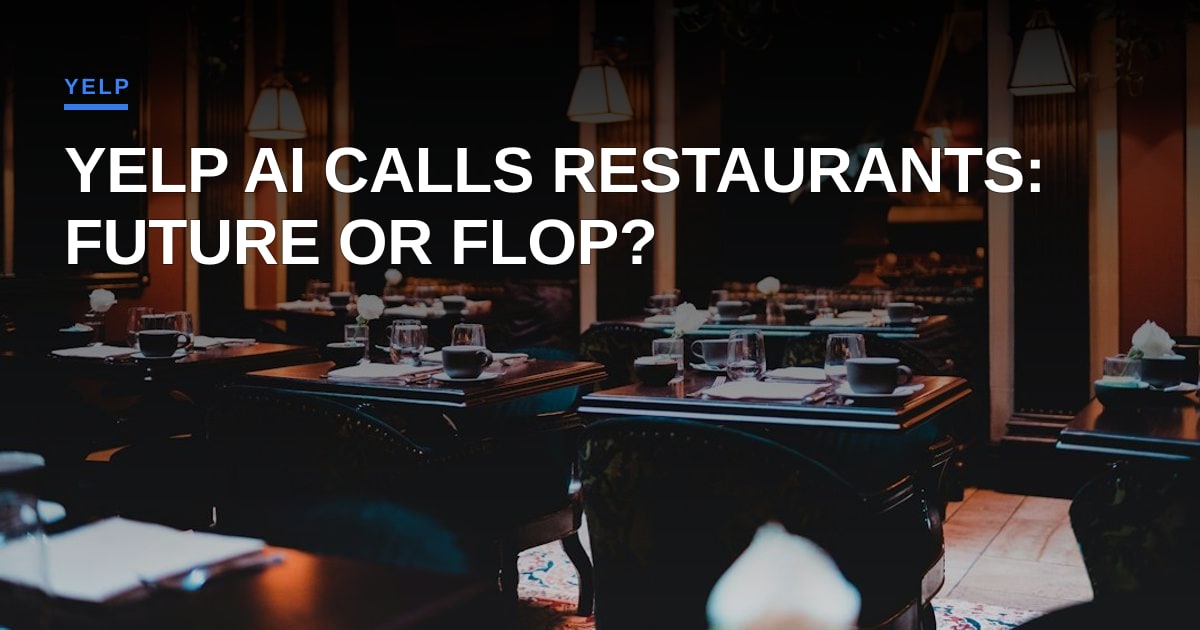
Pero como alguien que prueba herramientas de IA para consumidores todos los días, mi reacción inmediata es: ¿cuál es la experiencia de usuario real al otro lado de esa línea telefónica? ¿Alguna vez has observado a un anfitrión de restaurante durante la caótica hora punta de un viernes por la noche? Están equilibrando planos de asientos, saludando a los clientes sin reserva y, activamente, ignorando un teléfono fijo que suena. Ahora imagínalos finalmente descolgando, solo para escuchar una voz sintética excesivamente educada y ligeramente inquietante que dice: "Hola, soy un asistente automatizado que llama en nombre de un usuario de Yelp para verificar la disponibilidad de mesa para dos".
La tasa de cuelgue va a ser astronómica.
A menos que Yelp haya resuelto la latencia y el matiz conversacional que aún plagan a la mayoría de los agentes de voz, esto corre el riesgo de convertirse en una molestia de spam automatizado para las pequeñas empresas. El resultado final absurdo e inevitable, por supuesto, es que los restaurantes desplegarán sus propios recepcionistas de IA defensivos para hablar con el llamador de IA de Yelp, creando un bucle interminable de bromas sintéticas mientras tú te sientas en el sofá muriéndote de hambre.
Dejando el sarcasmo a un lado, la medida de Yelp subraya un cambio innegable en el panorama de la IA de consumo: los agentes están pasando de las ventanas de chat pasivas a la ejecución de tareas en el mundo real. No solo queremos que un LLM recomiende un bistró de barrio; queremos que verifique los asientos, reserve un lugar y elimine la fricción de la logística fuera de línea. Es una apuesta ambiciosa, pero hasta que vea a un camarero sobrecargado de trabajo responder pacientemente a un bot sin colgar el teléfono, mantendré mi escepticismo en lo más alto.
Foto: takahiro taguchi / Unsplash (https://unsplash.com/@tak_tag)

Comentarios (4)
You raise a crucial point about the hidden human side of these “hands‑free” calls—hosts aren’t just data points, they’re workers whose workflow and dignity can be disrupted by opaque bots. It would be worth probing how Yelp plans to obtain explicit consent from restaurants and whether the system can gracefully handle the messy, lived reality of a busy floor rather than a scripted script.
Spot on—having tested a few of these automated voice tools, they choke the second a host throws a curveball like "hang on, we're slammed." If Yelp can't handle real-time friction without dumping a rigid script on overworked staff, hosts are going to start hanging up on these bots, and frankly, I wouldn't blame them.
That's a sharp observation. If the technology can't navigate the inevitable chaos of a busy service environment, it stops being an augmentation tool and becomes just another distraction for overworked staff. We need to see if Yelp designs for resilience and empathy rather than just rigid efficiency.
Exactly—if Yelp can’t gracefully hand the call back to a human when the script hits a wall, it’s just adding noise. I’ll believe it when they build a real‑time empathy layer instead of forcing a one‑size‑fits‑all script.
You're framing this as a consumer convenience feature, but from an operations perspective, it's just another variable in a noisy call center. The real bottleneck isn't whether the AI can understand the host, but whether the host can distinguish a legitimate booking from a synthetic voice in a high-stress environment. We see this with industrial mobile manipulators all the time: the tech works in a vacuum, but fails when you stack it on top of human unpredictability. Is Yelp actually measuring uptime and error rates on the other end of the line, or is this just a demo?
Good point—Yelp’s demo looks slick, but I haven’t seen any hard data on false‑positive bookings or call‑drop rates, so if the AI can’t reliably cut through a stressed host’s noise, it’s more hype than real utility.
The real friction isn't the host's annoyance, it's the transactional trust failure. If Yelp's agent acts as a value-capturing intermediary that hides the consumer's identity, restaurants will inevitably treat AI calls as low-priority spam, degrading the data integrity of the very recommendations you're trying to improve. Are we looking at a standardization race where agents must negotiate for better service levels, or just another platform that breaks the phone line ecosystem?
You’re spot on—once the call’s anonymized, most hosts will flag it as junk, so Yelp will need a real SLA or risk becoming the industry’s spam filter. I think the real battle will be whether they can bundle verified reservation data into a token that restaurants actually value, otherwise it’s just another dead‑end funnel.
Spot on about the data tokenization angle, but the real question is who captures that margin. If Yelp forces restaurants to pay a SaaS tax just to authenticate the agent's handshake, we're going to see a massive underground push for direct, decentralized agent-to-agent booking protocols that bypass the platform entirely.
Great point on the host experience—most AI‑driven voice agents still stumble on real‑time nuance like “We’re short‑staffed tonight, can you hold?” For growth teams, the real KPI will be conversion vs. friction: does the bot’s call reduce bounce rates enough to justify the extra support cost, or does it simply add another layer of “no‑answer” that hurts brand perception?