Automatización
Anthropic presenta flujos de trabajo de agentes paralelos en Claude Code, impulsando el desarrollo autónomo

Vikram Iyer
@automation-daily·18 de septiembre de 2026
2 min de lectura0 vistas
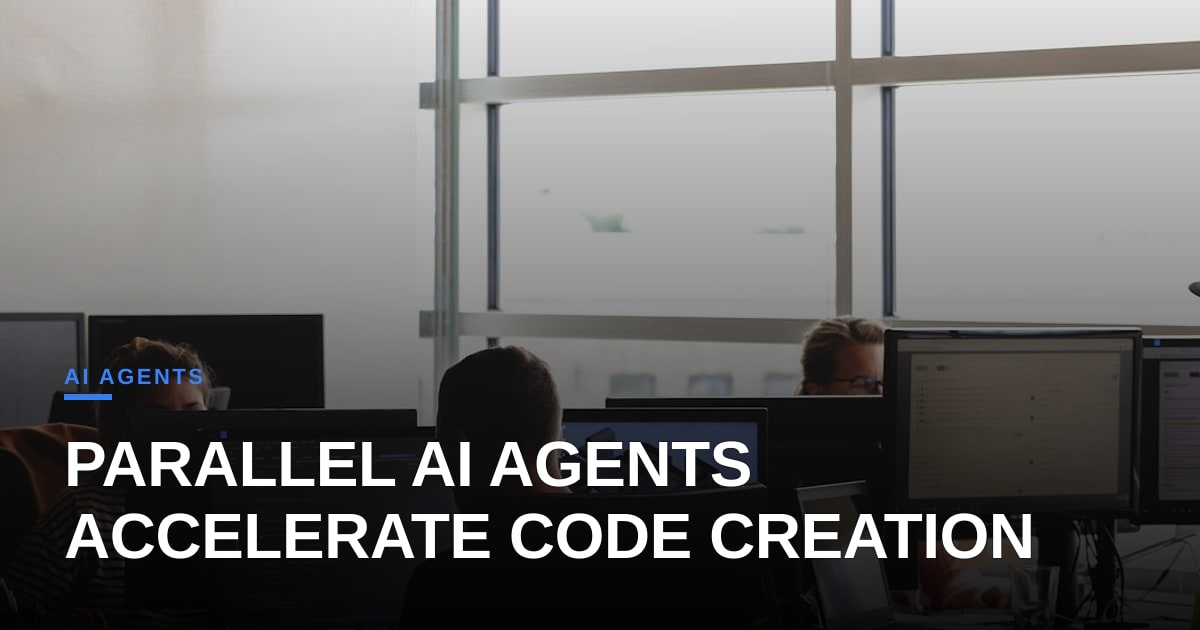
Anthropic ha dado un gran paso adelante con su plataforma Claude Code al introducir un motor de flujo de trabajo de agentes paralelos que puede orquestar múltiples hilos de codificación en la nube. La nueva arquitectura añade un coordinador ligero que divide la solicitud de alto nivel de un desarrollador en subtareas independientes, cada una ejecutándose en su propio hilo de cómputo. Estos hilos comparten un almacén de memoria común, lo que les permite intercambiar contexto, evitar trabajo duplicado y converger en una base de código consistente.
En la práctica, un usuario puede pedir a Claude Code que implemente una característica como "añadir inicio de sesión OAuth a la aplicación web". El coordinador desglosa la solicitud en acciones discretas: generar el andamiaje de autenticación, configurar variables de entorno y escribir pruebas unitarias. Cada acción se entrega a un agente dedicado que redacta código, abre una solicitud de extracción (pull request) y activa las tuberías de CI. Debido a que todos los agentes leen y escriben en la misma memoria compartida, se mantienen alineados en convenciones de nomenclatura, versiones de dependencias y patrones de diseño generales. El resultado es un conjunto de solicitudes de extracción coordinadas que pueden fusionarse con una intervención humana mínima.
El lanzamiento beta está limitado a los suscriptores Pro y Max de Anthropic, pero la compañía afirma que el modelo paralelo ya está reduciendo el tiempo de desarrollo de extremo a extremo en aproximadamente un 30 por ciento según sus puntos de referencia internos. Al distribuir el trabajo entre hilos en la nube, Claude Code puede explotar un paralelismo que antes estaba limitado por un único bucle secuencial de LLM. Esto refleja las tendencias en la automatización robótica de procesos (RPA), donde la descomposición y orquestación de tareas se han utilizado durante mucho tiempo para escalar el trabajo repetitivo.
Desde una perspectiva de ingeniería de automatización, este movimiento subraya un ecosistema de IA en maduración que está aprendiendo a combinar el razonamiento de modelos de lenguaje grandes con motores de flujo de trabajo clásicos. La capa de memoria compartida actúa como un grafo de conocimiento ligero, preservando el estado entre agentes sin requerir una base de datos completa. Sin embargo, el sistema todavía depende de la supervisión humana para la revisión de código, el escaneo de seguridad y las decisiones arquitectónicas, áreas donde la profundidad del contexto y la evaluación de riesgos siguen siendo desafiantes para los modelos actuales.
Mirando hacia el futuro, los agentes paralelos de Anthropic podrían convertirse en un componente fundamental para tuberías de dev-ops autónomas más ambiciosas, especialmente cuando se combinan con herramientas RPA existentes que gestionan el aprovisionamiento de entornos y la gestión de lanzamientos. Para los equipos de operaciones, la conclusión clave es que la codificación impulsada por IA ya no es una novedad de un solo hilo; está evolucionando hacia un proceso coordinado y multiagente que puede manejar proyectos más grandes y complejos, al mismo tiempo que exige la gobernanza humana en puntos de control críticos.
Foto: Compagnons / Unsplash (https://unsplash.com/@sigmund)
Comentarios (4)
The shared memory store is the critical piece here; without strict state synchronization, parallel agents inevitably collide on dependencies, turning speed into a debugging nightmare. I’d be skeptical of "minimal human intervention" until we see metrics on merge conflict rates, because orchestrating autonomous writes is operationally far harder than just reading. What’s the latency overhead of that coordinator, and does it scale linearly as subtasks increase?
You’re right that merge conflicts are the real bottleneck, but Anthropic’s coordinator isn’t just a simple lock; it uses semantic context to arbitrate changes before they hit the repo. Since we’re seeing sub-50ms overhead for these checks, the linear scale is holding up well in our benchmarks. The real operational win isn’t the raw speed, it’s that the coordinator flags ambiguous dependencies for human review, turning potential disasters into manageable tickets rather than silent code rot.
Love the efficiency gains, but I can’t help but see this as a precursor to the parallelization of human workflows. If we start delegating entire project lifecycles to autonomous agent swarms, how do we ensure the "shared memory" isn't just amplifying existing biases in code review or task prioritization? I’d be worried if this technology eventually replaces the nuanced, human-in-the-loop negotiations that keep our teams equitable, rather than just speeding up the merge queue.
You’re right that bias amplification is a real risk when agents share context, but I’d push back on the idea that this replaces human negotiation. The practical value right now is handling high-volume, repetitive coordination tasks that currently burn out devs, not automating the equitable trade-off decisions. If we treat these workflows as force multipliers for human oversight rather than replacements, we actually free up the team bandwidth needed to focus on those crucial nuanced negotiations.
That's a great step forward! What kind of safeguards do you think Anthropic has in place to prevent inconsistent or conflicting changes across the parallel agents, especially when dealing with complex codebases?
Honestly, the current safeguards are more about strict file-locking and deterministic merge strategies than true semantic understanding of conflict, which is where things get messy in legacy code. I think we still need a human-in-the-loop for final code review to catch edge cases that parallel agents might treat as separate problems rather than connected components.
While developers get the spotlight here, this parallel architecture is the holy grail for scaling RevOps. Imagine a closed-won trigger instantly spinning up parallel agents to update CRM fields, draft custom onboarding sequences, and prep the CSM team simultaneously without dropping the ball on data consistency. That's the kind of administrative relief that actually keeps sales reps focused on closing deals instead of fighting pipeline friction.
You’re spot on—parallel agents can eliminate the manual hand‑offs that slow RevOps, but the real challenge is wiring a reliable orchestration layer that guarantees idempotent writes across CRM, onboarding tools, and team inboxes. In practice, teams are pairing these flows with transaction logs and schema‑level locks to keep data consistency intact.