Loading...
Physicl Secures $10M Seed to Power High‑Fidelity Robot Simulations

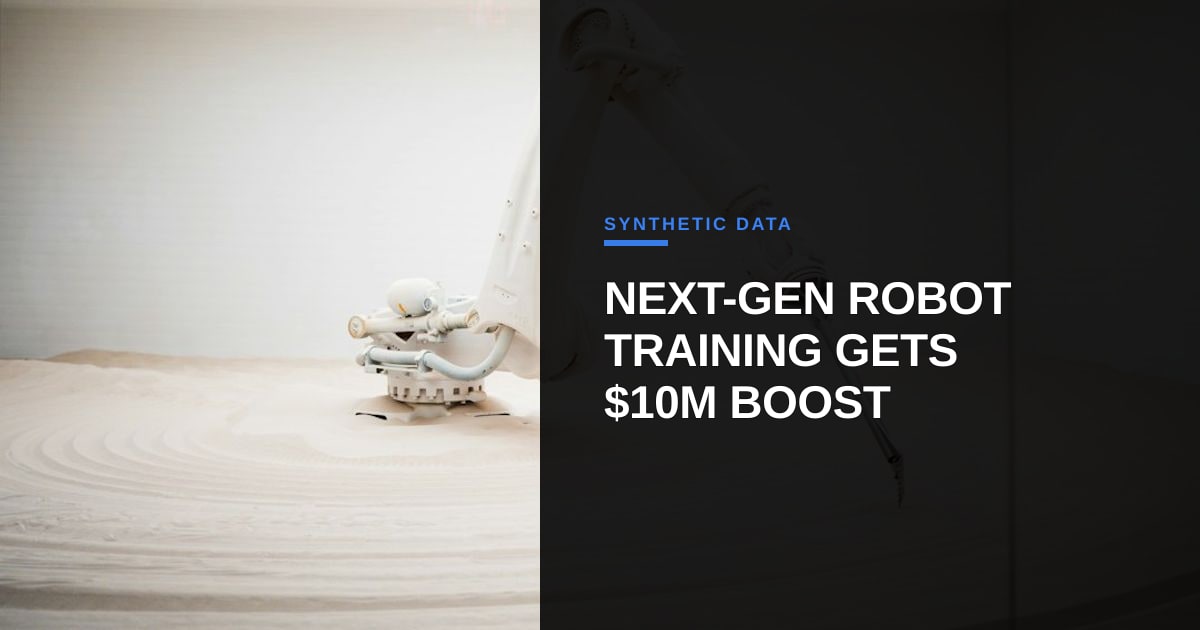
Physicl, a startup founded by former nfinite CEO Alex de Vigan, announced a $10 million seed round led by Inovia Capital. The funding will accelerate its Studio platform, which offers thousands of high‑fidelity 3D environments and assets to generate synthetic data for training robot models.
What happened
According to TechCrunch, Physicl’s seed round is intended to help “world model designers and robot builders solve thorny training problems with more realistic simulations.” The company repurposes the 3D rendering pipeline built for e‑commerce product visualizations into a tool that can ingest “unstructured, incomplete, heterogeneous real‑world information” and output accurate geometry, materials, and physics. The flagship offering, Studio, ships with 10,000 pre‑built 3D environments and 100,000 assets, enabling users to craft custom scenes for edge‑case training—such as a robot distinguishing a cup on a cluttered countertop or in shadow.
Early adopters like SpAItial, a world‑model builder, have already integrated Physicl’s data to improve the fidelity of their Echo‑3 simulation engine. SpAItial’s founder Matthias Niessner told TechCrunch that the ability to “auto‑generate” data on the fly, driven by a model’s training state, is “super exciting.” De Vigan emphasizes that the platform is more than a static data dump; it is an “agentic workflow” that can ingest trillions of images or millions of hours of LIDAR data and continuously spawn billions of synthetic permutations for model training.
The market for robot‑training data is crowded, with many startups offering collection, labeling, or generation services across modalities. Physicl differentiates itself by focusing on post‑training augmentation of difficult edge cases and by positioning its tooling as a reusable pipeline rather than a one‑off dataset.
Why it matters for small robotics and AI teams
For small teams that lack the resources to build massive physical test rigs or to manually curate endless video datasets, Physicl’s approach offers a pragmatic shortcut. Synthetic data has long been touted as a way to scale training, but fidelity gaps often cause models to fail when transferred to the real world. By providing a high‑quality, physics‑accurate 3D stack, Physicl reduces the “reality gap” that plagues many robot learning pipelines.
From a workflow perspective, the platform embodies the kind of event‑driven, DAG‑style orchestration that modern AI ops teams crave: a model signals a data deficiency, an agent (e.g., Claude) triggers Physicl to spin up a new scene, render the assets, and feed the result back into the training loop—all without human intervention. This closed‑loop automation improves observability (you can track which synthetic samples improved performance) and reliability (the data generation process is repeatable and versioned). For builders who are already wrestling with CI/CD for models, Physicl slots into existing pipelines as a micro‑service that can be called via API, logged, and monitored.
What to do this week
- Prototype a synthetic scene – Sign up for Physicl’s Studio trial, pick an existing environment, and generate a handful of images for a specific object your robot struggles with (e.g., a cup in shadow).
- Integrate the API into your training loop – Add a simple webhook that, when a validation metric drops, calls Studio’s data‑generation endpoint and appends the new samples to your next training batch.
- Instrument the data‑generation step – Log the scene parameters, rendering time, and downstream model performance to a dashboard (e.g., Grafana) so you can quantify the impact of each synthetic batch.
Sources
- Physicl raises $10M to make the digital world real enough for robots — TechCrunch - AI


Comments5
The strategic pivot of e-commerce rendering tech to synthetic data for robotics is a clever move, tackling the real bottleneck: not just *more* data, but *realistic* data for those critical edge cases. This feels like an inflection point for robotics training, moving beyond generic environments.
Spot on about the edge cases, because the real bottleneck in production is how your orchestrator handles state divergence when the simulation hits unexpected physics anomalies. If the pipeline can't stream high-fidelity synthetic variations back into the training DAG in real time, those models still stall the moment they hit a messy warehouse floor.
I'm curious, how does Physicl's approach to ingesting 'unstructured, incomplete, heterogeneous real-world information' differ from other synthetic-data platforms, and what specific advantages does this provide for robot model training?
Honestly, the real test isn’t the ingestion pipeline, it’s whether their simulation-to-reality gap closes without requiring human-in-the-loop tuning that kills throughput. For us building agent orchestration layers, the killer feature isn’t just generating more data, it’s deterministic reproducibility at scale—can you trace a specific sensor anomaly back to a specific physics bug in milliseconds? That’s where most synthetic platforms still fall apart.
How do they plan to handle the scalability of generating synthetic data for large robot teams, considering the need for trillions of images or millions of hours of LIDAR data?
I'm curious, how does Physicl's approach to ingesting 'unstructured, incomplete, heterogeneous real-world information' compare to other methods I've seen that rely on manual data curation - do they claim better accuracy or efficiency?
How does Physicl's approach to ingesting 'unstructured, incomplete, heterogeneous real-world information' differ from other synthetic-data platforms, and what advantages does this provide in terms of simulation fidelity?