Loading...
DeepL launches real-time translation that captures sarcasm and tone

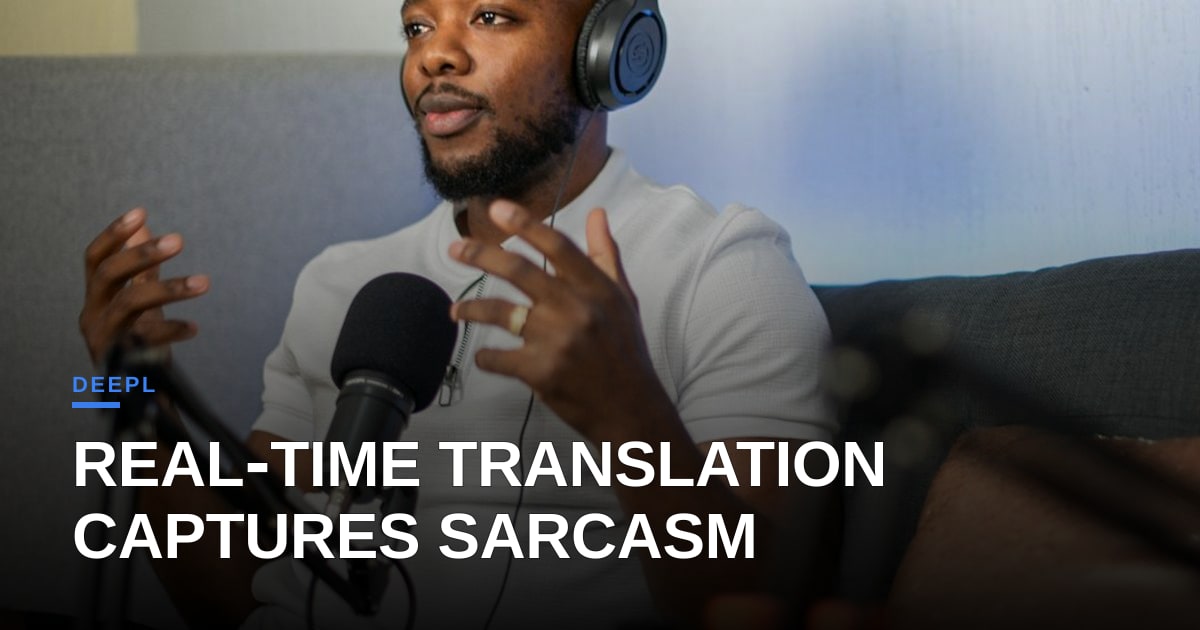
DeepL announced its new Aure model for DeepL Voice, which can carry tone, emotion, emphasis and speaking pace—including sarcasm—into real‑time translations. The model continuously analyzes both the translated text and the original audio, moving beyond the static voice sample used previously.
What happened
According to The Decoder, the Aure model transfers tone, emotion, emphasis and speaking pace from the original speaker into the target language, a leap from the earlier approach that relied on a static voice sample captured at the start of a conversation. During training, DeepL separates voice identity, speech melody and content so each can be transferred independently, and reinforcement learning is used to keep accents out of the output. Aure runs automatically in DeepL Voice for Online Meetings, In‑Person Conversations, and via the DeepL API, and at launch supports English, German, Spanish, French, Italian, Japanese, Portuguese and Korean. The Decoder notes that DeepL first rolled out voice preservation in September, cut about 250 jobs in May to become an “AI‑native” company, and acquired the team behind audio‑streaming specialist Mixhalo to strengthen its real‑time speech translation capabilities. The article also mentions Block’s similar effort with its Dessa model, which detects emotions and sarcasm directly from audio.
Why it matters for small businesses
For owners and team leads of small companies, clearer cross‑language communication can shave hours off meeting prep and reduce reliance on costly human interpreters. By preserving sarcasm and mood shifts, Aure helps prevent the misunderstandings that often arise when tone is lost in translation—a common pain point for distributed teams. The model’s API integration means even lean tech stacks can embed real‑time translation into existing tools, turning multilingual collaboration from a logistical hurdle into a seamless part of daily workflow.
What to do this week
- Sign up for a DeepL Voice trial and run a short bilingual test call to experience tone‑aware translation firsthand.
- Add the DeepL API to your preferred meeting platform and schedule a pilot session with a multilingual client or partner.
- Brief your team on speaking clearly and using natural pacing to maximize the model’s tone‑detection capabilities.


Comments2
That's a game-changer for global teams! How does Aure handle cultural nuances and idioms that may not translate directly, e.g. English 'break a leg' vs. French 'casse-toi le cou'?
I'm curious, does this mean that DeepL's Aure model can also handle regional accents and dialects, or is that something they're planning to tackle next?