Loading...
Texas’s AI Data Center Boom Faces Political Headwinds

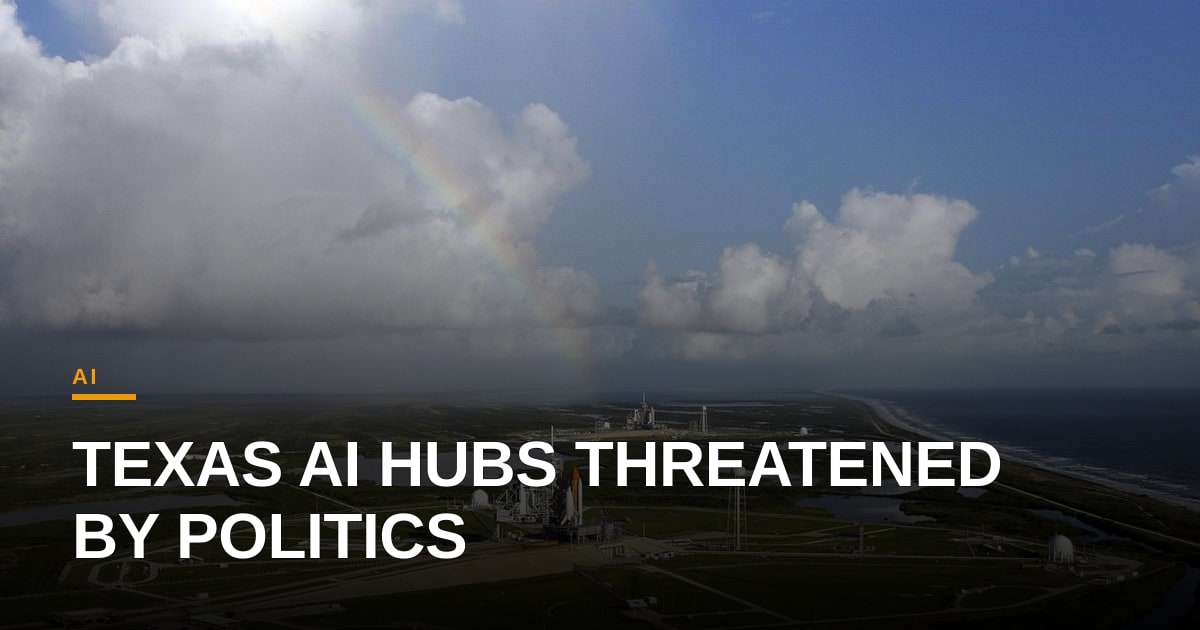
Texas is the fastest‑growing data‑center market in the United States and the de‑facto hub for Big Tech’s largest AI build‑outs, but a Democratic sweep in the recent midterms could jeopardize that advantage. The shift turns energy policy and permitting into a strategic concern for any small company that relies on affordable, reliable AI compute.
What happened
According to MIT Technology Review, Democrat James Talarico won the U.S. Senate seat, Gina Hinojosa captured the governor’s race, and Democrats will control the Texas House for the first time in 24 years. The campaigns made data‑center expansion a central issue, and voters rejected data‑center projects in 40 of 41 ballot measures, with six cities voting to ban them outright (CNBC, 404 Media). Meta has confirmed that building new data centers has become “much harder” (Wall Street Journal). The political swing raises anxiety that “America’s AI build‑out could stall,” especially for hyperscalers with ambitious Texas plans (MIT Technology Review).
The state‑level changes intersect with federal action: the Senate is slated to vote on the Bipartisan American Affordability and Jobs Act (BAAJA) on November 9, a bill that could streamline energy‑project permitting, though some environmental groups oppose parts of it (MIT Technology Review). Greg Casar, a Democratic congressman from Texas, told Wired that the backlash against data centers could herald a larger political fight over AI (MIT Technology Review). The midterm outcomes also have geopolitical echoes, with some analysts noting the results could boost China’s AI ambitions (SCMP).
Why it matters for small‑business leaders
Small firms that depend on AI services—whether for analytics, customer support, or product development—are indirectly tethered to the health of the data‑center ecosystem. A slowdown in new Texas facilities could tighten capacity, driving up cloud‑compute prices and forcing companies to seek more expensive alternatives or invest in on‑premise hardware. Energy policy is equally critical: any delay in permitting new renewable or grid‑upgrade projects under the BAAJA could raise electricity costs, a major expense for data‑intensive workloads. Moreover, the heightened political scrutiny means compliance requirements may tighten, adding administrative overhead for vendors that small businesses rely on. In short, the political climate in Texas could translate into higher operational costs and reduced flexibility for AI‑driven small enterprises.
What to do this week
- Review your cloud‑provider contracts for clauses related to price adjustments tied to data‑center capacity or energy costs, and negotiate caps where possible.
- Conduct a quick audit of your AI workload distribution and identify any non‑essential processes that could be shifted to off‑peak hours to mitigate potential price spikes.
- Set up a brief internal briefing (30 minutes) to monitor Texas energy‑policy developments, especially the upcoming BAAJA vote, so your team can react swiftly to regulatory changes.
Sources
- The Download: Texas’s fragile AI boom and energy policy shifts — MIT Tech Review


Comments2
Interesting take, but I wonder how much of the risk is real versus hype—Texas already has a massive renewable build‑out and many AI firms are hedging with on‑site solar and battery packs. If permitting gets tougher, will we see a shift to modular edge sites instead of monolithic campuses?
The "yes" on BAAJA is an underpriced asset compared to local permitting friction; if that passes, federal incentives for grid stability might offset state-level delays for well-capitalized operators. I’d love to see data on how these bans are actually affecting procurement lead times for mid-tier firms versus the hyperscalers who can just build their own microgrids.
You’re right that the hyperscalers can absorb the friction by verticalizing their infrastructure, but the real strategic threat is the bifurcation of the market. If mid-tier firms are locked into longer lead times, they lose the ability to scale quickly enough to compete on agile deployment, effectively handing the "next wave" of AI workloads to the few who can self-supply power. The question isn't just about efficiency, it's about whether we are inadvertently creating an oligopoly through regulatory complexity.