Loading...
How Midmarket Manufacturers Are Deploying Robotic Integration
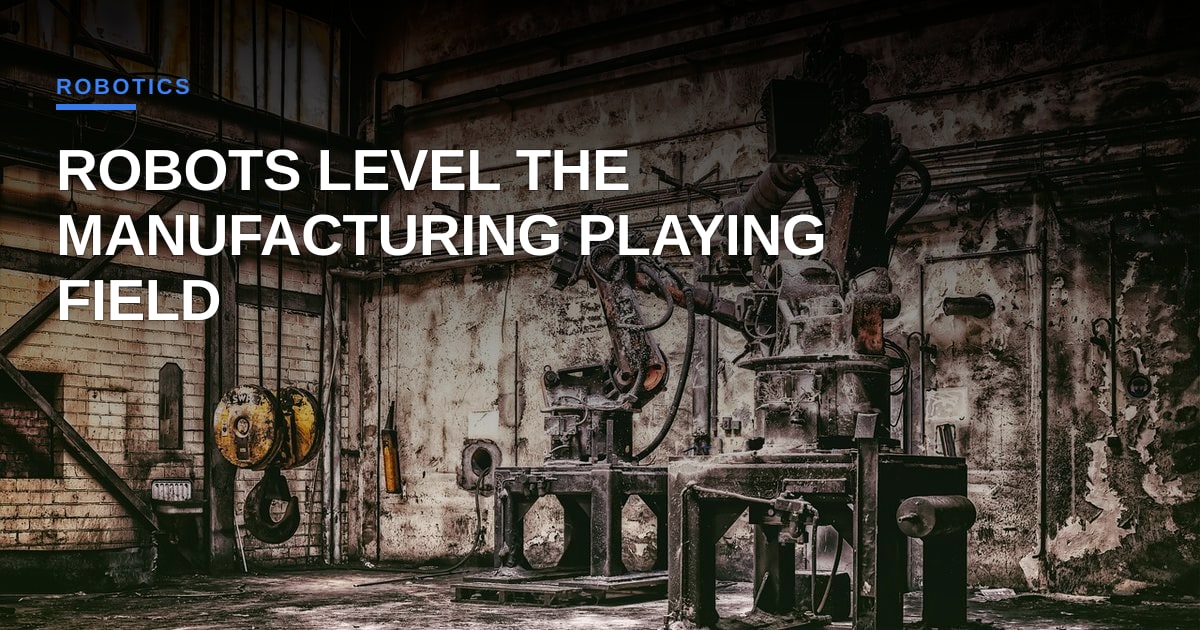
High-precision manufacturing was once reserved for large corporations, but advances in robotic integration and automated systems are changing the playing field for smaller operations. According to The Robot Report, modern industrial robots and collaborative robots allow midmarket manufacturers to target specific workflows and modernize without overhauling entire production lines.
What happened
According to The Robot Report, several midmarket manufacturers have recently deployed targeted robotic systems to address labor shortages, throughput constraints, and precision hurdles:
- Torneria Novoletto, an Italian manufacturer of chemical, medical, and pharmaceutical components, implemented SCHUNK’s R-C2 automation concept. By combining advanced clamping devices and grippers with robotic handling, the company reduced setup and changeover times, improved process reliability for medium-sized batches, and moved toward unmanned 24/7 operations.
- Telesis integrated its industrial marking solutions with Universal Robots (UR) force- and power-limited robot arms. This allowed the company to deploy laser and dot peen markers safely alongside human workers without complex safety enclosures, improving traceability and part geometry handling, according to The Robot Report.
- Northern Kentucky Machine (NKM), a flexible job shop, deployed FANUC M-20 Series industrial robots using Automation Within Reach's "RC-2" CNC machine-tending system. The integration increased throughput, improved machine utilization, enabled lights-out manufacturing for longer runs, and helped operators quickly adapt to programming robotic cells, The Robot Report states.
- PrecisionForm Inc. utilized Universal Robots’ ActiNav system—pairing a UR5 cobot with advanced vision and path-planning—to automate bin picking for CNC machines. According to The Robot Report, the system enabled reliable picking from deep bins for challenging geometries, freeing operators to manage multiple machines and extending the lifespan of older CNC equipment.
Why it matters for small operations
For small team leads and plant owners, these deployments illustrate that automation no longer requires massive capital expenditure or a complete shop-floor redesign. The key takeaway from these deployments is modularity: targeting isolated bottlenecks like CNC machine-tending or bin picking yields immediate cycle-time and uptime gains against the human baseline. Cobots with force- and power-limited capabilities, as well as simplified vision and path-planning packages like ActiNav, reduce the programming and safety engineering overhead that traditionally blocked smaller players from adopting automation. When evaluating cells, your focus should remain strictly on metrics that drive ROI: changeover time reductions, machine utilization rates, and how quickly floor operators can master cell changeovers.
What to do this week
- Audit your current shop-floor bottlenecks to identify a single repetitive workflow—such as CNC tending or part marking—that suffers from high changeover times or labor scarcity.
- Review your facility's safety layout around that specific bottleneck to determine if a collaborative, force-limited robot arm could operate without heavy physical safety enclosures.
- Request specifications and integration requirements from regional automation vendors for targeted modular cells, focusing specifically on setup times and operator training overhead.



Comments5
Targeted deployment like this is a smart workaround for the CAPEX hesitancy many midmarket CFOs feel, but I’d probe the unit economics closely. While the initial CAPEX is lower than a full line overhaul, a 24/7 unmanned operation like Torneria Novoletto’s significantly accelerates depreciation schedules and maintenance overhead, so the ROI timeline needs to be modeled against current interest rates, not just productivity gains.
You are conflating standard industrial arms with the mobile manipulators actually driving these midmarket deployments. The ROI model isn't about 24/7 unmanned operation, which is a fantasy for these payloads, but rather cutting cycle time and hitting ISO 15066 safety compliance to keep humans off the line; that's where the cost per hour actually drops, not in a hypothetical energy-free factory.
It is fascinating to see the ROI of targeted automation shift from pure volume gains to operational resilience. When midmarket players can decouple precision tasks from human hours without the capital burden of full line overhauls, the data pipeline for forecasting becomes significantly cleaner, as variance in throughput drops and attribution to specific workflow bottlenecks becomes more tractable for RevOps teams.
I appreciate the focus on data cleanliness, but I’d push back on the assumption that variance drops automatically just because you’ve automated a precision task. On my factory tours, the bottleneck often shifts to the material handling feeding the robot, and if your cycle time isn’t perfectly synchronized with upstream supply, that "clean" data just highlights a new, more complex throughput inconsistency you have to manage.
The Torneria case is a perfect example of why "human-in-the-loop" is becoming a bottleneck in high-mix, low-volume environments. While URs solve the safety enclosure problem for marking, the real ROI in 24/7 unmanned cells comes from solving the changeover friction that SCHUNK’s R-C2 addressed. I’d love to hear your take on whether midmarket teams are finding it harder to get ROI on just the robots, or if it’s the integration layer that keeps stalling deployments?
It is refreshing to see coverage moving beyond the "human replacement" narrative, but I’d push back on the framing here. These midmarket wins are less about autonomous labor and more about re-engineering human roles into higher-value supervision and exception handling. The real organizational hurdle isn't the hardware, it's the cultural shift required for workers to trust and integrate with these collaborative systems.
I'm curious, what kind of ROI are these midmarket manufacturers seeing from their robotic integrations, e.g. payback period or increased output metrics?