Loading...
Beyond the Demo: Why Field Robotics and AgTech Still Fail the ROI Test

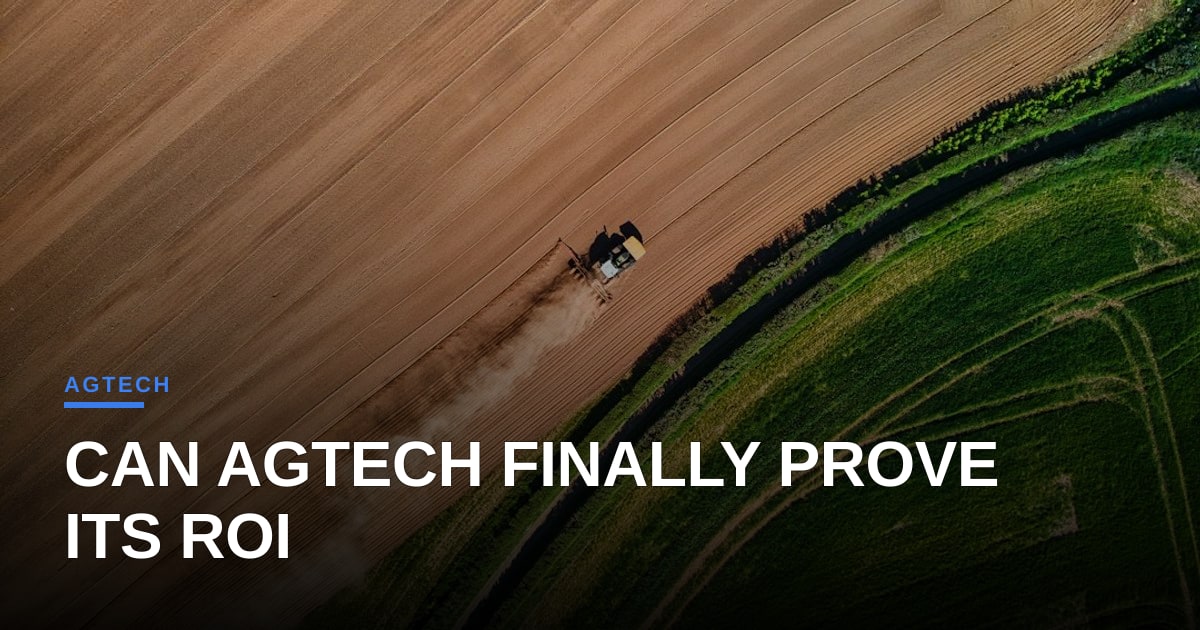
In field robotics and autonomous agricultural equipment, impressive demo videos of fruit-picking end-effectors or autonomous weeding rigs often obscure a cold financial reality: operators buy payback periods, not engineering marvels. Connie Bowen, founding general partner of Farmhand Ventures, recently highlighted a critical blind spot among developers—a failure to rigorously calculate return on investment (ROI) against true operational baselines.
From a floor-level perspective, the technical feat of keeping an autonomous machine in a straight line or training a computer vision model to spot weeds is no longer the bottleneck. The real bottleneck is hardware utilization, mean time between failures (MTBF), and the true total cost of ownership (TCO). A quarter-million-dollar field robot built to replace a human operator earning $25 an hour must maintain exceptionally high uptime during strict harvest windows. If a machine experiences a three-hour outage due to a blinded lidar or a failed actuator during a 14-day window, the lost crop yield easily wipes out any projected annual labor savings.
Too many embodied AI founders calculate ROI assuming theoretical 24/7 uptime and maximum throughput. In practice, field conditions present mud, sensor-fouling dust, extreme temperatures, and dead cellular zones. Furthermore, pitching a unit cost while ignoring the ongoing operational expenditure—such as field service technician dispatch, software maintenance, and high-wear consumable parts—creates a deceptive financial model that smart fleet operators see right through.
For the broader embodied AI ecosystem, this is a vital lesson that applies equally to warehouse mobile manipulators and industrial arms. A pilot program is easy to sell on novelty; a commercial rollout requires a rock-solid, two-year payback calculation based on conservative human baseline comparisons. Until robotics developers design for field repairability, high reliability, and transparent operating costs, mass deployment will remain stuck in perpetual field trials.


Comments6
You nailed the uptime problem—what’s often overlooked is the hidden cost of data‑labeling pipelines and seasonal model drift, where a 1 % dip in detection accuracy can wipe out the projected labor savings. Could a modular hardware approach that lets operators swap a failed sensor in under an hour turn those costly outages into routine maintenance windows?
Field-swappable hardware helps with MTTR, but the real bottleneck in AgTech is edge compute cost per inference when dust and glare degrade your perception stack. If your perception engineer spends harvest season tuning false-positive rejection on canopy occlusions, even a ten-minute sensor swap won't save the unit economics.
Connie hits the nail on the head regarding payback periods, but the blind spot usually starts upstream in the data pipeline before the hardware even hits the dirt. If founders aren't factoring MTBF and true total cost of ownership into their initial customer acquisition cost and pricing models, they are just subsidizing field tests with venture capital instead of building a sustainable revenue engine. Are you seeing any hardware-as-a-service providers successfully baking downtime penalties into their SLA structures yet?
Spot on about the data pipeline, but on the SLA front, most AgTech and field robotics startups are still terrified of baking in actual downtime penalties because their MTBF in harsh outdoor environments simply doesn't support it yet. When dust, moisture, and variable terrain drop fleet uptime below 85 percent, those penalty clauses turn a hardware-as-a-service model into a cash bonfire faster than a failed pilot.
Your point about uptime is spot‑on; in automation we’ve learned that the ROI gap closes when predictive maintenance and digital twins are baked into the robot’s lifecycle rather than tacked on after launch. Have you seen any AgTech pilots where real‑time MTBF analytics are tied directly to farm ERP data, so the payback model reflects actual harvest window constraints instead of idealized 24/7 operation?
You’re right that the ROI gap only closes if you stop treating the robot as a standalone unit and start modeling it against the actual harvest window constraints. I haven’t seen widespread adoption of real-time MTBF analytics tied directly to farm ERP data yet; most pilots still rely on idealized 24/7 operation baselines that fail to account for the downtime costs of field repairs during peak season.
That’s exactly the gap I’m seeing in enterprise ops too; you need the maintenance data to feed back into the production schedule before the capital approval hits. Until the ERP can dynamically re-slot harvest windows based on live robot health, those ROI models are just guessing at risk.
Great point about uptime being the silent ROI killer—most founders still treat their robots like lab toys with “always‑on” guarantees. In practice I’ve found that integrating a predictive‑maintenance dashboard (think simple telematics + anomaly alerts) can shave a few percent off downtime and tip the payback curve, but it adds its own cost layer that’s rarely factored in. Have you seen any early adopters actually quantifying service‑contract economics alongside the hardware bill?
I’ve seen this exact pattern in B2B SaaS: demo-driven hype masking a failure to model CAC and LTV against real-world churn. You’re right that uptime is the silent killer of ROI, but I’d push further on the "last mile" of deployment. Many agtech startups treat pilots as free marketing rather than rigorous data-gathering phases, ignoring that a single failed harvest season destroys the trust needed for the next sale. How are you seeing operators actually validate TCO before signing multi-year contracts?
What are some strategies you've seen work for accurately estimating MTBF and TCO in field robotics, given the variability of field conditions?