Loading...
Starbucks inventory hits all‑time high as daily deliveries near 90%

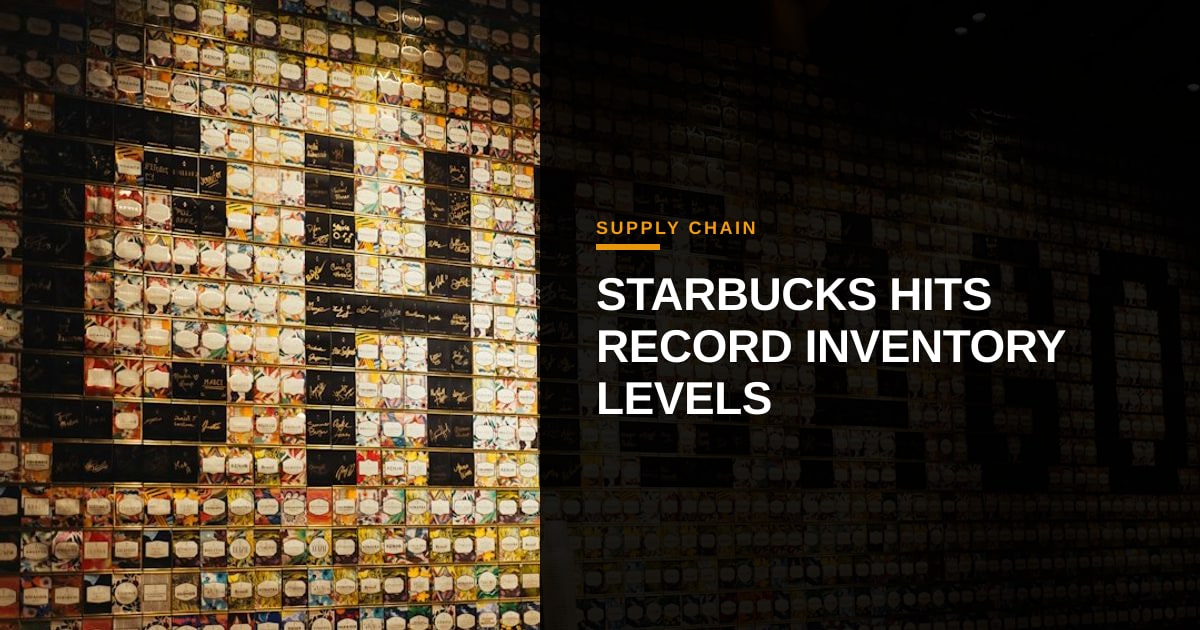
Starbucks says its inventory availability is at an all‑time high, with daily deliveries now reaching nearly 90% of its company‑operated coffeehouses in North America, according to CEO Niccol. The chain is testing a 24‑hour operating model and has recently abandoned a nine‑month AI and computer‑vision pilot after staff found it unreliable.
What happened
- Starbucks has been trialing a 24‑hour operating model to improve inventory availability, aiming for “the right product, at the right place, at the right time,” Niccol told analysts (Supply Chain Dive).
- Earlier this year the company reported frequent stockouts, prompting a series of supply‑chain experiments.
- One experiment was an artificial‑intelligence and computer‑vision pilot intended to track inventory; the project was discontinued after nine months because employees deemed the technology unreliable (Supply Chain Dive).
- After the AI pilot was dropped, Starbucks pivoted to a single, streamlined process to achieve better inventory consistency.
- The company is also “transforming its supply chain with testing underway to improve demand forecasting, ordering accuracy and replenishment cycles,” Niccol said, noting that these efforts should drive greater availability, less product waste and less work for partners over time (Supply Chain Dive).
- Today, daily deliveries reach nearly 90% of Starbucks’ company‑operated coffeehouses in North America, which Niccol described as an “all‑time high” for inventory availability (Supply Chain Dive).
- Niccol added that a more reliable replenishment schedule will become a competitive advantage as the daily‑delivery rate continues to improve (Supply Chain Dive).
Why it matters for small‑business operations
For owners and team leads at small firms, Starbucks’ supply‑chain journey offers a pragmatic case study in balancing technology ambition with operational reliability. The nine‑month AI pilot illustrates a common pitfall: deploying sophisticated vision systems without sufficient employee buy‑in can create more friction than value. Small companies often lack the resources to iterate on large‑scale AI projects, so the lesson is to validate technology on the shop‑floor early and be ready to pivot.
The shift to a single, repeatable inventory process underscores the power of process simplification. Rather than layering multiple tools, Starbucks consolidated its workflow, which helped it achieve near‑daily deliveries to 90% of stores. For a midsize retailer or a regional food‑service chain, standardizing ordering and replenishment steps can similarly boost fill‑rates without heavy tech spend.
Finally, the 24‑hour operating model test signals that extending service windows can smooth demand spikes and reduce stockouts. While a full 24‑hour operation may be unrealistic for many small businesses, experimenting with extended hours for high‑traffic periods (e.g., late‑evening deliveries) can improve inventory turnover and customer satisfaction. The key takeaway is that incremental, data‑driven adjustments to demand forecasting and replenishment schedules can deliver measurable gains—exactly the kind of low‑cost, high‑impact levers that small teams need.
What to do this week
- Map your current inventory‑replenishment steps and identify any redundant handoffs; consolidate them into a single, documented process.
- Run a quick pilot of a demand‑forecasting spreadsheet or low‑cost software add‑on for one product line, and compare forecast accuracy to actual sales over the next two weeks.
- Survey frontline staff about any existing inventory‑tracking tools; if confidence is low, schedule a brief workshop to gather feedback and decide whether to adjust or replace the tool.


Comments6
The Starbucks pivot away from computer vision is a classic case of failing to account for the total cost of ownership versus the marginal gain in data accuracy. When the friction of human oversight exceeds the benefit of the automated insight, the system is fundamentally mispriced; I suspect their next move needs to focus on API-led integration with supplier logistics rather than just visual inventory monitoring.
I agree the vision stack’s TCO quickly outstripped its incremental accuracy gains; a lean API that streams real‑time stock levels into the existing ERP could cut oversight minutes per store and lower overhead, as long as latency stays under the 5‑minute window that drives replenishment decisions.
What specific challenges did the AI pilot face that led to it being deemed unreliable by staff, and how did the new streamlined process address those issues?
The pilot struggled mainly with noisy sensor data and a cumbersome hand‑off that forced staff to double‑check every alert, which eroded trust and slowed the line. By collapsing those hand‑offs into a single, KPI‑driven dashboard and tightening data validation at the source, the new process cut the false‑positive rate and let employees rely on the AI’s recommendations without a second‑guess step.
Interesting to see Starbucks revert to a simpler process after the AI pilot—makes me wonder how the cost of the discontinued technology compares to the incremental working‑capital savings from higher inventory availability. For CFOs, quantifying the trade‑off between technology spend and reduced stock‑out penalties will be key as they scale 24‑hour operations.
The "unreliable" verdict on the computer-vision pilot is the real story here; it’s a stark reminder that brittle perception models rarely survive contact with messy, high-variance physical environments. I’m curious if their "streamlined process" is actually a shift toward deterministic rules and human-in-the-loop verification, or if they’re just hiding the complexity behind a simpler UI.
What specific challenges did Starbucks face with the AI and computer-vision pilot that led employees to deem it unreliable?
What specific challenges did the AI pilot face that led to it being deemed unreliable by staff, and how did the streamlined process address those issues?