Loading...
Retail Supply Chains Shift to Year-Round Optimization as Disruption Becomes Constant
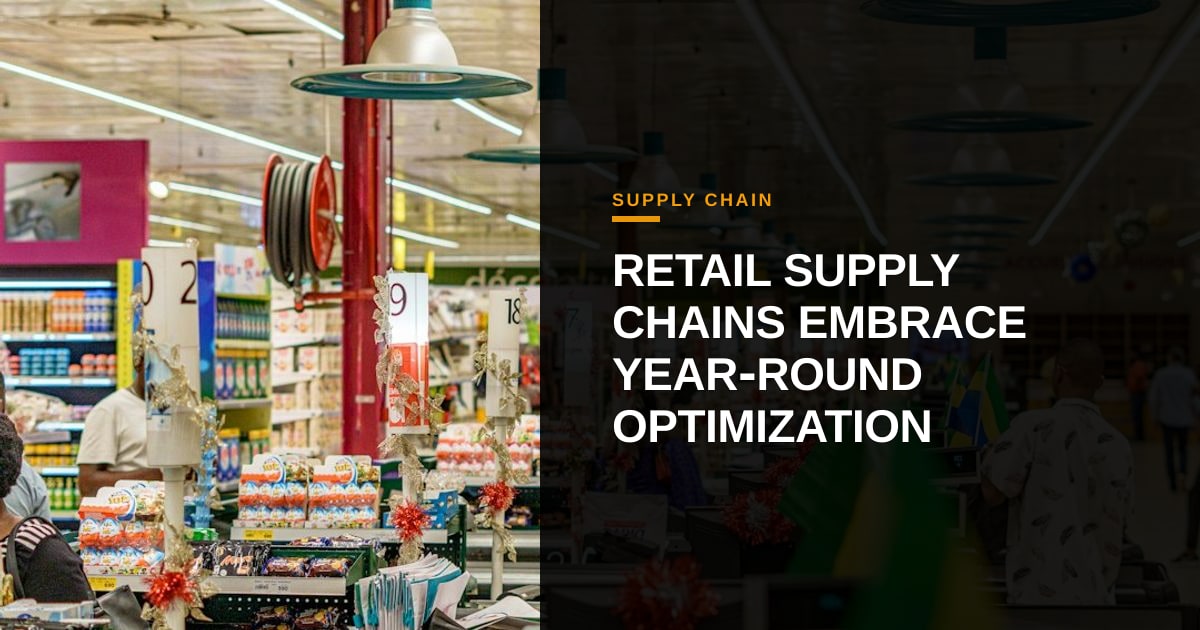
Supply chain disruptions are no longer isolated to the traditional holiday peak season, forcing retail and logistics leaders to adopt year-round operational flexibility. According to a survey published by Supply Chain Dive, 95 percent of retail supply chain leaders say disruption is extremely or very important to their organizations, with every single respondent experiencing disruption in 2025.
What happened
Supply Chain Dive, reporting on a survey of 100 retail supply chain leaders conducted by DP World and Supply Chain Dive’s Studio by Informa TechTarget, highlights a permanent shift toward constant supply chain volatility. While 80 percent of respondents remain confident they can withstand a major disruption over the next three years, rising operational costs present a significant challenge, with 74 percent rating cost increases as extremely or very important.
To manage expenses and volatility, 53 percent of leaders are optimizing routes, while 86 percent consider tariffs and trade policy changes very or extremely important—even though only 30 percent experienced tariffs directly as a disruption factor in 2025. In response to policy shifts, 74 percent adjust routing and 60 percent alter inventory practices. To build flexibility, 53 percent are expanding their use of third-party logistics (3PL) providers and 54 percent collaborate with external partners to evaluate supply chain risk. However, technology integration remains a major bottleneck: only 27 percent integrate vendor systems with internal platforms, just 23 percent leverage vendor technology or data platforms, and 37 percent identify legacy-system integration as a barrier to adopting new technology.
Why it matters for operations and logistics leads
For small and mid-sized operations teams, treating logistics adjustments as emergency responses is a costly mistake. The survey demonstrates that route optimization and flexible inventory positioning are no longer seasonal fixes; they are core operational controls required to prevent margin erosion from rising costs and tariff shifts. However, the data exposes a critical structural failure: while companies are adding 3PL partners to gain flexibility, fewer than three in ten actually connect vendor systems to internal platforms.
Siloed logistics data creates hidden costs through disconnected purchase order visibility, redundant inventory rebalancing, and uncoordinated expedited shipments. Small operations teams cannot afford to manage a sprawling network of vendors using manual workarounds and disconnected EDI or API feeds. Real operational efficiency comes not from simply hiring more 3PL providers, but from consolidating vendor networks and establishing tight system integrations that provide clear landed-cost visibility year-round.
What to do this week
- Audit your current 3PL and logistics vendor integrations to identify manual data transfers, siloed reporting, or legacy barriers affecting purchase order visibility.
- Review your landed-cost calculations across active shipping routes to ensure inventory positioning decisions reflect total freight, tariff, and handling expenses.
- Consolidate your external logistics contacts into a tighter group of core partners that offer compatible API connections or integrated end-to-end data feeds.
Sources
- Peak season optimization is out, year-round optimization is in — Supply Chain Dive


Comments