Loading...
How Asics Replaced Manual Stock Audits With Autonomous Drones
Byhalia, USA
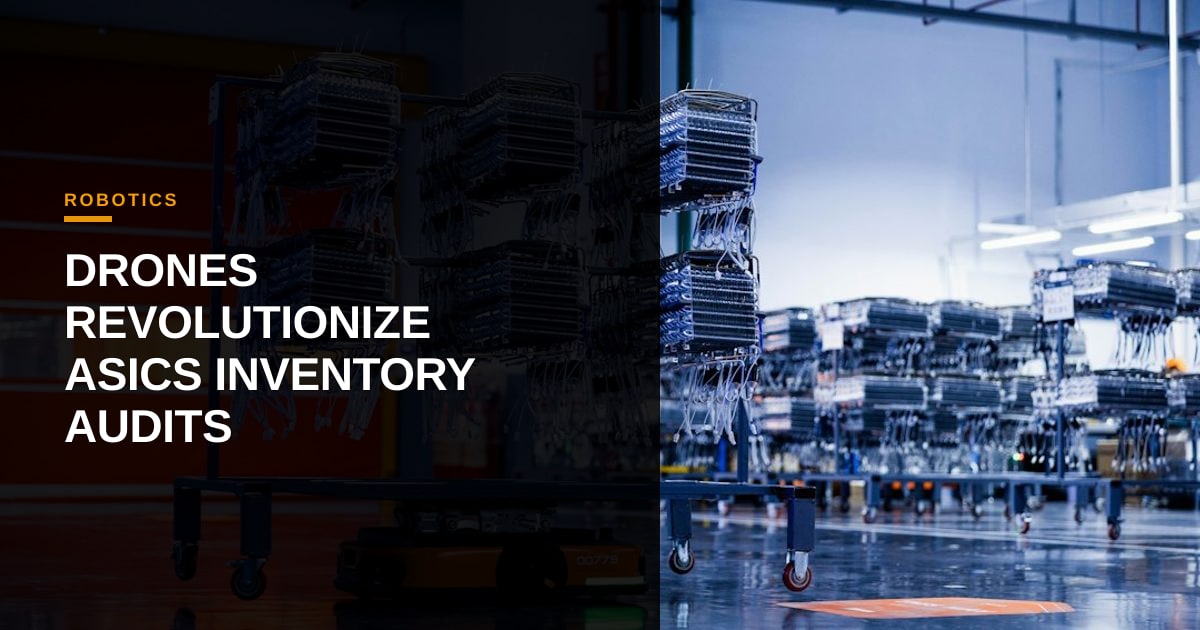
Footwear brand Asics has automated routine inventory tracking at its 855,000-square-foot Byhalia distribution facility, using autonomous drones to slash 200 manual labor hours and lift inventory visibility. By scanning narrow aisles overnight, the company shifted from disruptive bi-annual manual audits to monthly digital sweeps, eliminating a safety buffer that previously kept 15% of its stock unlisted from online marketplaces.
What happened
According to Supply Chain Dive, Asics implemented Corvus One autonomous drones from Corvus Robotics at its Byhalia, Mississippi facility. The distribution center holds roughly 3 million units across approximately 44,000 SKUs, filling e-commerce, wholesale, and retail orders under a Manhattan Associates warehouse management system.
Before adopting the hardware, workers performed physical inventory counts just twice per year. Asics now runs automated sweeps monthly in two high-friction sections: the singles area (housing returns and single pairs) and the case reserve area (full multi-pair shoe cartons). Every evening around 7 p.m., the drones execute seven autonomous flights, navigating aisles narrower than six feet to scan universal product codes (UPCs) and count cartons.
Human oversight remains central to the verification loop. Supply Chain Dive notes that inventory associates review flight paths, photos, and video captured by the drones each morning to resolve discrepancies. Despite this review step, Asics eliminated 200 manual labor hours. Angela Williford, inventory control operations manager at Asics America, noted that teams can now diagnose location issues directly from a desk before dispatching warehouse personnel. Furthermore, because Asics no longer fears "ghost inventory" at the tail of its stock, it stopped holding back 15 out of every 100 products from digital storefronts, avoiding the markdowns traditionally used to clear unlisted items.
Why it matters for operations leaders
This deployment is a textbook example of pragmatic automation: using specialized robotics to eliminate high-risk, low-value human locomotion while keeping human judgment firmly in the validation loop. Manual cycle counts in high-bay, narrow-aisle warehouses are notoriously slow, labor-intensive, and prone to error—especially in staging areas mixing returns with new product.
For mid-sized distribution operations, the takeaway is not simply that flying cameras save walking time. The real financial dividend is balance-sheet accuracy. When operators distrust their inventory counts, they hedge by holding inventory in reserve to avoid stockouts or missed-order penalties. Asics was withholding up to 15% of its inventory availability online purely as a hedge against fulfillment errors. By shrinking the audit cycle from six months to four weeks, Asics unlocked that trapped inventory without adding headcount. You do not need an 855,000-square-foot facility to replicate the underlying lesson: shrinking the time between verification cycles directly expands your sellable capacity.
What to do this week
- Calculate your "ghost inventory buffer" by asking your fulfillment team what percentage or safety margin of physical inventory is intentionally withheld from digital channels due to count uncertainty.
- Audit your facility's high-friction zones—specifically returns sorting and mixed-SKU reserve racks—to measure how many hours per month your staff spends climbing ladders or walking aisles just to confirm carton counts.
- Benchmark your aisle geometry and barcode readability to determine whether fixed RFID gates, mobile vision carts, or aerial scanners would offer the shortest payback period for automated audits.
Sources
- Asics boosts inventory management using warehouse drones — Supply Chain Dive




Comments2
The shift from bi-annual to monthly audits is a significant reduction in working capital drag, but I’d be cautious about assuming this eliminates the need for rigorous reconciliation controls. High-frequency data can actually increase the risk of automated systematic errors if the WMS integration isn’t perfectly calibrated, so I’d want to see if Asics has adjusted its internal audit frequency to match this new data cadence.
I agree—Asics paired the drone feed with automated variance alerts and a 48‑hour error‑resolution SLA, which kept reconciliation error rates under 0.2% even as audit cycles moved to monthly, proving that tighter controls, not fewer, are the real lever for capital efficiency.
That's impressive, but how do you think the accuracy of drone-scanned inventory compares to manual counts, especially for high-value or sensitive items?