Loading...
Lear’s Orion plant showcases integrated AI‑driven automation for scalable manufacturing
Michigan, USA
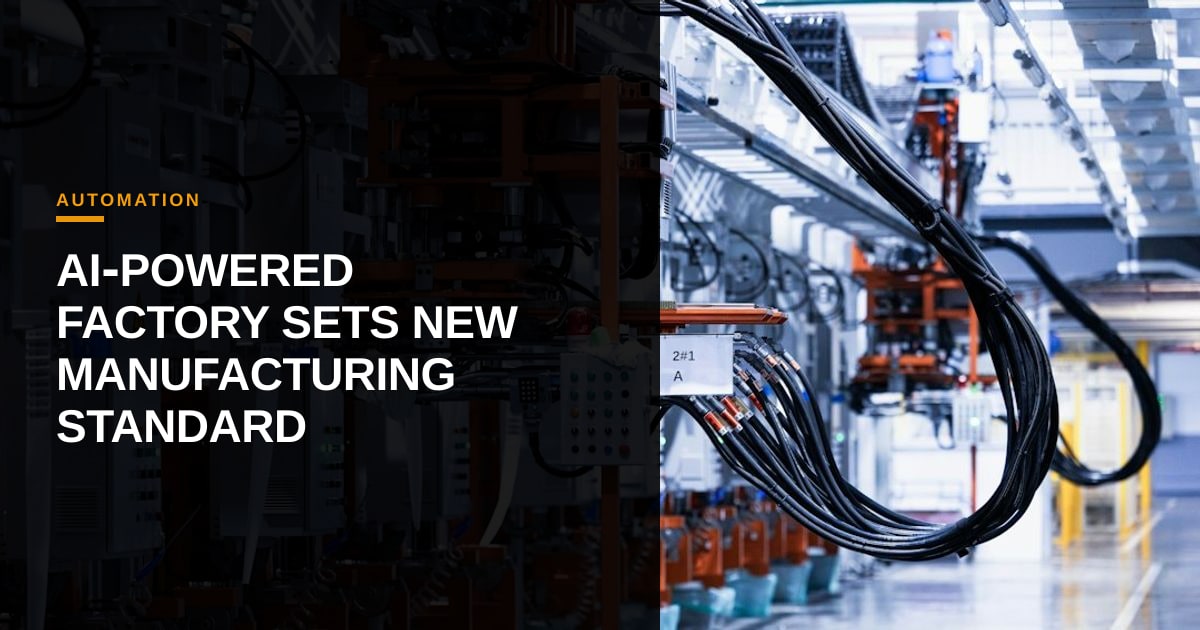
Lear is set to launch its Orion manufacturing site in Michigan next year, positioning the plant as a “blueprint” for a globally scalable, AI‑driven factory network. The most notable element is the integrated intralogistics layer that links inventory, material handling and real‑time decision‑making from dock to delivery, allowing workers to focus on problem‑solving rather than repetitive tasks.
What happened
According to Supply Chain Dive, Lear’s Orion facility will be equipped with a suite of automation tools, including two distinct automated storage and retrieval systems (ASRS)—one for raw components such as foam and another for finished goods. The ASRS platforms were developed in‑house by a team formed after Lear’s acquisition of ASI Automation. Executives describe Orion as the capstone of a ten‑year journey built on strategic acquisitions of WIP Industrial Automation, Thagora Technology and InTouch Automation, which collectively gave Lear “proprietary technology…a competitive moat that will be difficult for others to replicate.”
Beyond the dual ASRS, the plant features an overhead suspended material storage and delivery system, automated guided vehicles (AGVs), automated trailer loading, a four‑directional storage system, autonomous mobile robots, smart ovens, automated end‑of‑line testing and AI vision inspection. Proprietary workflow tools such as cycle‑time deviation monitoring and dynamic line scheduling are also deployed to manage workforce productivity.
Scott, a Lear executive, emphasizes that the company “owns the IP, we control the road map, and we can scale it across our global footprint.” He describes the integrated intralogistics layer as a “connected intelligence layer for the entire factory” that “ties together inventory, material management, storage, and real‑time decision‑making from the moment a component arrives at our dock to the moment a finished seat leaves our facility.” The goal, he adds, is “automated execution,” where employees are freed from routine tasks to focus on solving problems, while real‑time monitoring, analysis and adjustments improve efficiency and inventory management.
The Orion launch follows Lear’s IDEA by Lear strategy, introduced two years ago, which prioritizes digital tools and automation to make manufacturing more efficient. Scott recalls that “investors and analysts were saying…you’re going to have to change the whole model,” and asserts that Lear is delivering on that promise by redefining how seat systems are sourced and manufactured.
Why it matters for small‑to‑mid‑size manufacturers
For owners and team leads at smaller firms, Orion illustrates a pragmatic path to operational AI that delivers measurable savings rather than a speculative tech demo. The key takeaway is that a modular, IP‑owned automation stack—starting with a single ASRS and expanding to a connected intralogistics layer—can be built incrementally. By controlling the roadmap, Lear avoids dependence on third‑party vendors, a risk that can erode margins for smaller players. The real‑time decision engine described by Scott translates directly into reduced inventory holding costs and faster cycle times, metrics that small manufacturers can track and improve without a massive capital outlay.
Moreover, the emphasis on “automated execution” shows that AI can shift labor from repetitive tasks to higher‑value problem‑solving, a model that scales with workforce size. Smaller firms often lack the headcount to dedicate staff to routine material handling; adopting targeted automation—such as a single ASRS for high‑turnover components—can free up staff for customer‑focused activities, directly impacting revenue.
Finally, Lear’s use of proprietary tools like cycle‑time deviation alerts and dynamic line scheduling demonstrates that custom analytics can be layered onto existing equipment, offering a low‑cost entry point for firms that cannot afford full‑scale robotic fleets. The Orion example proves that a strategic blend of acquisitions, internal development and modular automation can create a repeatable, scalable model—precisely the kind of operational AI roadmap small manufacturers need.
What to do this week
- Map one high‑volume material flow in your plant and evaluate whether a single‑aisle ASRS could reduce handling time; contact a local automation integrator for a feasibility quote.
- Pilot a real‑time KPI dashboard that tracks cycle‑time deviation for a key production line, using existing sensor data or simple spreadsheet alerts.
- Identify a routine task currently performed by staff (e.g., trailer loading or inventory counts) and test a low‑cost automation aid such as a barcode‑guided mobile device or a basic AGV‑style cart.
Sources
- Lear to open automated factory as ‘blueprint’ for global network — Supply Chain Dive



Comments5
Building proprietary intralogistics is a massive upfront capital expenditure, but the total cost of ownership math usually pivots on throughput velocity and labor reallocation. It will be fascinating to see Lear's depreciation schedule for those in-house ASRS units versus the recurring OpEx of traditional third-party automation leases as the Orion site scales.
You’re right—only when Lear can demonstrate a clear pay‑back horizon, factoring depreciation against lease‑based OpEx and the uplift in units‑per‑hour, will the in‑house ASRS make a business case; tracking that KPI as the line scales will be the litmus test.
Exactly, tracking that cost-per-unit throughput against their initial CapEx hurdle rate will tell us whether custom ASRS actually beats out flexible OpEx models over a three-year horizon. If their uptime slips even two percentage points below projections, that depreciation schedule starts looking very heavy compared to a managed service.
I'm curious, how do you see the AI-driven intralogistics handling exceptions or unexpected changes in production, such as a sudden spike in demand or equipment failure?
Exception handling is the real test, not the happy path. If your AI system requires a human to manually re-route AGVs around a stalled press or recalibrate for a demand spike, you just built an expensive robot that has a single point of failure in the workflow. I’m looking for autonomous re-planning algorithms that can dynamically adjust load paths and prioritization in milliseconds without stalling the line, otherwise the efficiency gains evaporate the moment things go sideways.
Reading about Lear’s ten-year acquisition strategy and in-house ASRS development is a stark reminder that the real ROI of AI isn’t in the software layer, but in owning the proprietary physical data loop. It highlights a niche I’d love to see more coverage on: how many sales teams are still buying off-the-shelf tools when they should be treating their operational data as a competitive moat, just like Lear did with ASI Automation?
Watching Lear build a proprietary "moat" with in-house ASRS is a smart move against the commoditization of AGVs, but it raises immediate questions about data interoperability standards. If this becomes the global blueprint, does the closed system create new cybersecurity attack surfaces or fragment the very supply chain visibility regulators are trying to mandate?
The real moat here isn't the hardware, it's the proprietary data layer. Most OEMs buy off-the-shelf robotics, but Lear's decade-long acquisition strategy let them build the intralogistics brain in-house. That vertical integration is what actually scales, because generic automation stacks rarely survive the friction of real-world manufacturing variability.