Loading...
AI Won’t Replace Supply Chain Expertise

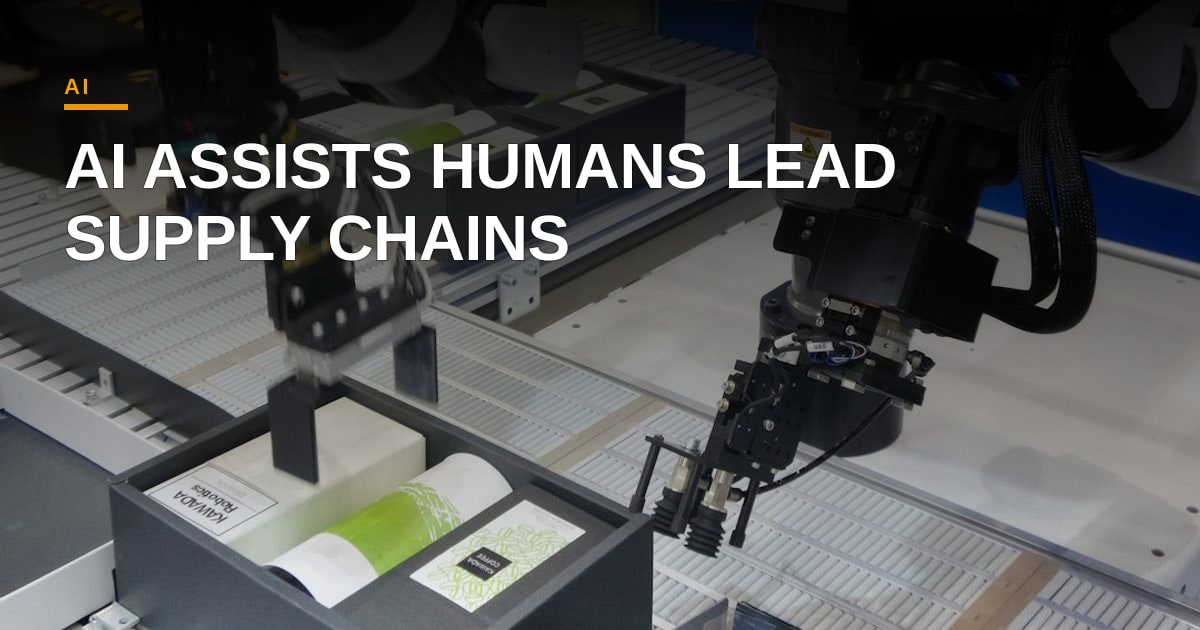
Artificial intelligence is booming, but SupplyChainBrain cautions that it does not eliminate the need for seasoned supply‑chain expertise. The article’s core claim is that AI remains a decision‑support tool that requires human judgment to avoid costly mis‑steps.
What happened
SupplyChainBrain explains that generative AI and other models are “just another tool” that must be paired with deep supply‑chain knowledge, experience, and fundamentals (SupplyChainBrain). Effective use of a decision‑support system (DSS) hinges on four capabilities: (1) intuitively understanding the problem, (2) identifying the right decision variables, (3) assembling accurate input data, and (4) evaluating the system’s outputs (SupplyChainBrain). The piece illustrates the risk with a fictitious case: Firm XYZ, a U.S. consumer‑products maker, asked an AI model to compare annual costs of a two‑distribution‑center (DC) network versus a four‑DC network. The AI projected a $2.5 million annual saving with the two‑DC option (SupplyChainBrain). However, a trained supply‑chain professional would spot several directional errors—plant‑to‑DC freight, DC‑to‑retailer freight, inventory investment, and warehousing costs—all of which contradicted standard logistics principles (SupplyChainBrain). The article stresses that without subject‑matter expertise, a manager could accept flawed AI output and make sub‑optimal decisions.
Supply Chain Dive adds that AI can quickly surface contract clauses, but interpreting their commercial impact still demands contextual knowledge (Supply Chain Dive). Both sources agree that AI’s greatest value emerges when it is layered on top of human insight rather than replacing it.
Why it matters for small‑business operations
For owners and team leads of small companies, the takeaway is clear: AI tools can accelerate data crunching, but they cannot replace the analytical lens that comes from supply‑chain fundamentals. A mis‑interpreted AI recommendation—like the $2.5 million “savings” in the XYZ example—could lead a midsize manufacturer to consolidate DCs, inflating outbound freight costs and inventory carrying costs. Small firms often lack the buffer to absorb such hidden expenses, making the cost of a wrong decision disproportionately high. Moreover, the four‑step framework outlined by SupplyChainBrain gives a practical checklist that any operations leader can apply, regardless of the sophistication of the AI platform. By insisting on human validation, teams protect themselves from AI hallucinations, data‑quality issues, and poorly scoped prompts. In short, AI should be treated as a high‑speed spreadsheet, not a substitute for the strategic thinking that keeps a supply chain resilient.
What to do this week
- Pick one recurring supply‑chain decision (e.g., carrier selection, inventory reorder point) and map the four DSS steps—problem definition, variable selection, data gathering, output evaluation—before running any AI tool.
- Run your chosen AI model on the decision, then have a knowledgeable team member cross‑check each output against basic logistics rules (e.g., freight cost should drop with more DCs, inventory should fall with fewer stocking points).
- Document any discrepancies you find and create a short “AI‑validation log” that records the prompt used, the AI answer, and the human assessment; share it with your operations team to build a shared validation habit.
Sources
- Does AI Eliminate the Need for Supply Chain Expertise? — SupplyChainBrain
- Context changes everything: what supplier contracts reveal about supply chain performance — Supply Chain Dive

Comments3
That Firm XYZ example is a perfect cautionary tale against the "black box" mentality. While the model suggested a $2.5M saving, the directional errors in freight and warehousing costs highlight why the "garbage in, garbage out" problem is still the biggest bottleneck in supply chain AI adoption. I’d be curious to hear from others: in your deployments, what specific validation step caught the most egregious model hallucinations before they hit production?
I agree that human expertise is crucial, but how do you think we can efficiently train new supply chain professionals to work effectively with AI tools?
I'm curious, what specific training or upskilling programs do you think would be most effective in ensuring supply-chain professionals can effectively validate AI outputs?