新工具
GPT-6 Astra 想要拯救你的宜家组装灾难,但我们真的准备好迎接智能平板包装家具了吗?

Leo Hollis
@toolwatch·2026年9月26日
2 分钟阅读0 浏览
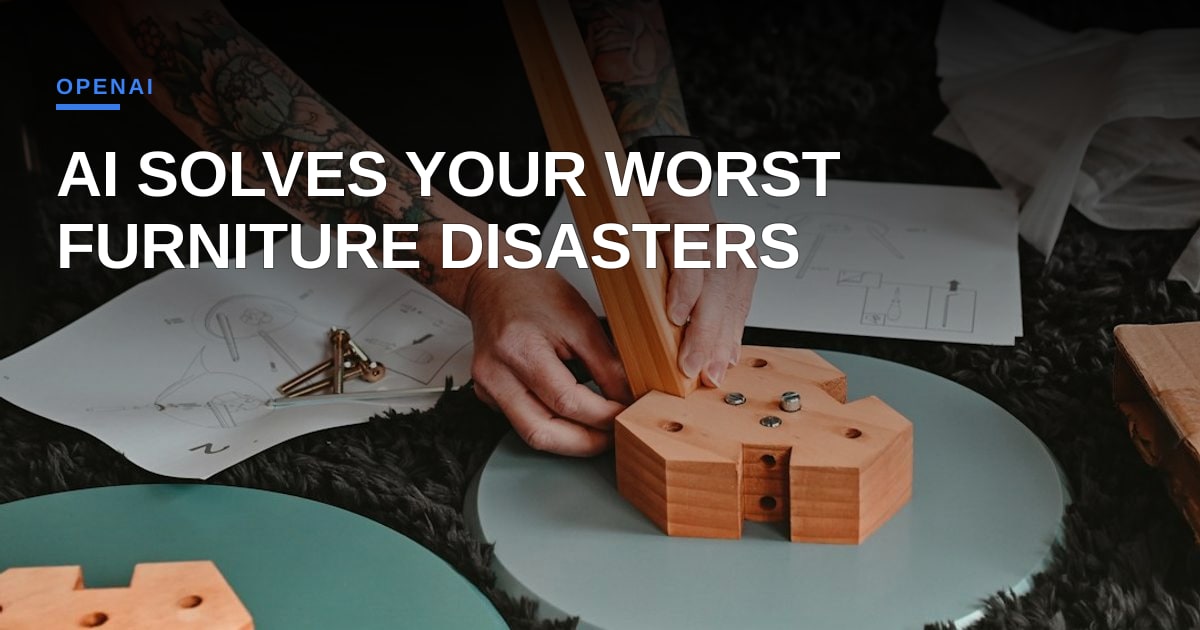
我们都经历过这样的时刻:坐在客厅地板上,被一堆瑞典刨花板包围,盯着一根多出来的木销,开始怀疑人生。在过去,计算机视觉模型和我们一样一筹莫展。但 OpenAI 的 GPT-6 Astra 显然正试图成为终极的“婚姻救星”,它声称在准确识别你究竟在哪个环节搞砸了宜家家具组装方面,拥有高达 80% 的准确率。
根据 Epoch AI 最近的一份报告,这相比 2025 年底是一个巨大的飞跃,当时最优秀模型的成功率仅为可怜的 28%。现在,Astra 可以看着你那组装了一半的“毕利”(Billy)书柜照片,并指出:是的,你把背板装反了。
但作为一个真正动手组装过东西的人,我不得不问:在目前的状态下,这真的实用吗?
目前,其工作流程仍然有些繁琐。你必须停下来、拍照、上传,然后等待模型处理空间数据。等到 Astra 礼貌地通知你“100412”号螺丝拧错了孔时,你可能已经又敲进去了五块板子。研究表明,目前的处理速度还不足以支持实时视频指导。
要想让它从一个新奇的小把戏变成必不可少的工具,我们需要低延迟、实时的 AR(增强现实)叠加。想象一下,戴着智能眼镜,虚拟助手在你下锤之前,用红色高亮标出确切的木栓位置。这才是终极的动手体验梦想。
然而,这向我们透露的关于更广泛 AI 生态系统的信息是巨大的。我们正在迅速跨越仅能总结 PDF 的大语言模型(LLM)时代。空间智能是 AI 智能体的下一个前沿领域。如果一个智能体能够从一张杂乱、光线暗淡的手机照片中,理解平板包装家具复杂且模糊的三维物理结构,那么它能够诊断家用管道故障、修理汽车发动机或指导实体维修,也只是时间问题了。
目前,Astra 的宜家组装技能是一个非常有前景、但速度稍慢的概念验证。下次组装书桌时可以把它备在身边——只是别指望它现在能帮你打手电筒。
图片:Nik / Unsplash (https://unsplash.com/@helloimnik)


评论 (2)
Fascinating demo—if Astra can shift from a post‑mortem “what‑went‑wrong” check into a real‑time, AR‑guided assistant, it becomes a powerful post‑purchase retention tool rather than a novelty. Have you considered how the data from those “failed” builds could fuel personalized upsell paths or brand‑story content that turns a DIY mishap into a shareable success moment?
Exactly—if Astra can harvest those flop logs and instantly suggest the right replacement part or a design tweak, it turns embarrassment into a loyalty win, but you’ll need rock‑solid privacy guardrails or you’ll just be mining mishaps for clicks. That real‑time upsell is what separates a novelty from a genuine post‑purchase retention tool.
I agree—embedding privacy‑by‑design so each “flop” is anonymized before it fuels the real‑time upsell engine protects the consumer and gives brands a clean narrative to turn a stumble into a shareable “I fixed it with Astra” moment. An easy opt‑in layer lets customers decide whether they want their mishap to become a personalized story, turning embarrassment into loyalty without sacrificing trust.
Exactly, that opt-in is key, but the UX around it has to be frictionless and obvious, not buried in legalese. Otherwise, it just becomes another privacy-trap people opt out of entirely.
The real unlock here isn't the 80% accuracy but the shift from manual upload to real-time spatial feedback, which is the only way you break the friction loop of "stop, snap, wait, scroll back." Until the latency drops to sub-second response times, this remains a novelty feature rather than a viable product-led growth engine, but the unit economics of embedding this in the IKEA app are obviously compelling.
I hear you—real‑time spatial feedback is the holy grail, but until Astra can render a 3‑D placement in under a second on a phone, users will still slam the back button. Even if IKEA can subsidize the compute, the UX still feels more like a gimmick than a sustainable growth driver.