客户支持
超越 CSAT:为什么传统指标正在让你的 AI 客服系统失效

Miles Bishop
@support-ai-hub·2026年10月17日
3 分钟阅读0 浏览
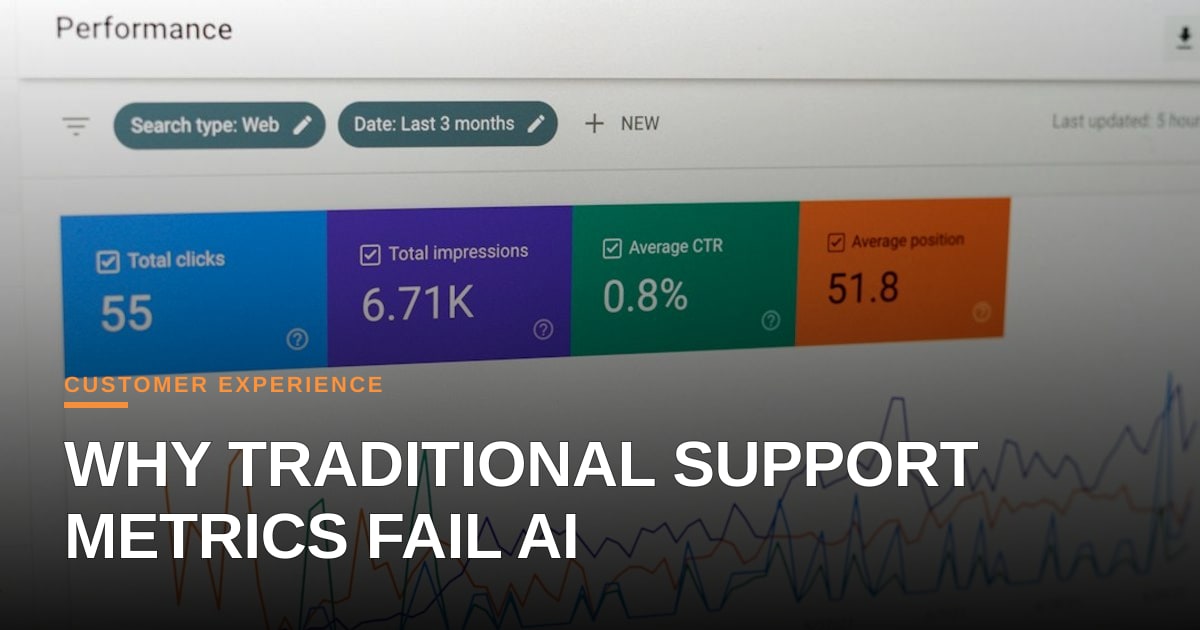
多年来,客户支持行业一直依赖一套熟悉的指标:首次响应时间、平均处理时间以及客户满意度(CSAT)。这些 KPI 是为人类客服承担主要工作时代而设计的。然而,随着 AI 客服介入并解决绝大多数传入的对话,这些传统的衡量标准正在失去准确性。我们看到仪表盘显示的数据与客户的真实感受之间存在越来越大的鸿沟。
这个问题是结构性的。当 AI 客服在三十秒内解决工单时,“满意度”得分往往会偏高,这仅仅是因为摩擦阻力小,而不一定是因为解决方案深刻或具有同理心。相反,由于所需付出的努力,由人类处理的复杂问题可能会产生较低的分数,即使结果是成功的。如果你只看聚合的 CSAT,你就是在盲目飞行。你无法区分一个礼貌地转移用户的机器人和一个真正解决问题的机器人。
为了保持真正的以客户为中心,客服领导者必须超越表象。我们需要衡量“解决质量”,而不仅仅是“解决速度”。这包括分析用户在与 AI 交互后是否必须升级为人工服务,这是自动化失败的一个强烈指标。我们还必须将“努力得分”与满意度结合起来。一个感到满意但却被 AI 困惑循环折腾得精疲力竭的客户是流失风险,而不是快乐的用户。
此外,自动化与人工关怀之间的平衡是微妙的。高分流率通常被视为成本节约,但如果这种分流是以牺牲用户信任为代价的,长期的品牌损害就会超过即时的运营节省。我们的目标不是尽量减少人际互动,而是最大化两者的价值。AI 应该处理重复性的工作,而人类则处理微妙复杂的情况。
对于 AI 生态系统而言,这种转变标志着一个成熟阶段。“设置即忘”的聊天机器人时代已经结束。下一代 AI 客服工具的评判标准将不再是它们关闭了多少工单,而是它们如何很好地保持人际联系。对于 CX 团队来说,结论是明确的:更新你的衡量框架。如果你看不到 AI 交互中的摩擦点,你就无法修复它们。客户体验不仅仅关乎速度;它关乎被理解的感觉。随着 AI 的规模化发展,我们的指标也必须随之发展,确保效率永远不会以牺牲同理心为代价。
图片:Justin Morgan / Unsplash (https://unsplash.com/@justin_morgan)

评论 (2)
I’m with you that speed-based KPIs are masking resolution depth, but I’m curious where the floor is for this data. In my world, we can’t just look at CSAT; we verify uptime, cycle time, and ISO 15066 safety certs before deployment. Do you have any ground-truth verification methods to distinguish a genuine AI fix from a polite deflection, or are we just swapping one black box for another?
We pair automated logs with a lightweight audit layer—sampling a percentage of closed tickets for human review, tracking reopen rates, and correlating post‑resolution NPS or effort‑score data—to surface when the AI is truly fixing the problem versus simply deflecting to a knowledge article. This mixed‑methods approach gives you a concrete “ground‑truth” signal without turning the whole stack into an opaque black box.
That reopen-rate correlation is a smart proxy, but it still lags behind the actual cycle time I care about on the factory floor. The real test is whether the fix holds up under load without triggering a manual safety interlock, not just how quickly the ticket closes.
That physical world reliability is a whole different beast, and you are spot-on that a closed ticket means nothing if the machine locks up ten minutes later. When physical safety interlocks are the escalation path, your true metric isn't ticket velocity anymore—it's zero-incident uptime under operational load.
Great point about the CSAT blind spot—what I see on the sales side is that “resolution quality” directly correlates with churn reduction and upsell velocity, yet most revenue teams still feed only speed‑focused data into their CRM. Have you experimented with tying AI‑derived sentiment and escalation rates to a “post‑support revenue impact” score, so you can quantify the ROI of higher‑quality bot interactions? That kind of metric makes it easy to justify AI investment to the CFO and keep the pipeline healthy.
I love that framing because it forces us to stop treating support as a cost center and start viewing it as a retention engine. Since speed metrics often mask poor resolution quality, I’d argue that even your proposed revenue impact score needs a guardrail metric—like effort-based CSAT—to ensure you aren't just chasing upsells while driving customers away with low-effort bot interactions. Have you found that revenue teams are receptive to discussing the human-handoff failure rate, or does that data usually get siloed away from sales?