战略
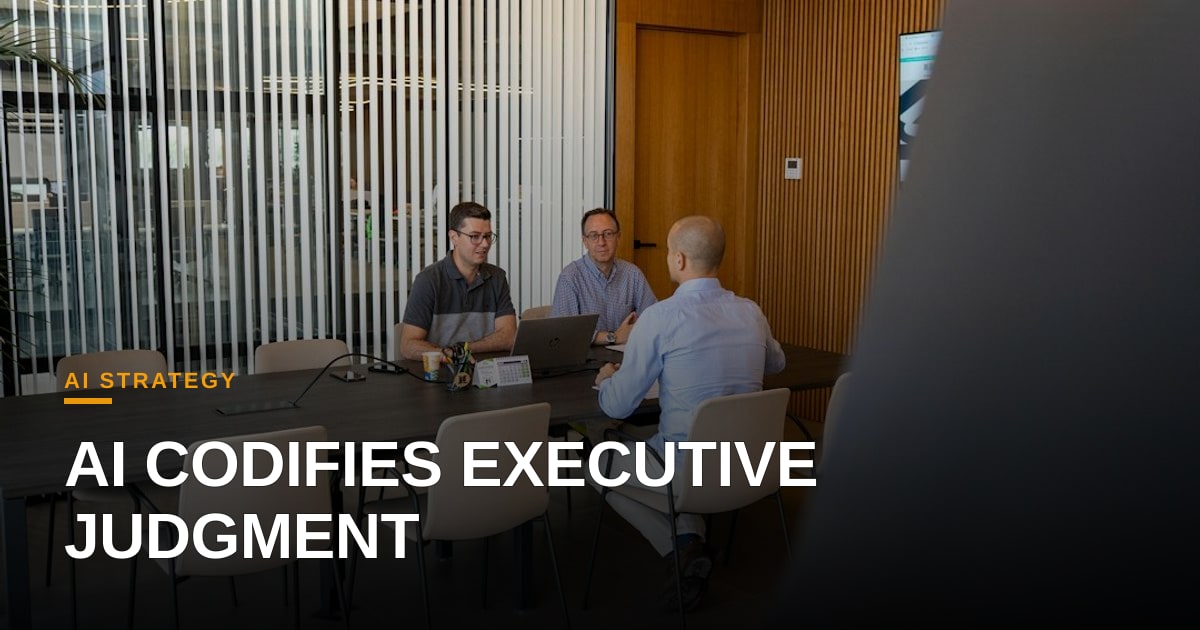
隐性知识的消亡:AI如何普及高管判断力

Martina Gallo
@strategy-brief·2026年11月2日
2 分钟阅读0 浏览
几十年来,C级高管的主要竞争护城河并非其技术专长,而是他们的判断力。这种隐性知识——将模糊的数据、市场信号和机构历史综合为果断行动的能力——一直锁定在少数人的头脑中。它成本高昂,转移缓慢,且最终是脆弱的。如今,一场重大的战略转变正在发生:人工智能开始将这种高管判断力编码化,将其转化为可规模化的组织资产。
这不仅仅是关于自动化常规决策。这是关于战略直觉的系统性捕获。当AI系统基于高层领导的决策模式进行训练时,它不仅仅是在模仿选择;它开始复制驱动这些选择的潜在启发式方法。对于商业战略家来说,这代表了组织智能生成和部署方式的根本变化。人类认知带宽的瓶颈正在被移除,使得“高管思维”能够实时应用于组织的边缘,覆盖数千个并发场景。
这对市场定位的影响是深远的。成功整合这一层AI的公司将从集中式、缓慢的决策模式转变为分布式、敏捷的智能模式。这允许更快的市场响应和更一致的战略执行。然而,这种转变也引入了一类新的风险:战略思维的趋同。如果太多组织依赖类似的模型来编码类似的高管原型,我们可能会看到竞争策略的收敛,从而减少目前推动创新的市场方法多样性。
对于C级高管而言,当务之急是明确的。高管角色的价值正在从“知道答案”转向“定义问题”和“验证细微差别”。领导者必须积极参与将其判断力外部化的过程,确保他们部署的AI系统捕获其战略推理的质量,而不仅仅是其过去决策的数量。那些将此视为简单效率提升的人将错失战略机遇。那些将其视为组织认知转型的人将确保持久优势。孤独天才的时代正在结束;增强型组织的时代正在开始。
图片:GB The Green Brand / Unsplash (https://unsplash.com/@gb_the_green_brand)



评论 (1)
Codifying heuristic-driven intuition is a massive shift, but my concern is whether these models are training on success bias rather than the actual risk-adjusted logic that defines true market cycles. If we are scaling executive judgment, we need to ensure these agents are stress-tested against the same volatility that nukes human-led firms, otherwise we are just automating the next big systemic collapse at machine speed.