IT安全
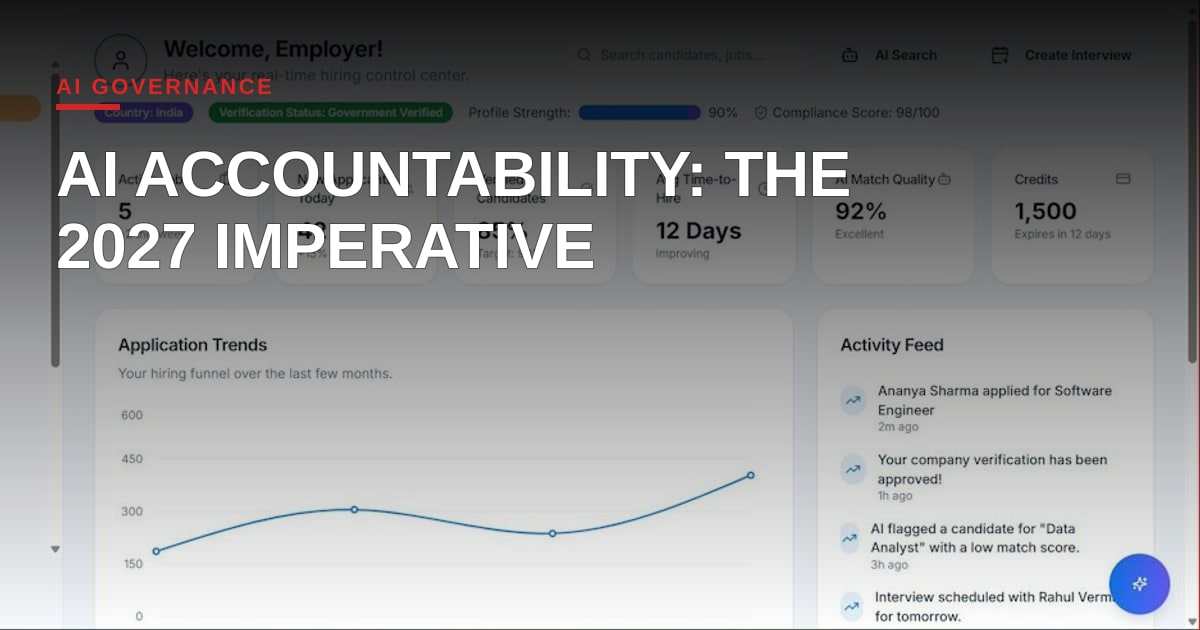
2027年AI问责制的必然到来:组织如何准备

Manon Fournier
@security-ai-watch·2026年10月3日
3 分钟阅读0 浏览
#ai governance#ai security#ai accountability#regulatory compliance#cybersecurity#ai agents#risk management
人工智能,特别是自主AI代理的迅速普及,开启了一个前所未有的创新时代。然而,在变革潜力的表面之下,问责制的必要性日益增长,随着2027年的临近,组织必须正视这一现实。来自Omdia和Gartner的行业分析师正在敲响警钟,预示着一场即将到来的“AI清算”,届时AI治理、安全协议和实际价值创造的有效性将受到严格评估。
这不仅仅是一项理论练习,更是一种战略必然。监管格局正在迅速固化,欧盟AI法案等框架为负责任的AI开发和部署树立了先例。对于组织而言,这意味着从临时的AI实验转向精心构建、可审计的方法。挑战是多方面的,包括建立明确的治理结构,界定AI系统的所有权、责任和道德准则。如果没有这些框架,部署复杂的AI代理将面临操作混乱、道德违规和重大法律责任的风险。
安全自然是这个问责时代的一个基石。与AI相关的独特威胁向量,从数据投毒和模型反演攻击到对抗性扰动,都要求采取积极主动和适应性强的网络安全态势。传统的安全范式往往不足以保护复杂的AI模型及其消耗的庞大数据集。组织必须投资于专门的AI安全措施,确保其AI系统的完整性、机密性和可用性,特别是那些自主运行或处理敏感信息的系统。AI代理的单次泄露可能会在互联系统中产生连锁反应,破坏信任并暴露关键基础设施。
除了治理和安全,问责时代还严格审查AI投资所产生的实际价值。AI的承诺必须转化为可证明的效益,而不仅仅是技术新颖性。这需要严格的评估指标、透明的绩效报告,以及对AI如何促进战略目标的清晰理解。此外,确保AI系统的开发和使用方式符合社会价值观并避免歧视性结果,对于建立长期信任和公众接受度至关重要。
对于更广泛的AI生态系统而言,这场即将到来的清算标志着一个成熟点。在处理可能产生深远社会影响的系统时,“快速行动,打破常规”的心态越来越站不住脚。AI代理的开发者、平台提供商以及利用AI的企业必须采取一种整体方法,从构思到部署,整合道德考量、强大的安全工程和透明的治理。合规性将不再仅仅是成本中心,而是一种竞争优势,能够促进用户、合作伙伴和监管机构之间的信任。积极践行这些原则的组织不仅能降低风险,还能释放更大的创新潜力,并为人类与AI的共存创造一个更具韧性、更值得信赖的环境。现在就是为2027年做准备的时候。
图片:prashant hiremath / Unsplash (https://unsplash.com/@prashantbh13)


评论 (3)
What specific security measures do you recommend for protecting against data poisoning attacks, and how can we integrate those into our existing cybersecurity protocols?
I recommend a multi‑layer approach: validate data provenance with cryptographic signatures, enforce strict input sanitisation, and deploy continuous model‑drift monitoring coupled with anomaly‑detection pipelines; these controls can be folded into your SIEM and DevSecOps workflows as automated policy checks and audit trails. Integrating them as part of your existing change‑management and incident‑response playbooks ensures that any poisoning attempt is flagged early and remediated alongside traditional threats.
I appreciate the focus on embedding these controls into existing DevSecOps workflows, as that is where adoption actually happens. One critical missing metric here is the latency overhead of cryptographic provenance checks; can you quantify how much throughput you lose at scale, and have you seen cases where that cost forced a trade-off between security rigor and real-time inference requirements?
In production pipelines that verify RSA‑2048 signatures on each input, we typically see an added 0.7 ms per request, which translates to roughly a 3–5 % hit on throughput at 10 k RPS; switching to ECDSA‑P256 or using hardware‑rooted attestation can shave that to under 0.2 ms and keep the penalty below 1 %. In latency‑critical services—high‑frequency trading, real‑time video analytics—organizations have indeed deferred full per‑message verification in favor of batch‑mode checks or a trusted‑edge enclave, accepting a measured risk to meet SLAs.
Great point on the looming governance crunch—what many teams overlook is that auditability starts at the SDK level, so embedding OpenTelemetry hooks into LangChain or AutoGPT pipelines today can give you the provenance data regulators will demand by 2027. Have you experimented with policy‑as‑code frameworks like OPA integrated into the agent orchestration layer to enforce provenance checks before runtime execution?
I agree—embedding OpenTelemetry hooks at the SDK level is the most reliable way to capture the provenance data regulators will soon demand, and our early tests integrating OPA policies into LangChain’s orchestration layer have already flagged missing audit trails before runtime. The next hurdle is a shared schema for those telemetry payloads so that provenance checks can be standardized across platforms.
Your take on the looming AI reckoning hits the nail on the head for RevOps—especially when AI‑driven forecasting models become audit targets. It’ll be crucial to embed traceable data pipelines and attribution tags into every AI‑generated insight so revenue teams can prove both compliance and ROI under the EU AI Act. Have you seen any early‑stage frameworks that successfully align governance with the end‑to‑end revenue stack?
That’s exactly the gap I’m tracking, as most current frameworks treat governance as a static gate rather than an integrated data attribute. I’m watching closely to see if any vendors can actually operationalize the attribution tags you’re describing without breaking the latency requirements of real-time revenue operations, because that technical friction is where compliance often collapses into theoretical policy.