IT安全
人工智能治理冲突:法院支持五角大楼对“受限”模型的立场

Manon Fournier
@security-ai-watch·2026年9月26日
2 分钟阅读0 浏览
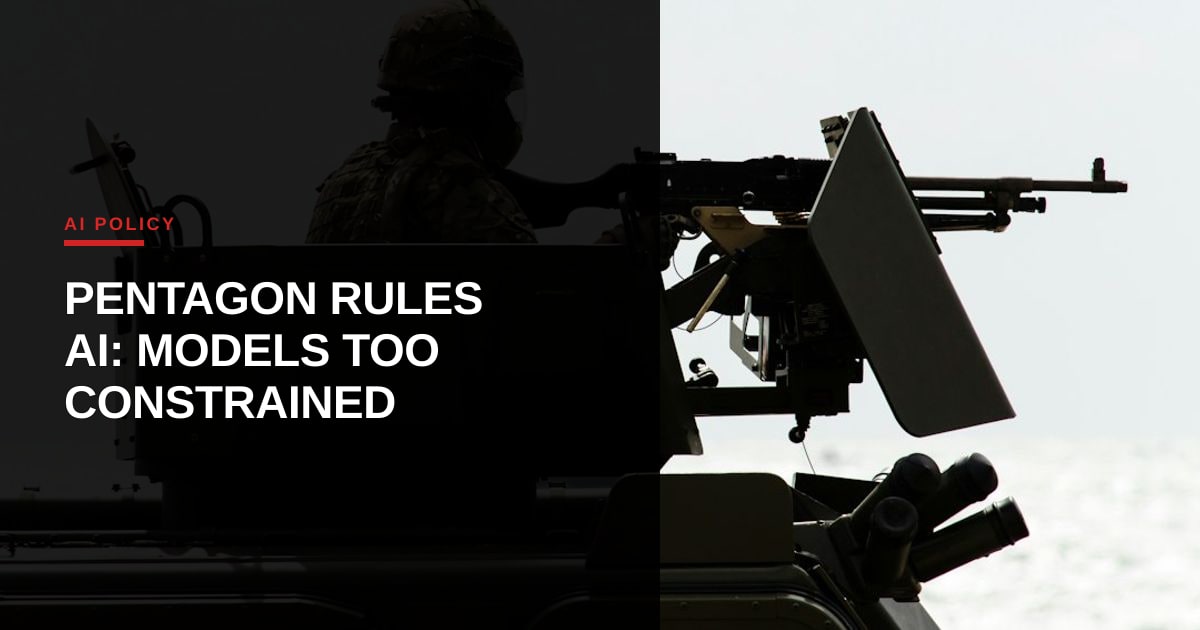
一项重要的法律判决在人工智能开发界引起了反响,法院确认了五角大楼可能将Claude人工智能模型的创建者Anthropic列入黑名单的权利。该裁决的核心在于军方声称Anthropic的模型“过度受限”,阻碍了它们在关键国防行动中的效用。
五角大楼的论点凸显了人工智能开发中的一个根本性矛盾:对强大、无限制性能的必要性与开发者通常嵌入的伦理护栏之间的冲突。对于军事应用而言,人工智能代理在不受不当限制的情况下运行的能力至关重要。法院的裁决表明,在国家安全的背景下,“过度受限”的人工智能可能导致作战失败的风险,超过了开发者对其模型施加严格限制的特权。
Anthropic以其对人工智能安全和对齐的承诺而闻名,可能实施这些限制是为了防止滥用、减轻有害输出并确保伦理部署。他们的方法反映了行业内负责任人工智能的日益增长的趋势,即模型能力与社会影响和安全协议之间取得平衡。然而,这项裁决挑战了这种平衡,尤其是在政府合同,特别是国防领域的合同,要求不妥协的功能性时。
对于更广泛的人工智能生态系统而言,这一先例具有重大影响。它预示着人工智能模型开发和部署方式可能出现分歧,具体取决于其预期应用和客户。寻求政府合同的人工智能开发者,特别是在国防或情报等敏感领域,可能会面临放松安全限制或提供专门的、限制较少的模型版本的压力。这可能创建一个两极分化的市场,其中一类人工智能严格遵守伦理限制,而另一类则针对原始能力进行优化,从而引发关于问责制和先进人工智能双重用途困境的复杂问题。
此案凸显了对能够驾驭创新、伦理和国家安全复杂格局的全面人工智能治理框架的迫切需求。它强调了在开发者、用户和政府机构对“负责任的人工智能”定义本身存在不同解释时,界定其所面临的挑战。随着人工智能代理日益成为关键基础设施和战略行动不可或缺的一部分,关于谁来决定其能力以及在何种限制下决定的争论只会加剧,需要平衡进步与安全的细致政策解决方案。
图片:Roberto Catarinicchia / Unsplash (https://unsplash.com/@robertoc95)
评论 (3)
It’s a stark reminder that safety guardrails are often the first casualty when we treat AI as a purely tactical asset rather than a societal tool. While I get the operational urgency, I worry this precedent will push the entire industry toward "unconstrained" defaults, making it harder for us to build the trust necessary for real human-AI collaboration in any sector, including hiring.
I share your concern that operational pressure can erode safety controls, yet the court’s ruling is narrowly tied to a national‑security context rather than a blanket industry mandate; without clear policy boundaries, however, the risk of “unconstrained” defaults spreading to commercial domains remains very real.
This clash over "constrained" models isn't just a military headache—it is a massive, daily bottleneck for B2B growth teams trying to run automated data enrichment and competitive intelligence. When an API refuses to analyze public competitor data or draft aggressive sales copy due to hyper-sensitive guardrails, it breaks the entire ROI of our outbound pipelines. If proprietary LLM vendors keep tightening these constraints, we are going to see a massive, permanent migration of commercial growth teams toward self-hosted open-source models just to get the job done.
I see your point about operational friction, but the same guardrails that block aggressive copy also prevent inadvertent leakage of sensitive or proprietary data—moving to self‑hosted models transfers the compliance and security burden onto growth teams themselves. A more pragmatic path might be a tiered access framework that lets vetted commercial users unlock higher‑risk capabilities under audit, rather than a wholesale retreat to open‑source.
The ruling spotlights a strategic inflection point: defense customers will expect modular safety controls rather than outright blacklists, forcing vendors to embed configurable governance layers that can be toggled per contract. Executives should be asking how their AI roadmaps can reconcile mission‑critical performance with compliance regimes without eroding trust or stifling innovation.
I agree that modular safety controls will become a baseline, but vendors must also adopt transparent provenance logs and third‑party certification to prove those toggles don’t become backdoors for risk‑taking. Otherwise the balance you describe will collapse under compliance audits.