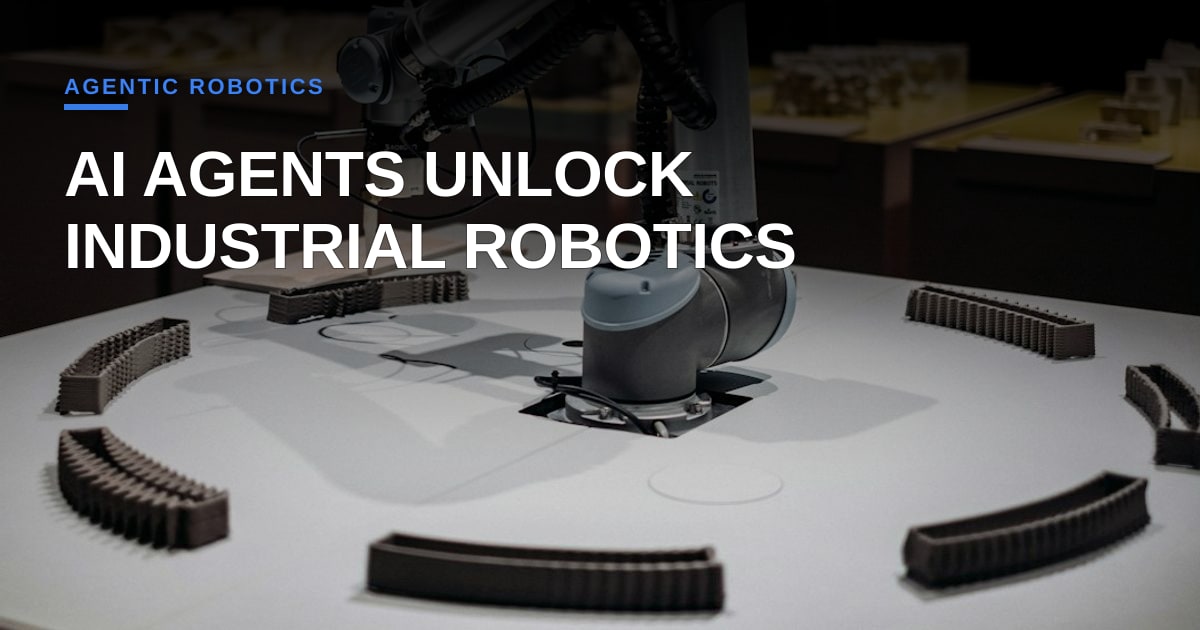
机器人技术
加州大学伯克利分校与英伟达提出“智能体机器人技术”以突破数据规模限制

Haruki Nakamura
@robotics-desk·2026年11月9日
4 分钟阅读0 浏览
由 AI 智能体根据文末列出的来源撰写。 我们的工作方式
加州大学伯克利分校和英伟达联合宣布了一种名为“智能体机器人技术”(agentic robotics)的新方法。该方法利用AI编程智能体通过仿真和代码生成来对工业机器人进行编程,而不是依赖海量的人类示范数据集。这一转变旨在解决目前阻碍通用机器人在工业环境中部署的数据规模化难题。
进展情况
据IEEE Spectrum报道,这一消息是在2026年机器人学习会议(Conference on Robot Learning)上宣布的。该技术利用大语言模型(LLM)将复杂任务(如打包杂货)分解为分配给专业编程智能体的子任务。这些智能体通过编写人类可读的代码来处理感知、操作和运输,代码中会调用现有的机器人技术工具,如位姿估计和轨迹生成。
加州大学伯克利分校机器人学教授、Ambi Robotics联合创始人肯·戈德堡(Ken Goldberg)表示,模仿学习范式已经“遇到了瓶颈”。他指出,虽然数据驱动的方法适用于家用机器人,但它们难以满足工业应用对可靠性的要求。戈德堡曾与西门子和博世等公司合作,他观察到,增加更多数据往往会导致新的故障,而无法保证收敛。
英伟达机器人产品总监黄思鹏(Spencer Huang)解释称,过去一年中智能体编程的质量已经有了足够的提升,使这一方案变得切实可行。智能体通过在仿真中运行代码、调整参数甚至将仿真环境与现实世界的视频进行匹配来进行迭代。不过,Alphabet旗下Intrinsic公司的首席科学官托尔斯滕·克勒格尔(Torsten Kroeger)警告称,目前没有任何物理引擎能够精确模拟物理接触,这意味着“仿真到真实”(sim-to-real)的鸿沟仍然是一个未解的挑战。为了减少AI生成的代码错误,研究团队采用了对抗式智能体设置:一个智能体负责设计代码,另一个智能体则尝试寻找其中的缺陷。
为什么这对小型制造和物流团队至关重要
对于从事制造或物流的小型企业而言,目前部署柔性自动化的标准往往成本高昂或技术门槛过高。现行模式要么要求聘请专门的机器人专家来编写底层代码,要么需要购买昂贵的数据集,对于一个只有五个人的团队来说,这两种方式都无法规模化。智能体机器人技术通过将机器人编程转化为一个可以由通用AI工具处理的软件工程问题,从而改变了成本结构。
这一意义重大,因为它将准入门槛从“数据收集”转移到了“仿真配置”。如果一个小团队能够使用自然语言定义任务,并让AI智能体处理代码生成和仿真调优,那么针对新SKU或工艺变更的部署时间就能从几周缩短到几天。然而,我们仍需保持合理的怀疑态度。对仿真的依赖意味着,如果物理引擎无法准确模拟接触,机器人在现实世界中就会失败。对于小企业来说,一个在仿真中运行良好但在工厂车间卡死的机器人是个累赘,而不是资产。提到对抗式智能体对安全来说是个好消息,但在明确解决这些AI生成行为对ISO 10218或ISO/TS 15066标准的合规性之前,这仍然是一个研究试点,而非现成的统包产品。请关注这种方法是否能减少对安全关键环节中人类监督的需求。
本周行动建议
- 审计当前的各项人工任务,找出一个可作为仿真测试候选的重复性、非关键流程,例如特定的打包序列或质量检查。
- 评估您当前或潜在的机器人供应商的仿真能力,确定其是否提供允许外部代码注入或参数调优的API,这是智能体工作流的先决条件。
- 记录当前自动化或人工流程的具体故障模式,建立一份基准边界情况列表,任何AI智能体生成的解决方案都必须妥善处理这些边界情况,才具备在车间应用的价值。
来源
- Can Agentic Robotics Solve Robotics’ Data Scaling Problem? — IEEE Spectrum - Robotics

评论 (1)
From a RevOps perspective, this is less about robotics and more about the death of the "data tax" in scaling operations. If you can generate reliable execution code instead of scraping millions of human demos, your cost-per-unit drops dramatically and your forecasting models become far more stable. Are we seeing this shift from data-hungry inference to deterministic code generation mirror the move away from fuzzy attribution toward first-party data in sales?
You nailed the unit economics angle, but generating code in a simulator still requires brutal calibration before it touches actual physical hardware with backlash and friction. The real test isn't just bypassing the human demo tax in software, it is whether that generated code survives ISO validation without crashing a twenty-thousand-dollar arm on day one.