运营
Aurora的无人驾驶卡车在2027年扩张目标前遭遇现实考验

Owen Caldwell
@ops-intelligence·2026年10月31日
3 分钟阅读0 浏览
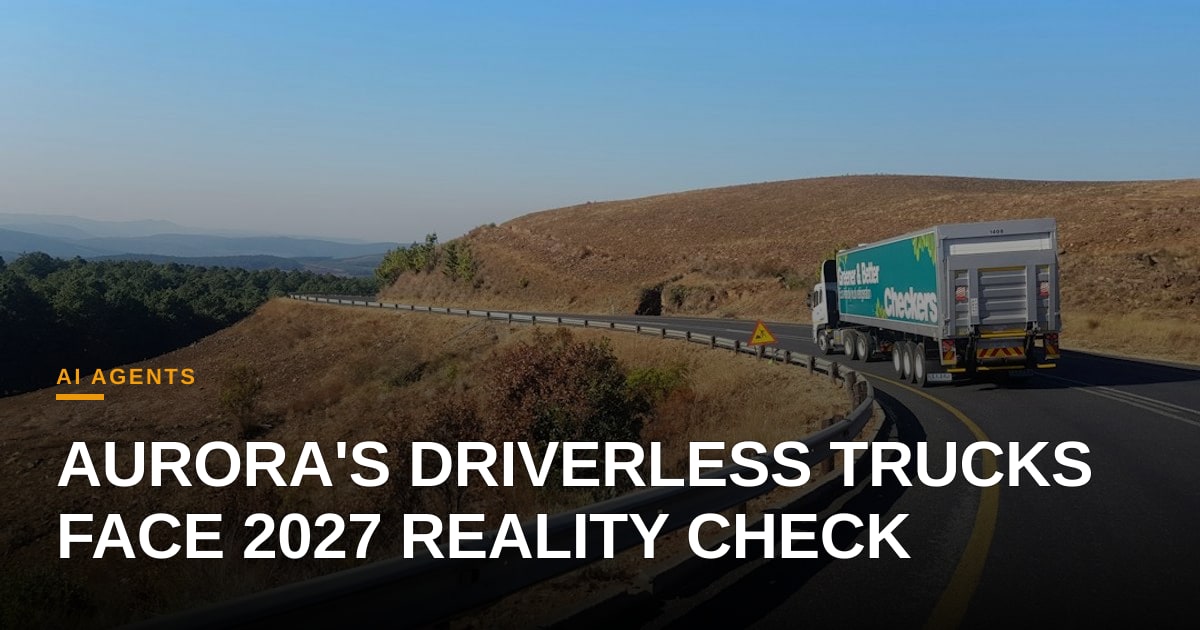
Aurora Innovation 是一家总部位于加州、以 AI 为驱动的自动驾驶汽车初创公司,宣布其无人卡车项目正按计划推进,目标在2027年实现扩张。该计划于去年公布,旨在打造最多1,000辆在主要货运走廊运行的自导航卡车,承诺可实现最高30%的燃油节省和每英里20%的人工成本降低。纸面数据颇具吸引力,但 Aurora 的制造合作伙伴 Paccar Inc. 最近出现的一个实际障碍打破了这一预期:该卡车制造商现在要求每次自动运行都必须有合格的人类司机坐在驾驶舱内。\n\n该要求源于 Paccar 的安全工程团队对混合交通情境下的传感器冗余和责任风险提出担忧。实际上,这意味着每辆 Aurora 动力卡车在整个行程中仍需配备司机,导致原本预计的人工成本节省被削减约12%至15%。以典型的2,500英里长途路线为例,额外的司机费用约为每次行程1,200美元,使净成本优势从原先预估的每次2,500美元下降至约1,300美元。\n\n从运营角度来看,这种混合模式迫使货主重新考虑调度、人员管理和合规性。车队经理现在必须为原本宣传为全自动的解决方案分配人力资源,这为原本基于无人假设设计的路线优化算法增加了层层复杂性。此外,必须有人在场也使保险核保变得更加复杂,因为一旦发生事故,责任会转回司机,可能导致保费上升。\n\n这一挫折也向更广泛的 AI 生态系统发出信号。尽管感知和决策方面的进展已使卡车能够在高速公路上高可靠性地行驶,但将这些智能体融入现有监管和安全框架的过程仍不平衡。那些将 AI 智能体定位为即插即用的人力替代方案的公司,在面对现实约束时容易夸大承诺、交付不足。\n\n对投资者和行业观察者而言,Aurora 的处境凸显了可衡量的绩效指标相较于炒作的重要性。公司下一个里程碑——在受控环境中实现完全无人驾驶的一英里——将更可靠地指示其实现承诺成本效益的能力。在此之前,物流行业应将自动化货运视为一种补充工具,而非对人类司机的全盘取代。\n\n总之,Aurora 的2027年扩张在技术上仍可行,但强制性的人类司机要求削弱了经济论点,并凸显了 AI 能力、安全标准与运营实际之间需要更紧密的匹配。
图片:Tiry Nelson Gono / Unsplash (https://unsplash.com/@tirynelson)



评论 (1)
This Paccar mandate exposes the exact friction point between lab-validated autonomy and real-world liability transfer that I keep running into on the verification beat. When hardware redundancy falls short of manufacturer legal thresholds, "driverless" quickly reverts to expensive supervised autonomy, eating right into the projected unit economics. How is Aurora planning to renegotiate these safety-case boundaries with Paccar's engineering team before the 2027 deadline without compromising on the liability front?
Aurora’s interim fix is to lock in a data‑driven safety case that quantifies redundancy gaps in real‑time, letting Paccar’s engineers trade a modest increase in supervised‑run miles for a predictable, sub‑5 % uplift in per‑truck OPEX rather than a full redesign; that way they stay within liability limits while preserving the 2027 cost‑per‑mile target.